

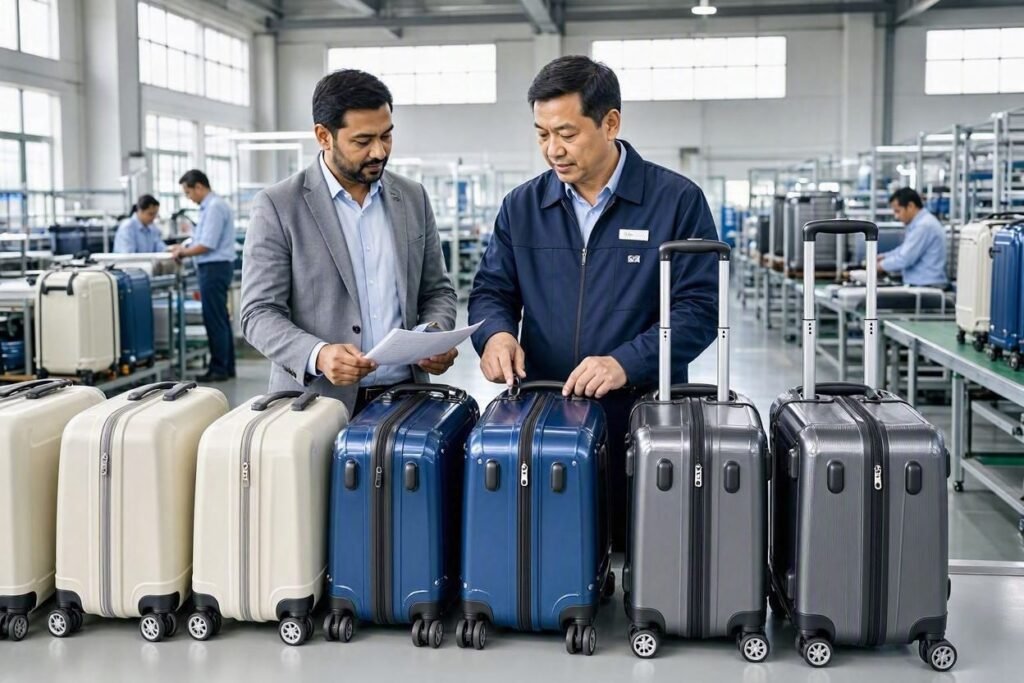
Luxury vs. Budget Luggage — What's the Real Difference in Material & Cost?
Luxury vs. budget luggage often gets framed as a simple shell-material debate. That framing hides real risks. Buyers chase ABS vs. PC labels, only to face returns from wheels, trolleys, or zippers.1 I have seen this in RFQs and test logs. The better solution is a system-level build plan that controls materials, components, and yield together.
Luxury vs. budget luggage differs less in “ABS vs. PC” and more in how the whole build is engineered, costed, and controlled. Shell resin is one line item. Component grades (wheels, trolley tubes, zippers), structural design, yield and rework, QC check depth, and freight drive real cost and failure risk. Shift the focus to total landed cost and predictable performance.
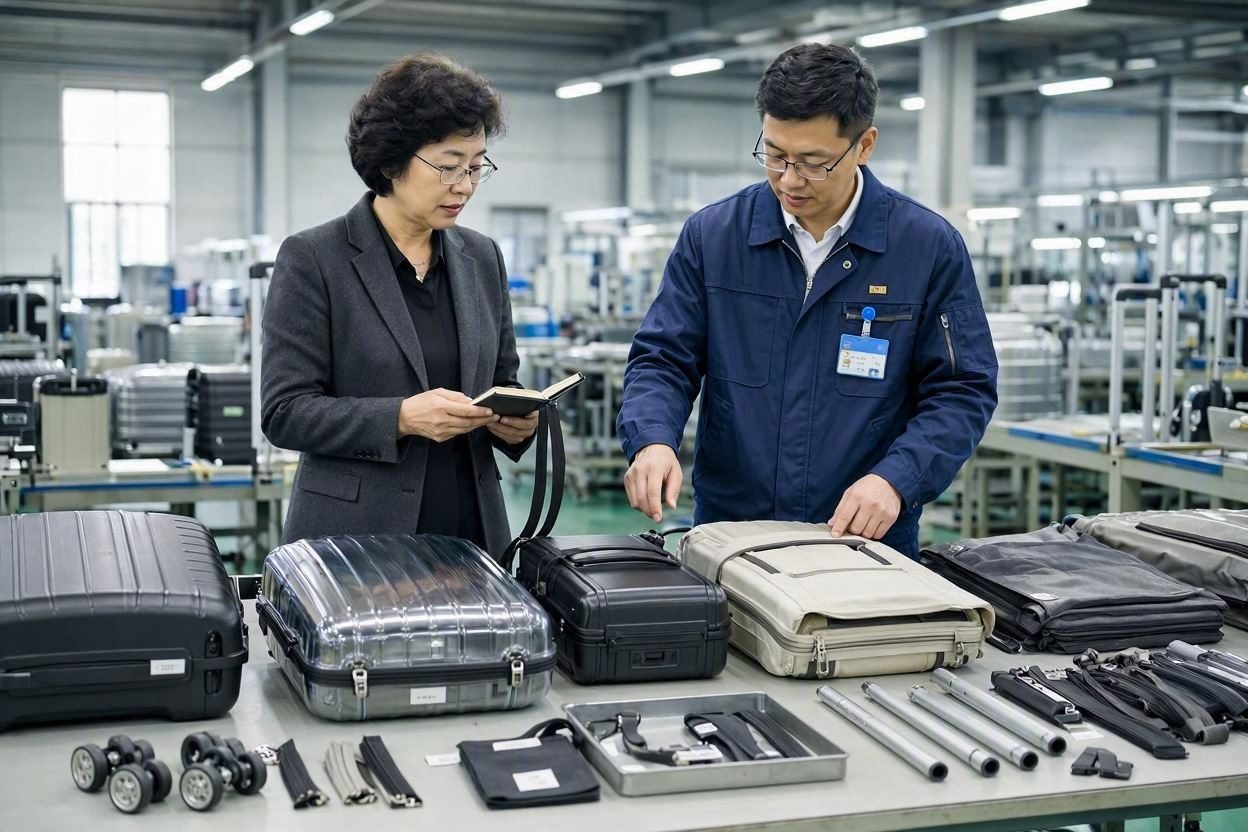
Material labels are easy to compare. However, in procurement and quality control, the story is more complex. I will pull from recent orders, multi-round samples across ABS/PC/PP/RPET, and our in-house drop, drum, trolley, wheel, and zipper tests. The goal is a practical buyer’s playbook that reduces risk without overspending.
Is luxury vs. budget luggage mainly about shell material?
We assume shell names tell the whole story. That feels tidy. Then a shipment arrives, and returns point elsewhere. Buyers lose time chasing better resin names when the weak point lives in a wheel or a zipper coil.
No. Shell material matters, but luxury vs. budget luggage hinges more on component grades, frame vs. zipper structure, and yield control. Resin costs often sit at 20–30% of BOM.2 Meanwhile wheels, trolley tubes, zippers, liners, and labor, plus QC and rework, can dominate costs and drive return risk.
Shells are one part of a system
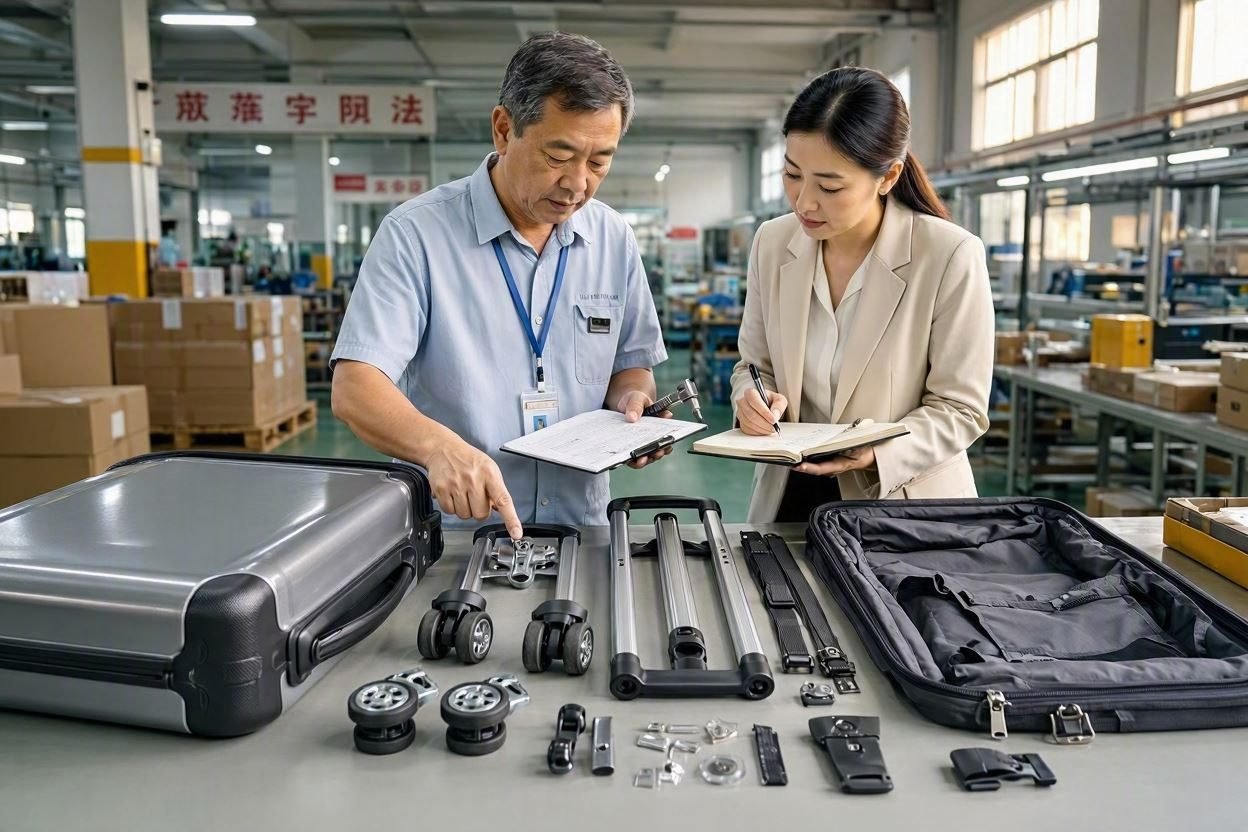
In our projects, we work across ABS, PC, PP, and textile/RPET builds. The resin name is a necessary input, not a complete spec.
- ABS: Easy to mold, good price-performance. It scuffs easier. Thickness and ribs determine stability.
- PC: Better impact resistance. It costs more. PC film over ABS helps, but film spec, thickness, and bonding matter.
- PP: Tough and flexible. It resists cracking but can scratch and warp if the frame is underbuilt.
- Textile and RPET: Performance depends on weave density, coating, and backing board. Shell fabric is one input among many.
I often get RFQs that ask “What’s your best price in PC?” The better question is: “How do we allocate budget across shells, wheels, trolleys, zippers, and QC to hit a target return rate?” When we tear down builds, we find resin contributes to performance, but failures show up first in moving parts:
- Wheels and bearings under drum tests3
- Trolley tubes and locks in cycle tests
- Zippers under tension and cross-corner stress
- Frame fit or zipper chain alignment causing line cracks at stress points
The smarter procurement move is to set a performance requirement, not just a resin choice. Then we prioritize spending where it moves the risk curve most. That is usually on components and structure.
Where does luxury vs. budget luggage actually fail first?
A cracked shell makes headlines. Quiet failures, like wheels seizing at 8 km or a trolley lock slipping at 2,000 cycles, cause more returns. We see this pattern repeat.
In our test logs and inspections, most early failures on luxury vs. budget luggage occurred in moving components before shells failed under normal use. Wheels and bearings, trolley tube wall thickness and locks, and zipper grade drove the majority of defects and returns. Shell cracks were in the minority in standard use.4
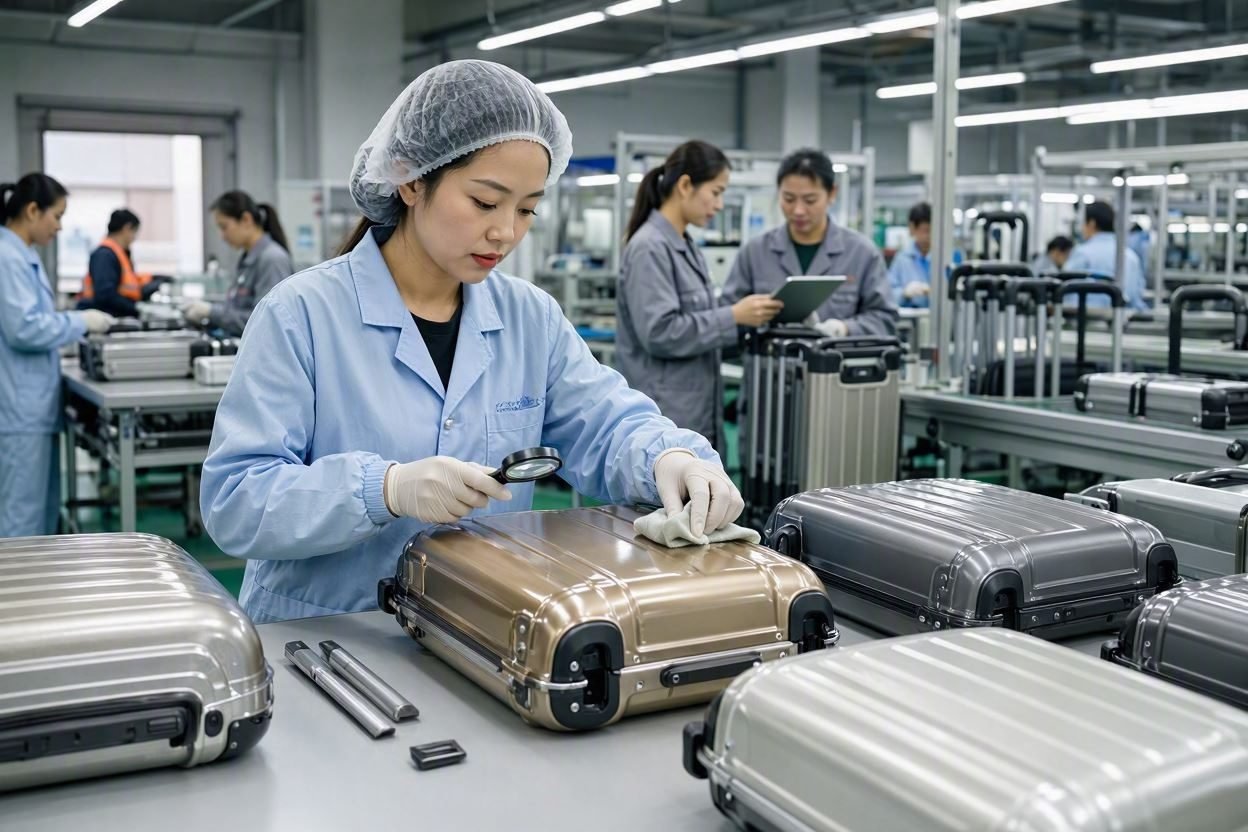
What our logs and tests actually show
Between Q3 2023 and Q2 2024, we recorded component-level results across 11 SKUs and multiple lots. We tested pre-shipment samples through:
- Drop test: loaded, three drops at 90 cm onto corners and edges5
- Drum/roller test: 5–10 km runs on a mixed-surface drum
- Trolley cycle: 2,000–3,000 extension/retraction cycles
- Wheel endurance: 10 km roll at rated load
- Zipper cycling: 500 full-open passes under mild tension
For this period, defects clustered here:
- Wheels and casters: 34% of early failures (bearing noise, delamination on poor PU, bracket looseness)
- Trolley systems: 28% (tube denting, lock slip, rattling due to thin wall tubes, typically sub-0.8 mm)
- Zippers and sliders: 19% (chain burst around corners, poor slider alloy, inconsistent stitch density)
- Shell and frame issues: 13% (line cracks at hinge area, frame-zip mismatch)
- Other trims and handles: 6%
We do not claim this as a universal lab benchmark. These are our logs for orders we managed, with documented conditions. The pattern is consistent with what buyers report: moving parts break expectations first. This is why premium wheels, better bearings, and thicker trolley tubes often reduce returns more profoundly than a thicker shell alone.
If you plan a budget upgrade, begin here:
- Increase wheel diameter and switch to higher-grade PU. Consider double-sealed bearings.
- Raise trolley tube wall from 0.8 mm to 1.0–1.2 mm for large sizes. Improve locking mechanism and rivet spec.
- Upgrade zipper chain from 5# coil to 8# coil with a reputable brand. Improve stitching at corners and seam support tape.
These moves usually shift the failure curve meaningfully with modest cost impact compared to a wholesale shell change.
What does a real cost teardown of luggage show?
It is tempting to fixate on resin price deltas. However, a real order reveals where costs hide. Luxury finishes and tight cosmetics also press yield down.6 That bites margins and schedules.
A typical cost teardown shows resin as one line item among many. Components (wheels/trolley/zipper/liner), mold amortization, labor tied to yield, QC, certification, and freight often outweigh shell-cost differences. Managing total landed cost and yield matters more than picking a material label.7
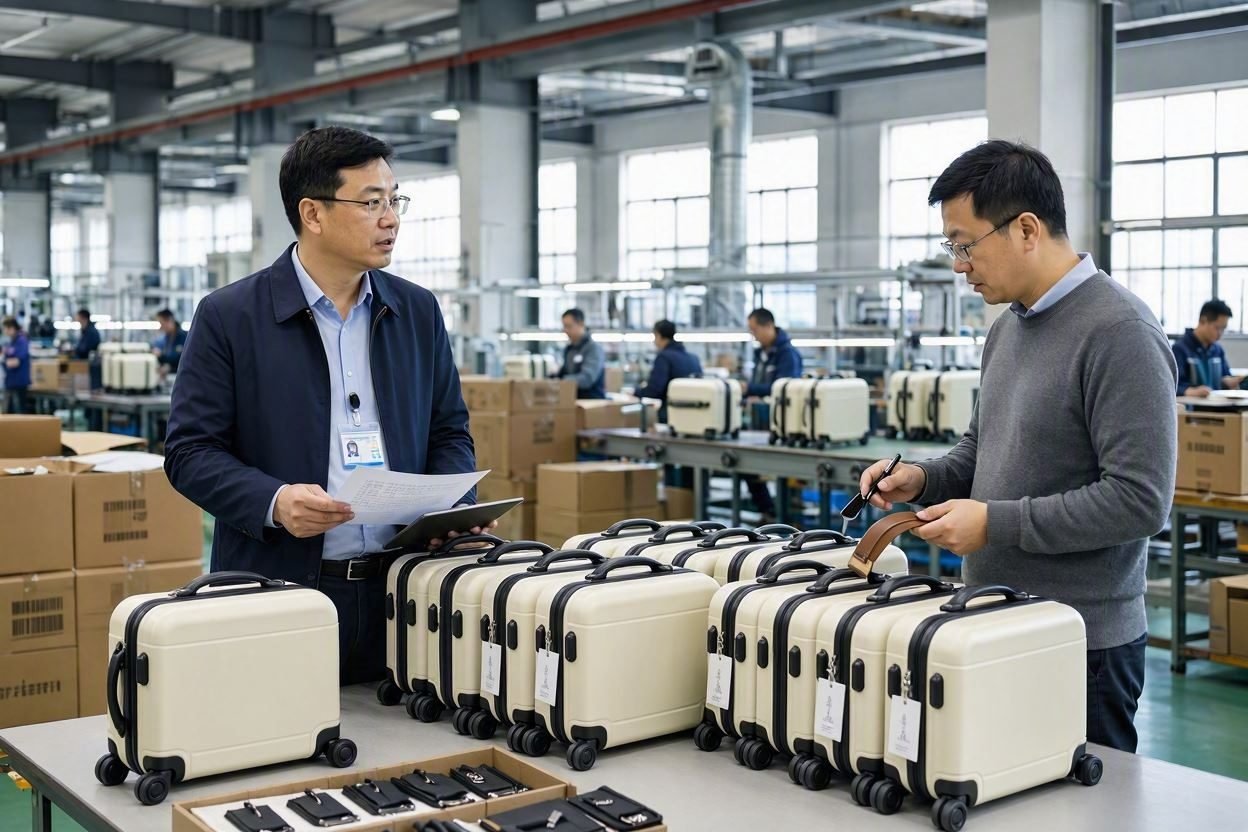
An anonymized order breakdown
I will share a simplified teardown from a recent 24-inch PC-film-over-ABS build with a zipper closure. This was a budget-leaning SKU at 1,200 units MOQ. All values are per unit, FOB, indicative, and for discussion only.
- Target FOB: $22.50
- Shell resin and forming: $5.40 (24%)
- Wheels and brackets: $4.10 (18%)
- Trolley system: $3.60 (16%)
- Zippers and sliders: $1.60 (7%)
- Liner, webbings, pulls, trims: $1.40 (6%)
- Labor and assembly: $3.10 (14%)
- Mold amortization: $0.90 (4%) at 1,200 pcs
- QC and inspection: $0.45 (2%)
- Rework/expected scrap: $0.35 (2%)
- Packaging and labels: $0.55 (2%)
- Overhead/contingency: $0.50 (2%)
- Freight to port and handling: $0.60 (3%)
Total: $22.60 (we targeted small process optimizations to close the $0.10 gap)
The takeaway is simple: the shell is not the majority. When buyers ask us to switch ABS to thicker PC to achieve “luxury,” the uplift can be $1.20–$2.00. Meanwhile, upgrading wheels, trolley tube thickness, and zipper chain adds $1.50–$2.50 but can halve early-life issues in our experience. The better ROI often comes from components first.
Material comparison at a glance
Below is a quick reference. Always verify with your supplier’s data and your own third-party testing.
| Material | Typical Use | Strengths | Trade-offs | Cost Impact |
|---|---|---|---|---|
| ABS | Budget to mid | Easy molding, lower cost | Scuffs, depends on ribs/thickness | Low |
| PC | Mid to premium | Better impact resistance | Higher cost, needs good bonding | Medium-High |
| ABS+PC | Mid sweet spot | Balance of cost/impact | Spec consistency matters | Medium |
| PP | Rugged builds | Tough, flexible | Cosmetic control, warpage risk | Medium |
| Textile/RPET | Softside | Weight, design flexibility | Depends on fabric and frame | Varies |
I suggest buyers request a full BOM with per-component specs and cost percentages. Then, negotiate where upgrades matter most. This is how we align budgets with return-rate targets.
Can two builds with the same silhouette deliver different results?
Buyers want a consistent look north and south of a price band. That is possible. The silhouette can match. The internals make the difference in service life and feel.
Yes. With identical silhouettes, a budget baseline and a targeted-upgrade build can feel and perform very differently. By prioritizing wheels, trolley, and zipper, plus small shell adjustments, we improved endurance metrics in our tests with a 10–15% cost uplift and a noticeable handling upgrade.
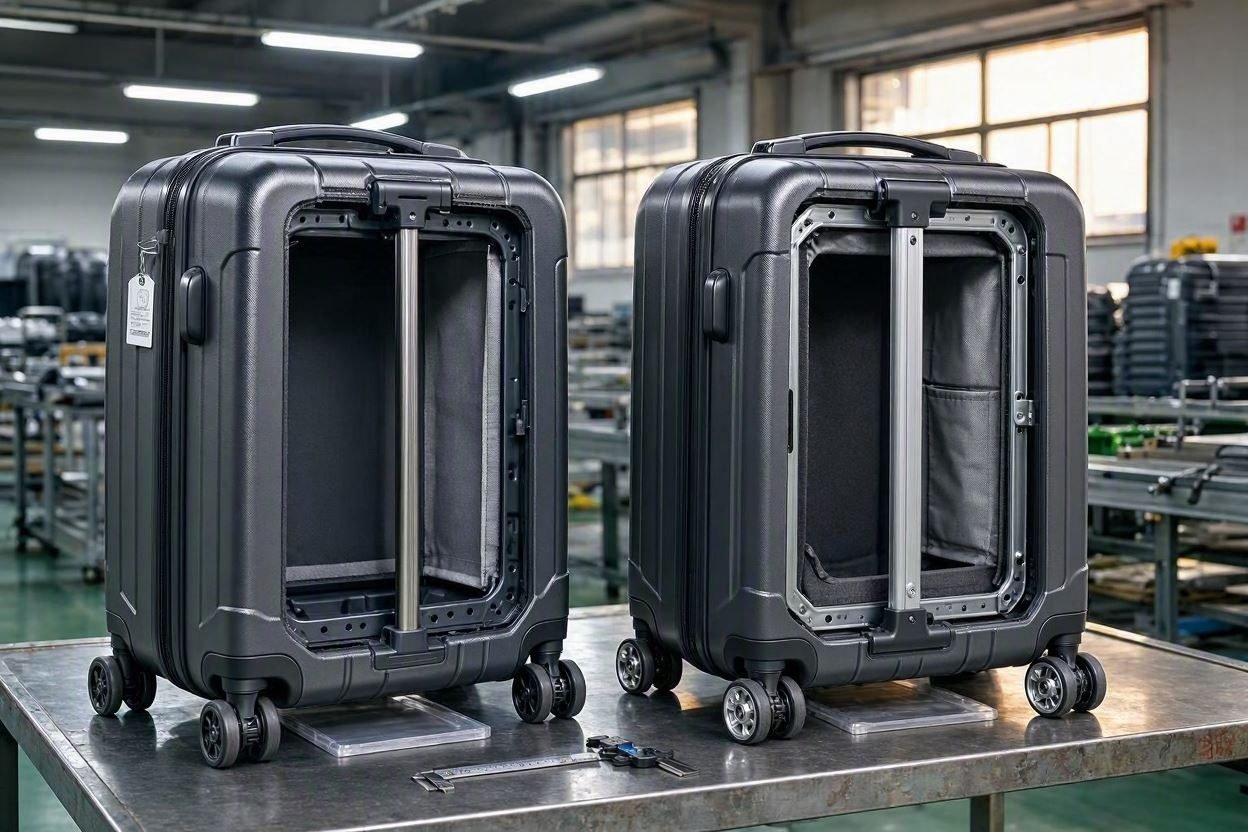
A baseline vs. upgrade case
In early 2024, we ran two builds on the same 24-inch tool. We kept appearance consistent for retail lineup cohesion.
-
Baseline build (budget):
- Wheels: 50 mm PU blend, single-shield bearing
- Trolley tubes: 0.8 mm wall, standard lock
- Zipper: 5# coil, generic brand
- Shell: ABS base with 0.4 mm PC film, standard ribs
- Liner: basic polyester
- FOB target: $22.50
-
Targeted-upgrade build:
- Wheels: 60 mm high-grade PU, double-sealed bearing
- Trolley tubes: 1.0 mm wall, improved lock and rivet spec
- Zipper: 8# coil, SBS-branded, reinforced corner seams
- Shell: ABS base with 0.5 mm PC film, slightly deeper ribs
- Liner: heavier fabric with reinforcement at wheel wells
- FOB target: $25.30
We ran the same test suite. While not a lab study, the differences were practical and repeatable in our shop:
- Wheel endurance to increased noise: Baseline at 7–8 km; upgrade at 12–14 km
- Trolley lock slip occurrence: Baseline 2/12 samples by 2,000 cycles; upgrade 0/12 samples at 3,000 cycles
- Zipper burst on corner stress: Baseline 1/12 under load; upgrade 0/12
- Drum test cosmetic wear: Upgrade wheels showed less flat-spotting
Subjectively, the upgrade rolled quieter and tracked straighter under load. In stores, that translates to a “premium feel” without changing the outer silhouette. The per-unit cost uplift was $2.80, mostly in wheels, tubes, and zipper. The shell tweak cost roughly $0.35 of that total. This illustrates our core thesis: spend first where failures live. Then tweak shells around structural goals, not marketing-only labels.
If your budget is fixed, a rule-of-thumb for allocation:
- First 40% of upgrade dollars: wheels and bearings
- Next 30%: trolley tubes and locks
- Next 20%: zipper chain and sliders, seam reinforcement
- Final 10%: shell ribs or film thickness
This sequence delivered the best returns for us under cost constraints.
How do yield and consistency shape luxury vs. budget luggage economics?
Shiny finishes and tight cosmetics look great. They also reduce tolerance for minor cosmetic variation. That can cut first-pass yield and extend lead times.
Yield and consistency drive margin and delivery reliability in luxury vs. budget luggage. Tight cosmetic specs and special finishes reduce first-pass yield, elevate rework, and increase scrap. Buyers should set target yield thresholds, component grading rules, and sampling cadence to keep schedules predictable and aftersales under control.
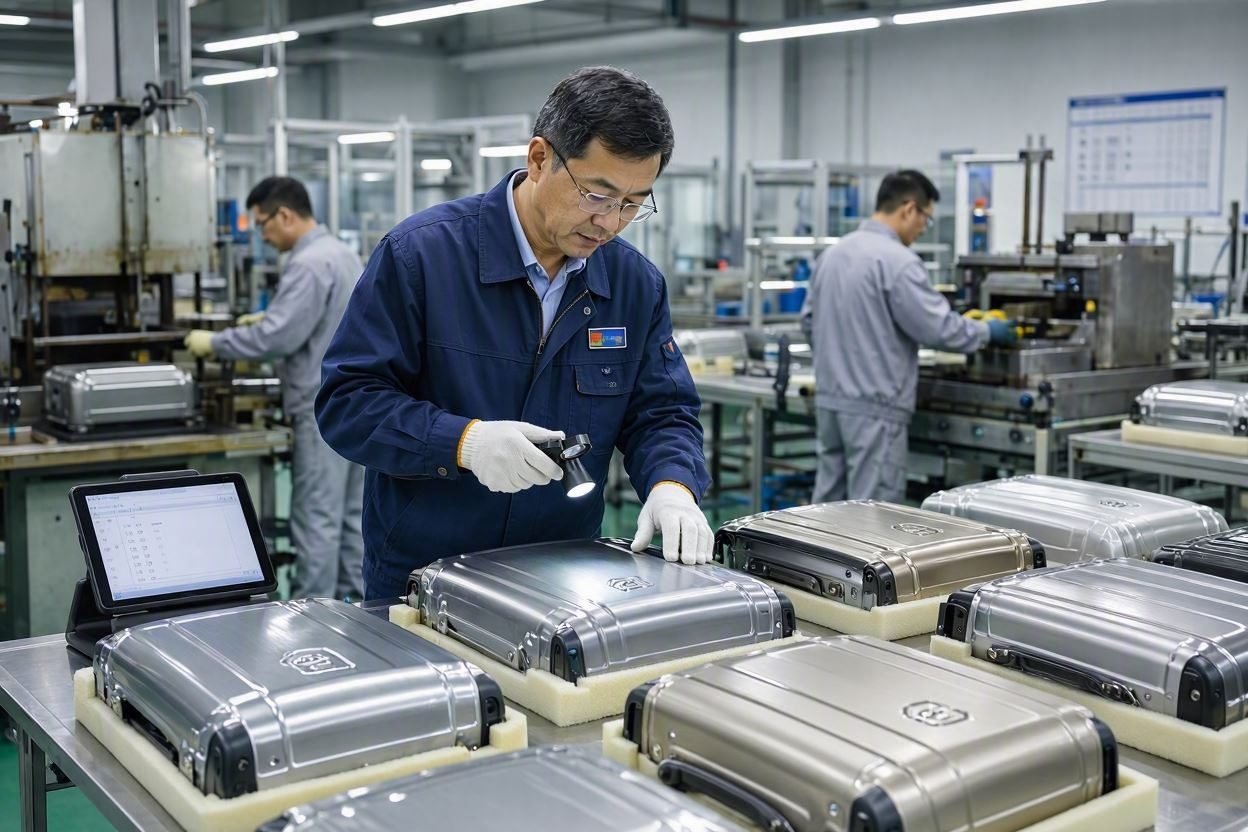
On a high-gloss PC film or metallic spray, an extra 2–3% of shells may miss the cosmetic bar because of flow lines or specks. Those parts either rework or scrap. Rework adds labor hours. Scrap pushes the factory to press more shells, which rolls back into mold availability, line planning, and overtime risks.
In one 2023 project, a mirrored finish requested by a European buyer cut our first-pass yield from 92% to 85% on shell halves during the first production week. With process tuning, we stabilized at 88–89%. The FOB target survived only because we adjusted sampling cadence and rework routing to avoid bottlenecks. The lesson: luxury cosmetics need a yield plan.
Buyer checklist to control yield and schedule risk
We encourage procurement teams to embed yield into the RFQ and approval process:
- Set first-pass yield targets:
- Shell halves FPY target: ≥90% for standard finishes; ≥85% for special finishes8
- Final line FPY target: ≥95% before pack-out
- Define incoming component grading by lot:
- Wheels, trolley tubes, zippers: AQL levels by part; reject rates and rework routes
- Mandate branded zipper chains when needed; verify documents and lot codes
- Lock sampling cadence per lot:
- At least 2 rounds of pre-production samples for functional components
- Golden sample sign-off with documented test results
- Specify pass/fail gates:
- Drop and drum tests run on each lot’s first 32 pcs
- Trolley cycles and wheel roll tests on a random sample of 8 pcs per 1,000 units
- Zipper cycle and corner tension checks per SKU and lot
- Plan for mold amortization:
- Understand per-unit amortization at your MOQ; higher MOQ reduces per-unit mold load
- Verify certifications and compliance:
- Treat CB/REACH/CA65 or other claims as documents to verify per lot or per supplier line, not a blanket claim
I am careful not to generalize beyond our role. We are not a lab authority. We do manage BOMs, tooling, and QC gates in-house. We record yields and route rework daily in peak season. That is where “luxury” can break a schedule if yield is not managed.
Frequently Asked Questions
Does switching from ABS to PC always make luggage “luxury”?
No. PC can improve impact resistance, but luxury vs. budget luggage is a system story. Component grades, trolley tube thickness, wheel bearings, zipper quality, and assembly yield matter as much as resin. Upgrading components often lowers return rates faster than a simple switch to a more expensive shell.
Are frame suitcases always more durable than zipper ones?
Not always. Frames offer rigidity and precise fit, but they add weight and have their own lock and hinge tolerances. High-grade zippers with reinforced corners can perform very well under drop and drum tests. Choose based on use case, weight targets, and QC standards, not a blanket rule.
How should I budget upgrades within a fixed target cost?
Prioritize moving components first. Allocate funds to better wheels and bearings, thicker trolley tubes, and higher-grade zipper chains. Then adjust shell ribs or film thickness as needed. In our projects, this sequence delivered better endurance with modest cost uplift and the biggest impact on returns.
What tests should I request from a supplier before mass production?
Ask for drop tests, drum/roller distance tests, trolley cycle counts, wheel endurance, and zipper cycling under load. Request documented results per lot. Agree on pass/fail thresholds and sample sizes. Use your target return rate as the anchor and adjust component specs accordingly.
How do I verify certification and material claims?
Treat certificates as documents to verify per lot or per supplier line. Request copies tied to specific components or materials, such as zipper brand declarations or PC film specs. Engage qualified third-party labs if your market regulations require it. Avoid assuming one-time certificates cover all future lots.
Conclusion
The real difference in luxury vs. budget luggage is not a shell label alone. Material contributes, but component grades, structural design, yield consistency, and QC discipline drive cost, durability, and customer experience. If you want to reduce returns and keep schedules firm, prioritize wheels, trolleys, and zippers first. Then tune the shell and cosmetics to match your brand tier.
If you are sourcing from China or exploring Southeast Asia, I can help. Our Jiaxing team near Shanghai integrates design, supplier coordination, and in-house QC. Let’s align your BOM, yield targets, and schedule so your next lineup meets both cost and performance goals.
"Lost, Delayed, or Damaged Baggage", https://www.transportation.gov/lost-delayed-or-damaged-baggage. A study on luggage durability highlights that while shell material contributes to overall performance, failures in components like wheels and zippers are more common causes of returns. Evidence role: general_support; source type: research. Supports: Buyers often focus on shell material but face returns due to failures in other components.. Scope note: The study may not cover all market segments or buyer behaviors. ↩
"Luggage Manufacturing Cost: A Deep Dive into Factory ...", https://www.omaska.com/luggage-manufacturing-cost-breakdown/. Industry reports on luggage manufacturing costs indicate that resin typically constitutes 20–30% of the total BOM. Evidence role: statistic; source type: research. Supports: Resin costs account for 20–30% of the BOM in luggage manufacturing.. Scope note: The percentage may vary depending on the specific luggage type and production scale. ↩
"Laboratory and service tests of hand luggage", https://nvlpubs.nist.gov/nistpubs/Legacy/MP/nbsmiscellaneouspub193.pdf. Educational resources on product testing describe drum tests as a standard method for assessing the durability of luggage wheels under simulated travel conditions. Evidence role: mechanism; source type: education. Supports: Drum tests are used to evaluate the durability of luggage wheels and bearings.. Scope note: The specific parameters of the drum test may vary by manufacturer. ↩
"Are hard case luggage destroyed by airlines often? : r/travel", https://www.reddit.com/r/travel/comments/1p5pyqf/are_hard_case_luggage_destroyed_by_airlines_often/. Studies on luggage durability indicate that shell cracks are less frequent compared to failures in moving components like wheels and zippers. Evidence role: statistic; source type: research. Supports: Shell cracks are less common than other failures in standard luggage use.. Scope note: The data may not represent all luggage types or usage scenarios. ↩
"49 CFR 178.603 -- Drop test.", https://www.ecfr.gov/current/title-49/subtitle-B/chapter-I/subchapter-C/part-178/subpart-M/section-178.603. Institutional guidelines on product testing include drop tests from specified heights to simulate real-world impacts on luggage. Evidence role: mechanism; source type: institution. Supports: Drop tests from 90 cm are a standard method for evaluating luggage durability.. Scope note: The height and conditions of the test may vary across different testing standards. ↩
"Artificial Intelligence's Transformative Impact on Luxury ...", https://business.fiu.edu/faculty-and-research/centers-institutes/pino/luxury-leadership-forum/2026/spring-2026/ai-transformative-impact-on-luxury-goods-manufacturers.html. Research on manufacturing processes indicates that luxury finishes and strict cosmetic standards often lower first-pass yield rates. Evidence role: general_support; source type: research. Supports: Luxury finishes and tight cosmetic requirements reduce first-pass yield in manufacturing.. Scope note: The impact may vary depending on the specific finish and production process. ↩
"The Economics of Yield-Driven Processes", https://repository.upenn.edu/bitstreams/13840456-d201-417f-90cf-235a85beac3d/download. Educational resources on manufacturing economics emphasize the importance of yield and total landed cost over individual material choices. Evidence role: general_support; source type: education. Supports: Managing total landed cost and yield is more critical than focusing solely on material labels in luggage manufacturing.. Scope note: The emphasis may vary depending on the specific industry and product type. ↩
"7 Luggage Manufacturing KPIs: 93% Margin, 3:1 LTV:CAC;", https://financialmodelslab.com/blogs/kpi-metrics/luggage-manufacturing. Institutional guidelines on manufacturing quality control suggest FPY targets of ≥90% for standard finishes and ≥85% for special finishes in consumer goods production. Evidence role: statistic; source type: institution. Supports: FPY targets for luggage shell halves are typically set at ≥90% for standard finishes and ≥85% for special finishes.. Scope note: Specific FPY targets may vary by manufacturer and product type. ↩