
How Do You Source Waterproof Travel & Outdoor Storage Bags for Your Business Line?
Sourcing waterproof travel and outdoor storage bags for your business isn’t as simple as comparing price tags or catalog claims. The term “waterproof” covers a spectrum, often misunderstood due to vague supplier terminology. Ensuring your bulk orders meet customer expectations requires evaluating factory processes, testing certifications, and quality control protocols—not just verifying surface-level material claims.
To source high-quality waterproof storage bags, buyers need to understand waterproof ratings, verify testing reports, and assess manufacturing consistency. Focusing on IPX standards1, seam-sealing methods, and component durability ensures products meet defined use-case requirements.
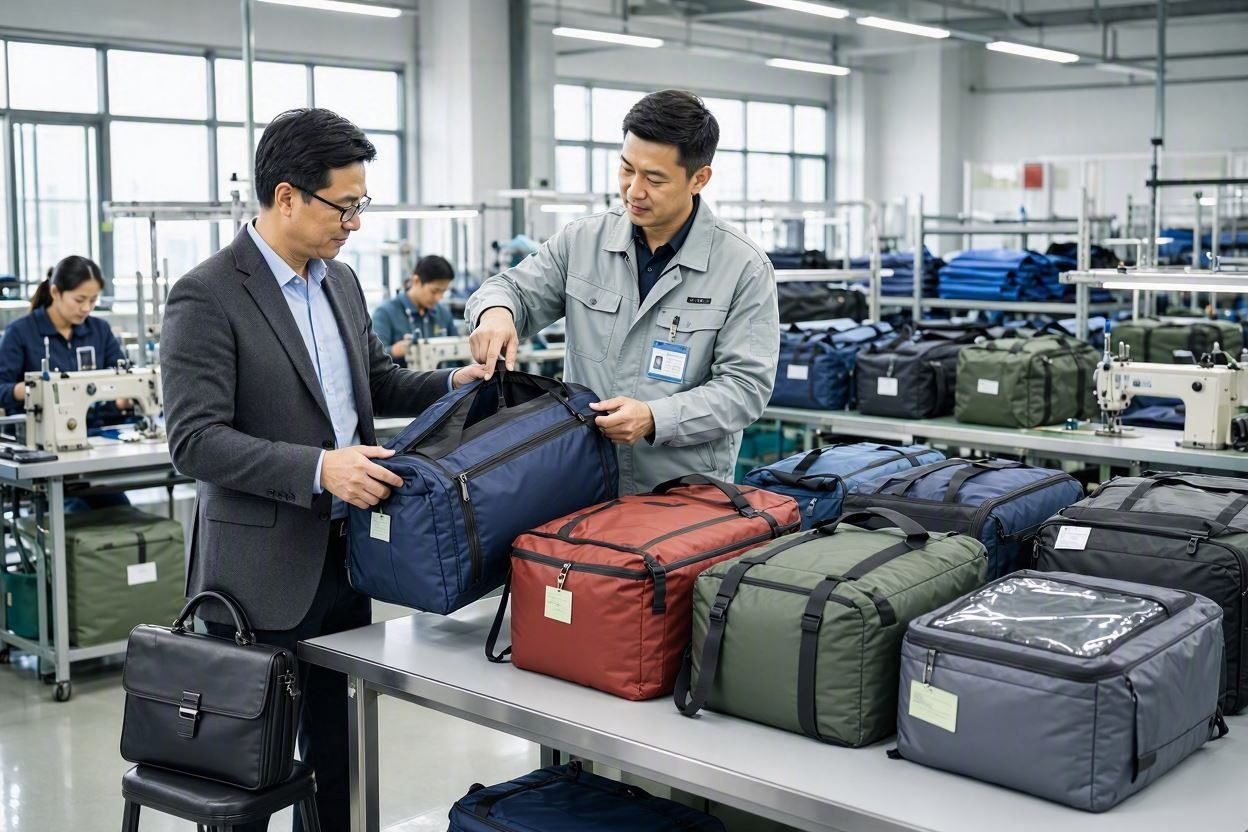
Sourcing confidently requires cutting through marketing jargon and focusing on technical and manufacturing variables. In this article, I’ll guide you through key factors when evaluating suppliers, auditing production capabilities, and aligning product specifications with real-world use scenarios.
What are the different waterproof ratings for travel and outdoor storage bags?
Buyers often interchange terms like water-resistant, water-repellent, and waterproof without understanding their distinct technical definitions. This confusion can lead to mismatched expectations and product failures.
Waterproof ratings, such as IPX standards, denote specific levels of water intrusion resistance under controlled testing conditions. Suppliers often use these terms interchangeably without explaining seam-sealing methods, material properties, or zipper specifications.
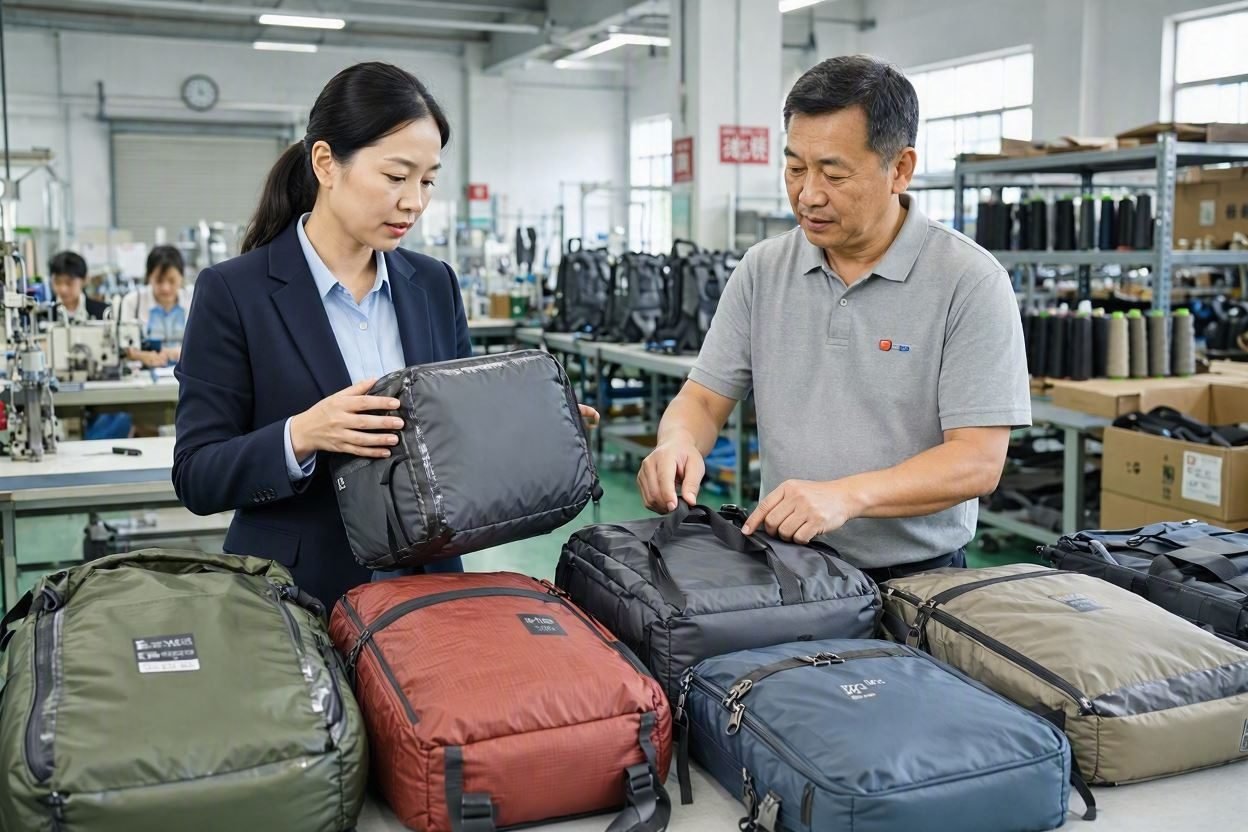
Diving deeper into waterproof terminology
A true waterproof bag achieves full protection against water penetration, typically rated under IPX standards. Here's how common terms differ:
| Term | Definition | Typical Uses |
|---|---|---|
| Water-resistant | Reduces water penetration to some extent but cannot withstand sustained exposure. | Light rain or splashes |
| Water-repellent | Treated material that allows water to bead up; may hold off rain but not submersion. | Hiking/travel bags |
| Waterproof | Sealed to prevent water intrusion entirely, often tested for immersion under set depths or pressure. | Kayaking/outdoor sports |
When sourcing, request suppliers to clarify whether their bags meet specific ratings such as IPX5 (resists water jets) or IPX7 (submersible up to 1 meter)2. Press for measurable test reports, as many suppliers mislabel general water resistance as “waterproof.”
Moreover, understanding waterproof performance requires evaluating seam-sealing, material treatment, zipper integrity, and heat-bonded closures—as these determine actual reliability in practical scenarios.
How do factories achieve waterproof bag consistency during production?
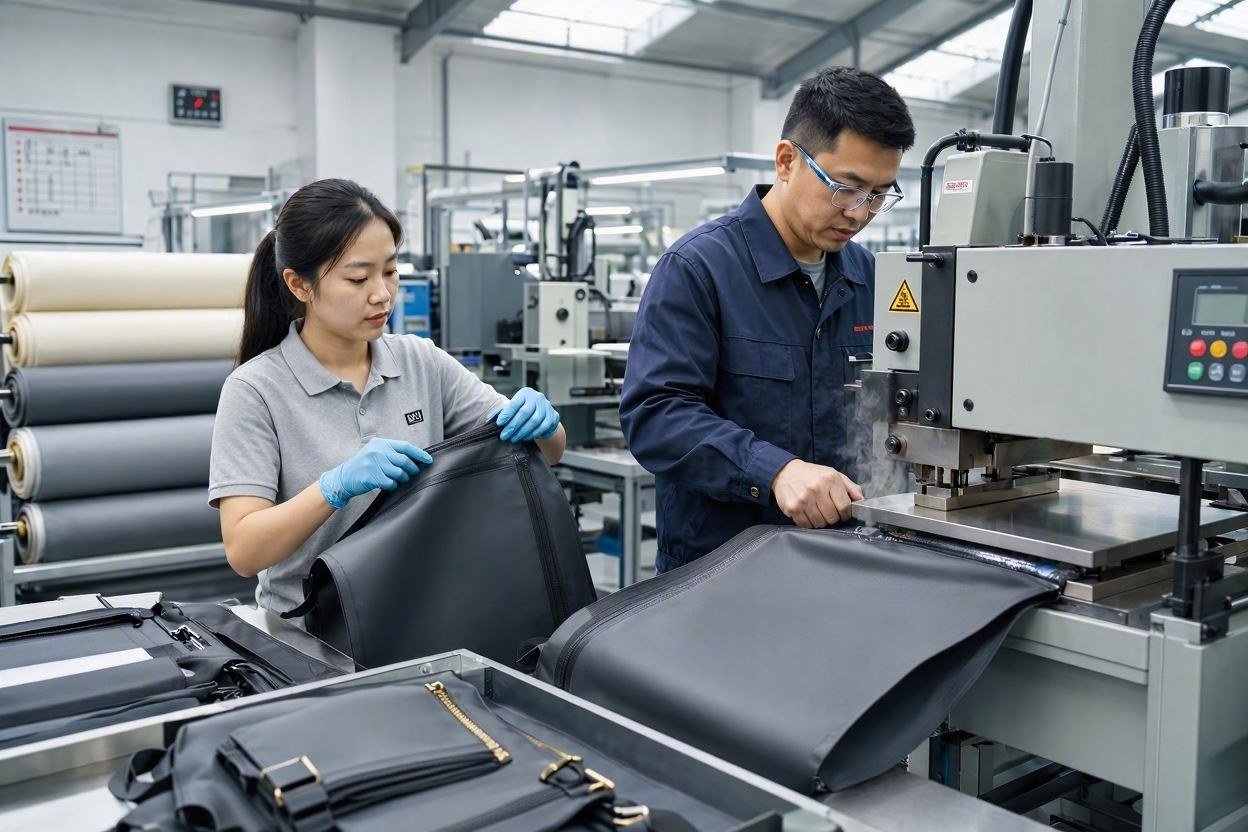
Material alone doesn’t guarantee waterproof performance. Factories must follow controlled processes for seam-sealing, heat-bonding, and zipper treatments. But not all suppliers maintain consistent standards across production batches.
Factories achieve consistent waterproof performance through controlled QC procedures, such as heat-sealing seams, pressure-bonding zippers, and tape-sealing inner linings3. Variability arises from poor material storage, overlooked seal-testing, or low-grade adhesives.

Reliable methods for pre-order evaluation
Ensure consistent performance by following these steps before confirming bulk production:
1. Request supplier certifications
- Ask suppliers for IPX testing certifications, specifying whether they meet immersion or pressure standards.
2. Conduct sample testing
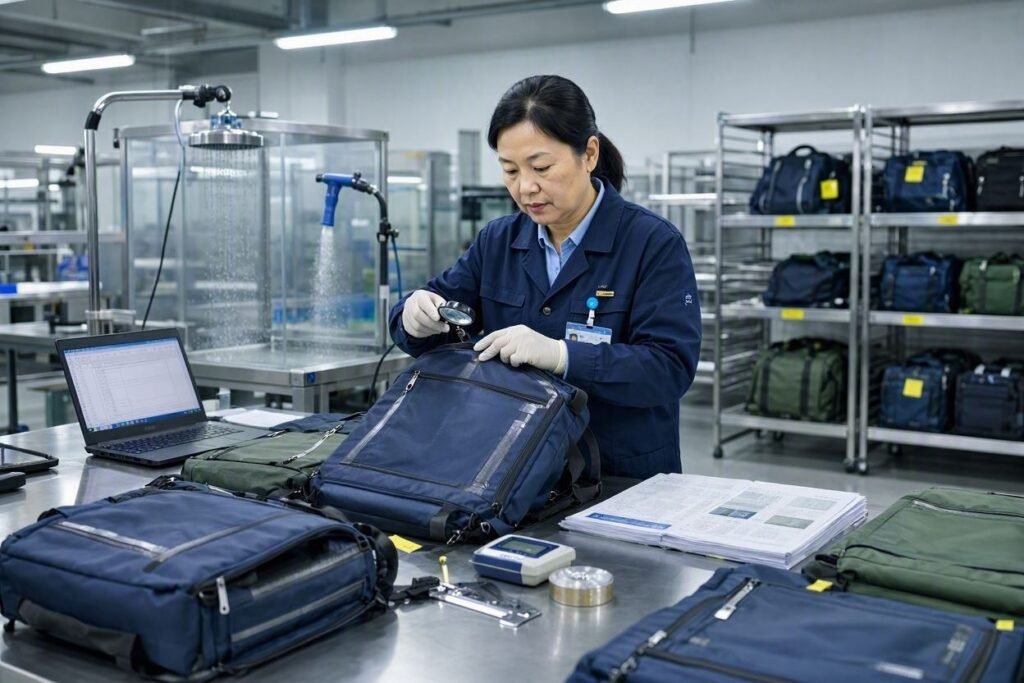
- Immerse bags under water conditions similar to end-use scenarios8 (e.g., submersion for kayaking vs. rain exposure for hiking).
- Simulate wear stress by loading bags and testing seams for breach points.
3. Verify batch-to-batch consistency
- Conduct spot checks and audit post-production reports. Focus on direct observations of seam-sealing areas and component bonding.
By layering certifications, sample tests, and batch audits, you minimize risks such as zipper leakage or seal failures across bulk supplies.
What are common supplier pitfalls for waterproof bags?
Even well-regarded factories can face challenges producing high-performance waterproof bags consistently. Buyers often overtrust supplier claims without examining manufacturing workflows.
Common pitfalls include inconsistent seam-sealing due to manual processes, skipping pressure-testing for waterproofing claims, and substituting lower-grade adhesives or coatings. Batch-to-batch quality drift is another risk with factories lacking QC automation.
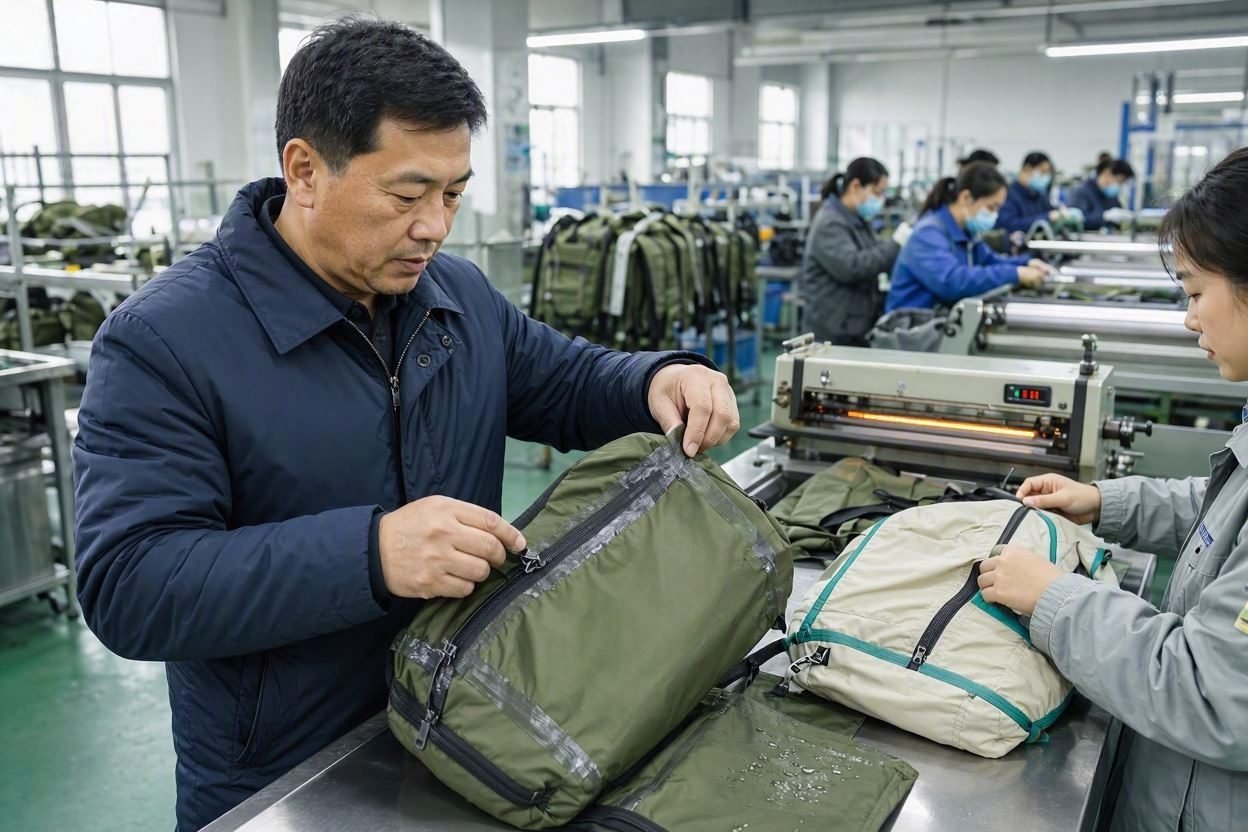
Red flags to watch for in supplier proposals
Here’s what you should watch for:
- Marketing jargon without data: Suppliers broadly label products “waterproof” without specifying IPX ratings or testing conditions.
- Manual seam-sealing techniques: Factories relying on manual sealing tasks rather than automated heat-sealing risk higher leakage rates.
- Unverified certifications: Some factories provide fake or irrelevant test reports9—verify authenticity and confirm test method alignment.
If suppliers refuse direct testing or evade approvals for sample immersion tests, they’re unlikely to maintain standards during bulk production. These risks often amplify when switching factories or ordering different product lines.
Frequently Asked Questions
What tests should I require for waterproof bags?
Demand IPX waterproof testing certifications that specify exposure limits (e.g., depth and duration). Ask suppliers to provide water immersion sample reports or pressure-seal integrity tests for seamlined products.
How do waterproof zippers work?
Specialized waterproof zippers are coated or heat-sealed with water-resistant films10. They may include interlocking teeth designed to prevent water ingress at connection points11.
Can I trust supplier certifications alone?
No. Certifications provide initial guidance, but you should always validate factory claims using sample immersion tests, spot inspections, and batch audits for bulk orders.
Conclusion
Sourcing waterproof travel and outdoor storage bags isn’t about chasing catalog claims—it’s about matching factory capabilities to product requirements. While terms like water-resistant and waterproof overlap, understanding IPX standards, seam-sealing processes, and component durability ensures reliable bulk performance.
Contact us to discuss how we audit supplier capabilities to offer consistent waterproof bag solutions tailored to your business needs.
"IP code", https://en.wikipedia.org/wiki/IP_code. The IPX rating system is defined by the International Electrotechnical Commission (IEC) standard 60529, which establishes specific test conditions for measuring protection against water ingress at various levels of exposure. Evidence role: definition; source type: institution. Supports: the technical definition and testing parameters of IPX water protection ratings. ↩
"IP code", https://en.wikipedia.org/wiki/IP_code. Under IEC 60529, IPX5 requires protection against water jets from any direction, while IPX7 specifies protection against temporary immersion in water up to 1 meter depth for 30 minutes. Evidence role: definition; source type: institution. Supports: the specific test conditions and protection levels defined for IPX5 and IPX7 ratings. ↩
"Apparel seam sealing", https://www.leister.com/en/Solutions/Applications/Apparel-Seam-Sealing. Heat-sealing and thermoplastic welding create waterproof seams by melting and fusing synthetic materials at molecular level, eliminating needle holes that would otherwise allow water penetration in sewn seams. Evidence role: mechanism; source type: research. Supports: the technical mechanisms by which heat-sealing and bonding processes create waterproof barriers in textile products. Scope note: This describes the general mechanism but may not address all specific techniques mentioned in bag manufacturing ↩
"Hydrophobic Modification of Thermoplastic Polyurethane for ...", https://pmc.ncbi.nlm.nih.gov/articles/PMC12608959/. Thermoplastic polyurethane (TPU) and polyvinyl chloride (PVC) create waterproof barriers when applied to fabrics by forming continuous, non-porous films that prevent water molecule penetration while maintaining flexibility. Evidence role: mechanism; source type: research. Supports: the waterproofing properties of TPU and PVC as textile coating materials. ↩
"Study of Water Resistance of Polyurethane Coatings Based ...", https://pmc.ncbi.nlm.nih.gov/articles/PMC11678652/. Polymer-based waterproof coatings can undergo hydrolysis and degradation when exposed to high humidity or contaminants during storage, reducing adhesion strength and barrier properties. Evidence role: mechanism; source type: research. Supports: how environmental storage conditions affect the performance of waterproof coating materials. Scope note: This addresses general polymer degradation mechanisms but may not quantify the specific performance reduction mentioned ↩
"Manual vs. Automated Inspection: Striking the Right ...", https://www.linkedin.com/pulse/manual-vs-automated-inspection-striking-right-balance-ekici-assef. Manufacturing research demonstrates that automated processes typically reduce variability and defect rates compared to manual operations by eliminating human inconsistency in repetitive tasks. Evidence role: general_support; source type: research. Supports: the relationship between manufacturing automation and product quality consistency. Scope note: This supports the general principle but does not specifically address waterproof bag seam-sealing processes ↩
"A perspective on Quality-by-Control (QbC) in pharmaceutical ...", https://pmc.ncbi.nlm.nih.gov/articles/PMC9948678/. Quality management research identifies batch-to-batch variation as a persistent challenge in manufacturing, particularly when process controls are inadequate or when multiple variables affect product characteristics. Evidence role: general_support; source type: research. Supports: the occurrence of quality variation across production batches in manufacturing. Scope note: This addresses general manufacturing principles rather than specifically waterproof bag production ↩
"Proposed Model for Evaluating Real-world Laboratory Results ...", https://pmc.ncbi.nlm.nih.gov/articles/PMC9467825/. Product testing methodology emphasizes that simulation of actual use conditions provides more relevant performance data than generic laboratory tests, as it accounts for the specific stresses and environmental factors products will encounter. Evidence role: general_support; source type: research. Supports: the validity of testing products under conditions that simulate intended use. ↩
"Data-driven quality assurance to prevent erroneous test ...", https://pubmed.ncbi.nlm.nih.gov/31680585/. Supply chain research documents that certification fraud and misleading test documentation represent persistent challenges in global manufacturing, particularly in industries with complex supplier networks and varying regulatory enforcement. Evidence role: general_support; source type: research. Supports: the occurrence of fraudulent or misleading certification documentation in manufacturing. Scope note: This addresses the general phenomenon but does not specifically quantify prevalence in the waterproof bag industry ↩
"Good Zipper Design", https://www.designreview.byu.edu/collections/good-zipper-design. Waterproof zippers typically employ polyurethane or rubber coatings applied to zipper teeth and tape, combined with overlapping flap designs or welded seals that create barriers preventing water from penetrating through the closure mechanism. Evidence role: mechanism; source type: research. Supports: the technical methods used to create waterproof zipper closures. ↩
"Fastener Design Manual", https://ntrs.nasa.gov/api/citations/19900009424/downloads/19900009424.pdf. Waterproof zipper designs incorporate tightly interlocking tooth profiles with minimal gaps and often include additional sealing elements, though the teeth themselves typically require supplementary coating or covering to achieve full waterproof performance. Evidence role: mechanism; source type: research. Supports: how zipper tooth geometry contributes to water resistance. Scope note: Tooth design alone is generally insufficient for waterproofing without additional sealing measures ↩