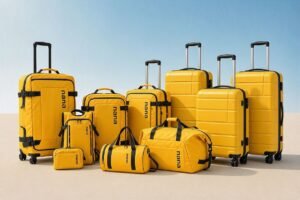

How Can Travel & Tourism Brands Get Co-Branded Souvenir Luggage Made?
Creating co-branded souvenir luggage is a growing trend in the travel and tourism industry, but many brands struggle to navigate the complexities of customization. From MOQ requirements to production challenges1, designing and sourcing co-branded luggage demands careful planning and realistic expectations. Here's how travel brands can successfully bring their ideas to life.
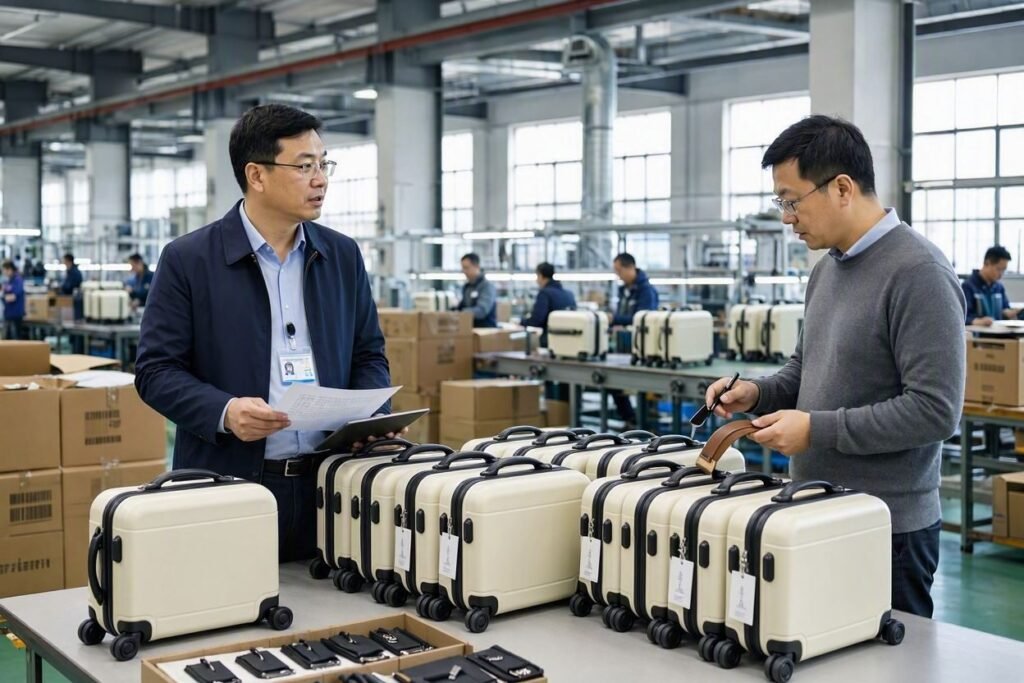
Co-branded souvenir luggage requires brands to balance creative design with practical production constraints. To achieve this, they must understand factors like minimum order quantities, material limitations, production timelines, and hidden logistics costs2. These considerations will help avoid delays and ensure a smooth launch.
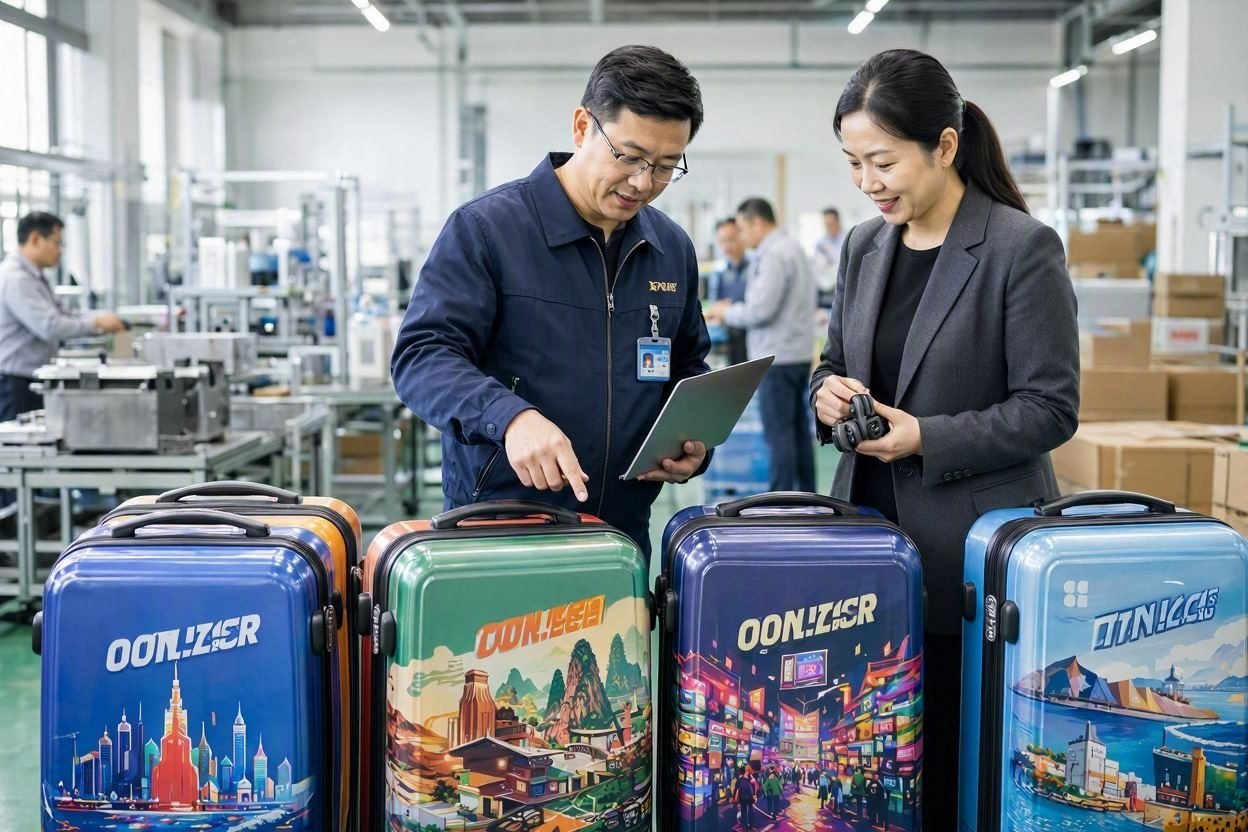
Travel & tourism brands contemplating co-branded luggage will need to manage specific challenges, including branding feasibility, communication with manufacturers, and post-production logistics. Below, I’ll explain each step so your project runs smoothly and delivers results.
What are the benefits of co-branded souvenir luggage?
Co-branded souvenir luggage offers both practical and promotional value.
Souvenir luggage builds an emotional connection between your brand and its audience3 while functioning as a useful travel accessory. It can generate brand visibility far beyond local markets as travelers take these products worldwide.
More broadly, co-branded luggage helps travel agencies, tourism boards, or destination-focused brands achieve the following:
- Increase customer loyalty by offering memorable branded items.
- Expand brand visibility internationally4 as luggage journeys across borders.
- Build cross-promotional opportunities by partnering with artists or local businesses.
- Drive retail sales with unique merchandise collections in local stores or airports.
While the benefits are compelling, designing and producing these items requires navigating complexities that your team will need to account for upfront.
How do MOQ requirements impact production?
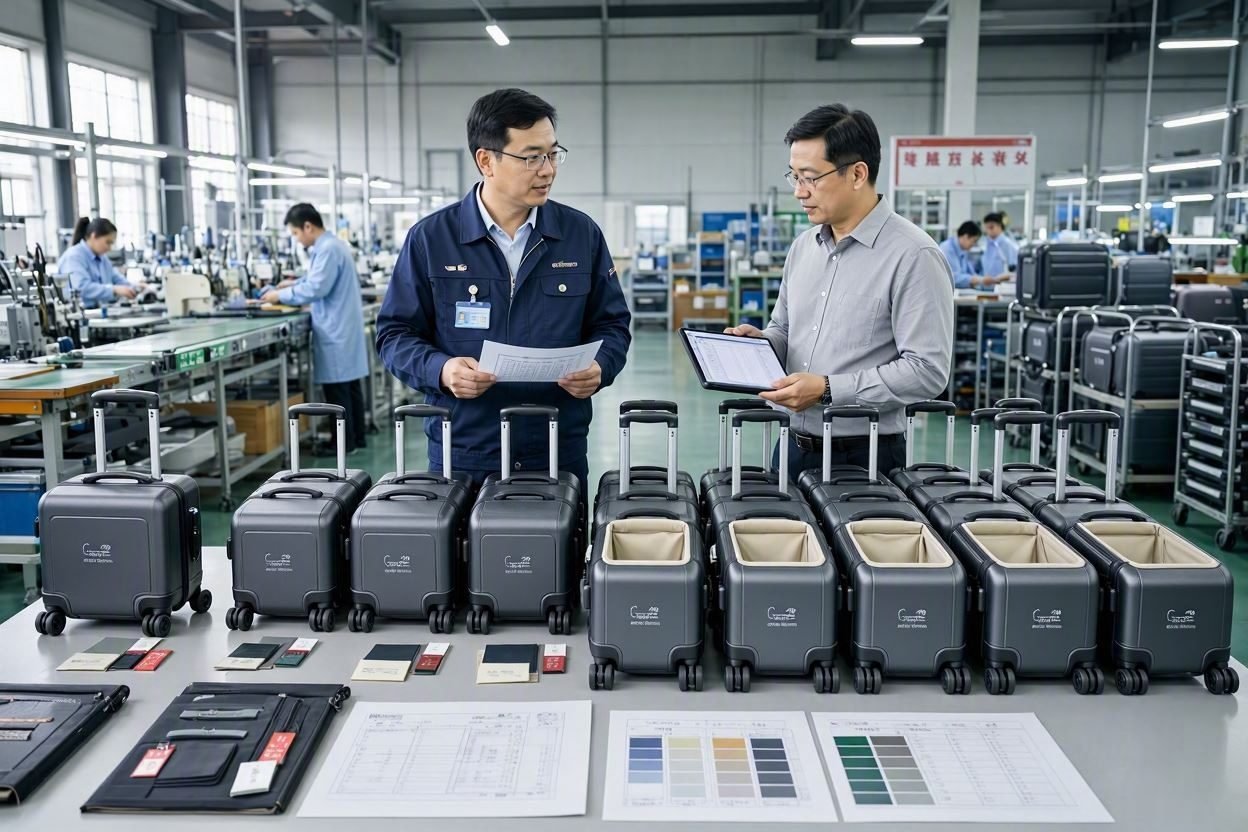
MOQ, or Minimum Order Quantity, is one of the first hurdles travel brands encounter on co-branded projects.
Manufacturers impose MOQ thresholds to ensure production processes remain cost-efficient5. Custom luggage usually requires expensive molds and printing set-ups, making small quantities impractical.
What is a typical MOQ for co-branded luggage projects?
For most factories specializing in co-branded travel luggage, MOQ typically starts at 500–1,000 units per design but may vary based on materials or functionalities. Premium materials like ABS+PC or RPET6 often have higher minimums due to costlier setup processes.
How can travel brands adapt to MOQ requirements?
Small brands can overcome MOQ limitations by:
- Combining designs. Split the MOQ across multiple co-branded designs or colorways.
- Partnering with peers7. Collaborate with another tourism organization or business to meet MOQ collectively.
- Opting for semi-custom options. Use pre-manufactured luggage shells and customize only surface elements such as labels or printing.
Realistically aligning order volumes with budget constraints will save you from last-minute disappointments.
Why is timeline planning essential?
Underestimating timelines is another common mistake. Custom souvenir luggage doesn’t happen overnight; you’ll need months to allow for everything from design iterations to production and shipping.
How long does it take to produce co-branded luggage?
Here’s the typical timeline breakdown for co-branded projects:
- Design phase: 2–4 weeks, including feedback cycles.
- Prototype sampling: 3–6 weeks for sample production and refinement.
- Bulk production: 8–12 weeks depending on order size, design complexity, and factory capacity.
- Shipping logistics: Add 4–6 weeks for international delivery and customs processing.
In total, brands should allocate 5–6 months from concept to delivery8. Rushing these stages risks costly mistakes or sub-par results.
What design and material factors should be considered?
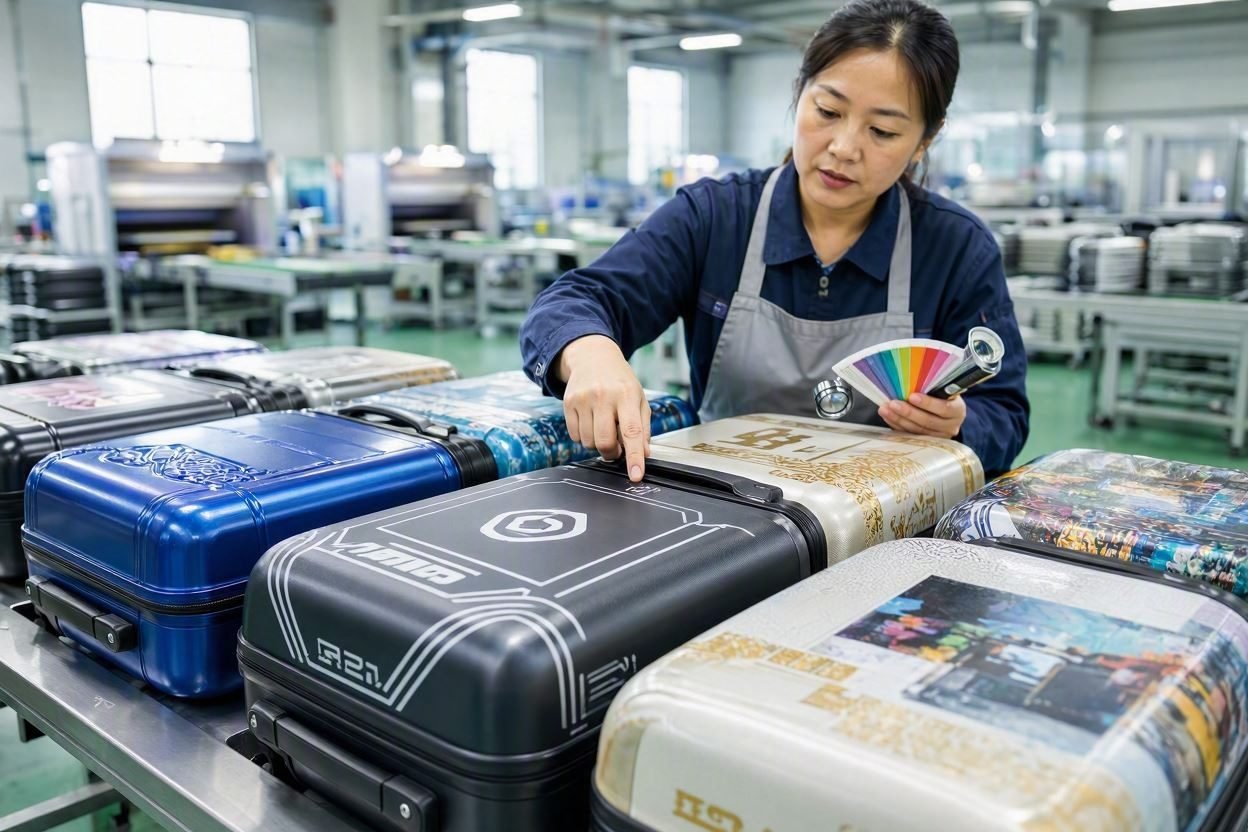
Unique branding ideas often face practical limits, especially in luggage production. Materials, durability, and manufacturing techniques can influence how well your concepts translate into physical products.
Which materials work best for branded luggage?
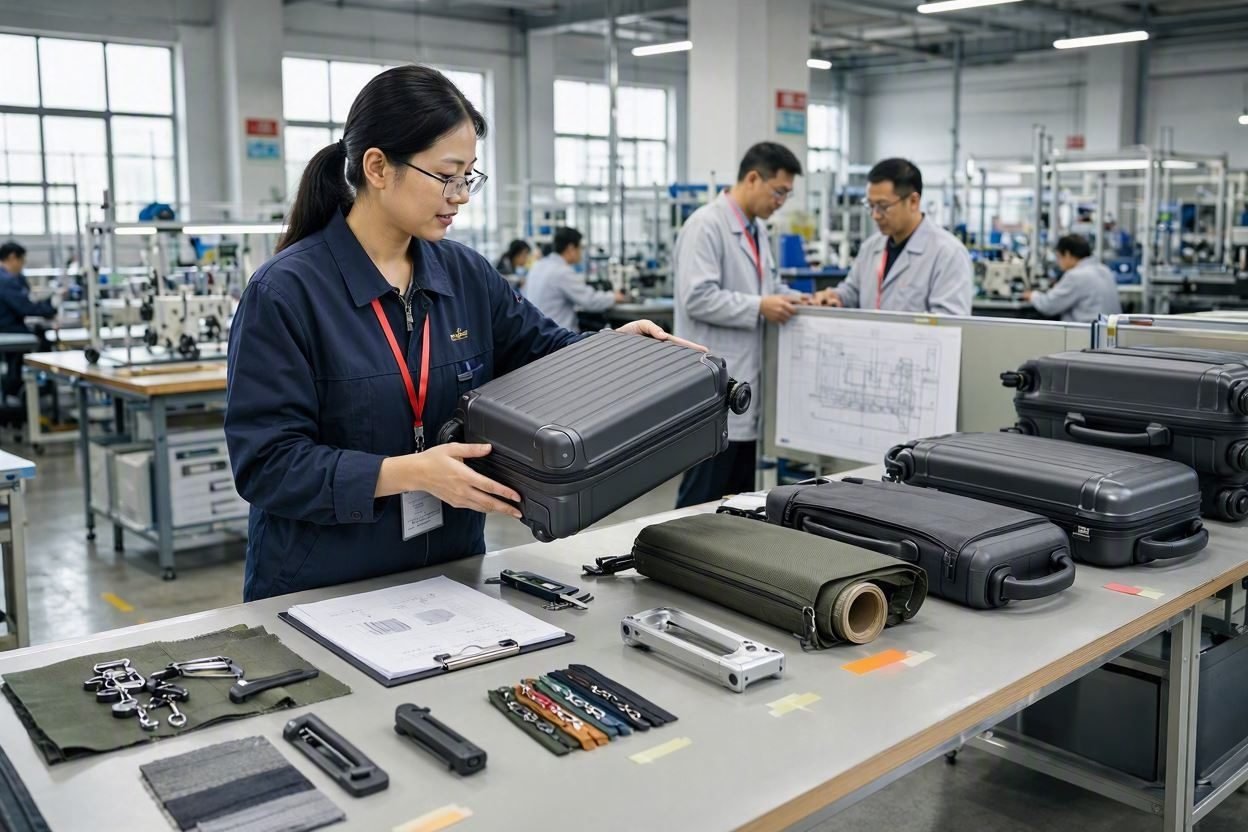
The most common materials for co-branded luggage include:
- ABS or ABS+PC blends9: Lightweight, cost-effective, durable options, popular for injection molding unique shapes.
- RPET: An eco-conscious recycled plastic, especially appealing for brands promoting sustainability.
- Fabric shells: Ideal for soft luggage designs with branding-specific textile prints.
Durability testing and suitability for long-haul use10 should guide material choices.
How can brands ensure designs align with feasible production?
Travel brands should:
- Provide clear branding assets like high-resolution logos or artwork.
- Consult factories early about design limits (e.g., printing techniques or color accuracy).
- Test initial prototypes for material fit and branding visual clarity.
Balancing creativity with practical manufacturing considerations will prevent misunderstandings during sampling phases.
Too often, brands overlook the additional cost layers that come after production. Shipping fees, customs duties, and storage expenses can significantly impact overall budgets.
Consider these common expenses:
- Freight costs: International orders incur shipping fees proportional to weight and volume.
- Customs fees: Import tariffs are country-specific and depend on product classification.
- Warehousing fees: If you’re going multi-retail, ensure your distribution strategy accommodates storage needs.
Working with an experienced supply chain team will help you mitigate these added budgetary concerns.
Frequently Asked Questions
What is the smallest MOQ for branded luggage production?
Most factories impose MOQs starting from 500 units, but this can vary. Small production runs may require semi-custom solutions or partnerships with co-branded peers.
How can co-branded luggage incorporate eco-friendly designs11?
Materials like RPET (recycled PET plastic) offer sustainable options. Brands can also focus on reducing packaging waste and promoting long lifecycle durability.
Can logos and intricate artwork be applied to luggage effectively?
Yes, printing techniques like digital UV printing12 or embossing can apply detailed visuals to both hard-shell and fabric luggage. Sampling is critical for verifying results.
What happens if production delays occur?
Brands can reduce risks through clear early agreements with manufacturers, realistic timelines, and backup plans for launch events or retail rollouts.
Does co-branded luggage require upfront payment?
Most factories require upfront deposit payments (often 30–50%) followed by final payments after production completion.
Conclusion
Producing co-branded souvenir luggage for travel and tourism brands is an exciting way to engage customers and boost brand visibility. However, success requires managing key challenges like MOQ thresholds, realistic timelines, material feasibility, and logistics costs. By staying informed and collaborating effectively with qualified suppliers, brands can launch standout products that customers treasure.
Ready to explore how your travel brand can start its co-branded luggage journey? Contact us today to learn about design options, production timelines, and tailored solutions!
"Minimum Order Quantity (MOQ): What It Means ...", https://www.finaleinventory.com/blog/guides/minimum-order-quantity-moq/. Research on manufacturing processes highlights that minimum order quantities and production complexities are critical considerations for custom product development, including luggage. Evidence role: general_support; source type: research. Supports: The importance of MOQ requirements and production challenges in co-branded luggage projects.. ↩
"19 CFR § 24.12 - Customs fees; charges for storage.", https://www.law.cornell.edu/cfr/text/19/24.12. Government trade resources outline common logistics costs, including shipping, customs duties, and storage fees, that can significantly affect the total cost of international product distribution. Evidence role: statistic; source type: government. Supports: The impact of shipping fees, customs duties, and storage expenses on overall budgets for international product manufacturing.. Scope note: Specific costs may vary by country and product type. ↩
"The impact of symmetry design of intangible cultural heritage ...", https://pmc.ncbi.nlm.nih.gov/articles/PMC9446451/. Studies in consumer psychology suggest that branded merchandise can enhance emotional engagement by associating products with memorable experiences. Evidence role: expert_consensus; source type: paper. Supports: The role of branded merchandise, like luggage, in fostering emotional connections with customers.. ↩
"How to Build Brand Awareness from the Ground Up", https://online.hbs.edu/blog/post/brand-awareness. Case studies from tourism marketing institutions show that branded travel accessories can serve as mobile advertisements, increasing brand exposure globally. Evidence role: case_reference; source type: institution. Supports: The potential of branded travel products to enhance international brand visibility.. Scope note: The effectiveness may vary depending on the scale of distribution and design appeal. ↩
"Minimum Order Quantity (MOQ) – Formula, Benefits & Tips", https://www.slimstock.com/blog/minimum-order-quantity/. Educational resources on manufacturing economics explain that MOQs are set to cover fixed costs and optimize production efficiency. Evidence role: mechanism; source type: education. Supports: The rationale behind manufacturers setting MOQ thresholds for cost efficiency.. ↩
"Polyethylene Terephthalate (PET) Bottle-to-Bottle Recycling ...", https://pmc.ncbi.nlm.nih.gov/articles/PMC9231234/. Research on recycled materials highlights RPET as a sustainable option widely used in eco-friendly product manufacturing, including luggage. Evidence role: general_support; source type: research. Supports: The eco-conscious nature of RPET and its appeal to sustainability-focused brands.. ↩
"MOQ: What is it and what are its advantages?", https://www.ar-racking.com/us/blog/moq-what-is-it-and-what-are-its-advantages/. Research on collaborative manufacturing highlights that small businesses can pool orders to meet MOQ requirements, reducing individual costs. Evidence role: case_reference; source type: research. Supports: The strategy of partnering with other businesses to meet MOQ requirements in manufacturing.. Scope note: Effectiveness depends on the alignment of design and production needs among partners. ↩
"How Long Does Custom Packaging Take? 2-4 Week ...", https://originalitypack.com/how-long-does-custom-packaging-take-real-production-timeline/. Industry research indicates that custom product manufacturing, including luggage, often requires 5–6 months from concept to delivery, depending on complexity and supply chain factors. Evidence role: statistic; source type: research. Supports: The typical timeline for designing, producing, and delivering custom luggage.. Scope note: Timelines may vary based on specific manufacturer capabilities and order size. ↩
"Luggage Materials: Polypropylene vs Polycarbonate vs ABS", https://travelpro.com/pages/luggage-guide-to-shell-materials. Encyclopedic entries on polymer materials describe ABS and ABS+PC blends as lightweight, durable, and cost-effective, making them suitable for luggage production. Evidence role: definition; source type: encyclopedia. Supports: The properties and common applications of ABS and ABS+PC blends in luggage manufacturing.. ↩
"Most Durable Luggage Materials in 2025: Lab-Tested ...", https://eumeworld.com/blogs/news/the-most-durable-luggage-materials-a-lab-tested-breakdown?srsltid=AU7gw4XEbuP_V63h_li3j-sLC2Z4EAcj3PoEjdY1M5fbnR7_F1lJa0VR. Institutional guidelines for travel product manufacturing emphasize the need for rigorous durability testing to ensure suitability for long-haul use. Evidence role: expert_consensus; source type: institution. Supports: The importance of durability testing and long-haul suitability in selecting materials for luggage.. ↩
"Sustainable Product Design: Sustainable design principles", https://guides.library.illinois.edu/c.php?g=347670&p=2344606. Research on sustainable manufacturing practices identifies RPET and reduced packaging waste as effective strategies for eco-friendly product design. Evidence role: general_support; source type: research. Supports: The use of RPET and reduced packaging waste as strategies for eco-friendly luggage design.. ↩
"UV Printing Machines for Luggage and Bags | Yotta", https://yottaprinters.com/luggage-bags.html. Educational materials on printing technologies explain that digital UV printing is suitable for detailed designs on various surfaces, including hard-shell and fabric materials. Evidence role: mechanism; source type: education. Supports: The effectiveness of digital UV printing for applying detailed visuals to luggage.. Scope note: Effectiveness may depend on the specific material and design complexity. ↩