


What Should You Check Before Choosing a Luggage Supplier for Wholesale & Export in 2026?
Selecting the right luggage supplier for wholesale and export isn't just about finding competitive pricing or creative designs; it demands careful attention to production consistency, material quality, and realistic lead times. By thoroughly vetting suppliers, you can avoid costly mistakes and ensure smooth operations for your growing business.
To choose the right luggage supplier for wholesale and export in 2026, prioritize key factors such as production consistency, material sustainability, delivery capacity, and quality assurance processes. Perform due diligence through factory audits, reputation checks, and testing to ensure long-term reliability.
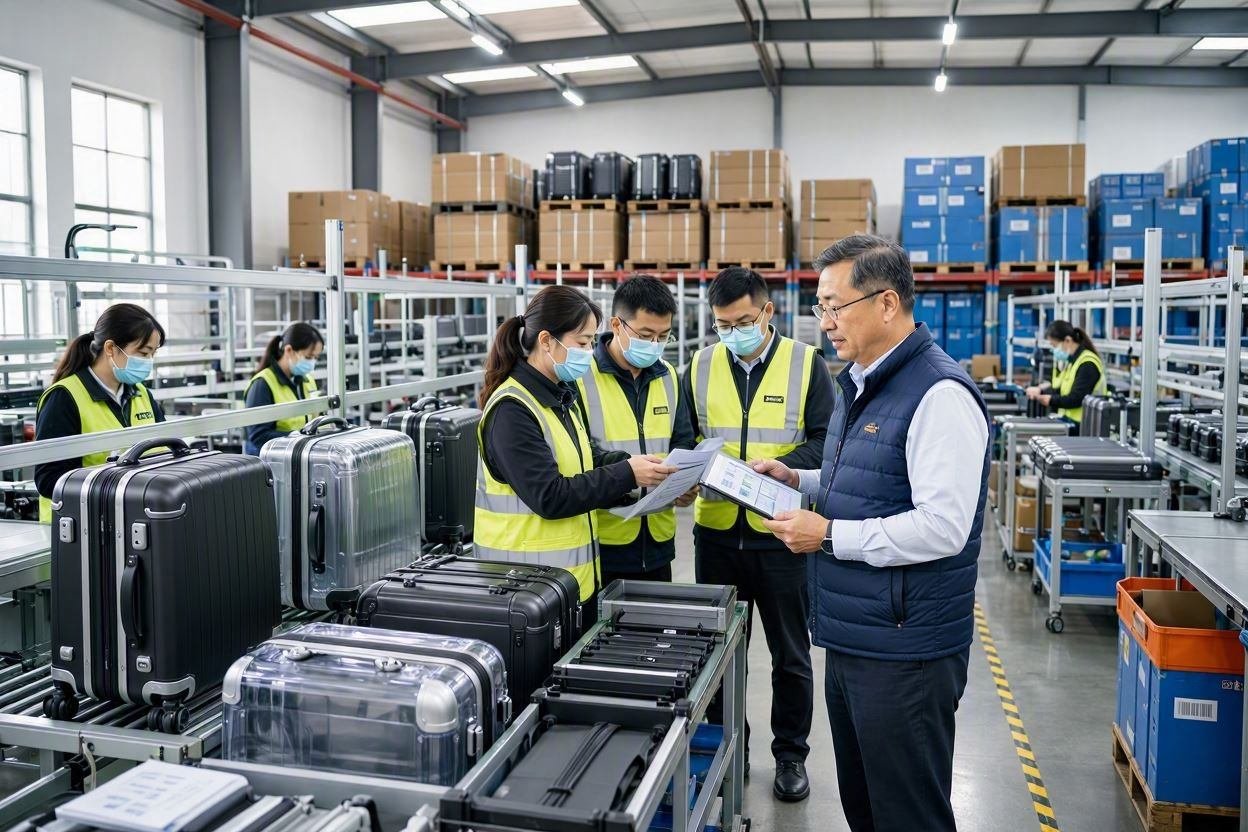
A thoughtful selection process will protect your business from common pitfalls such as inconsistent production, hidden material costs, or unrealistic delivery promises. Let’s break down the critical checks to keep your procurement process efficient and effective.
Why Is Production Consistency Crucial?
The problem with flashy samples is that they don’t guarantee consistency in mass production. What you see in the showroom isn’t always what you end up receiving.
Evaluating production consistency ensures that the quality of samples aligns with bulk production, minimizing risks like mismatched specifications, uneven stitching, or material failures. Insist on random batch inspections to verify supplier reliability.
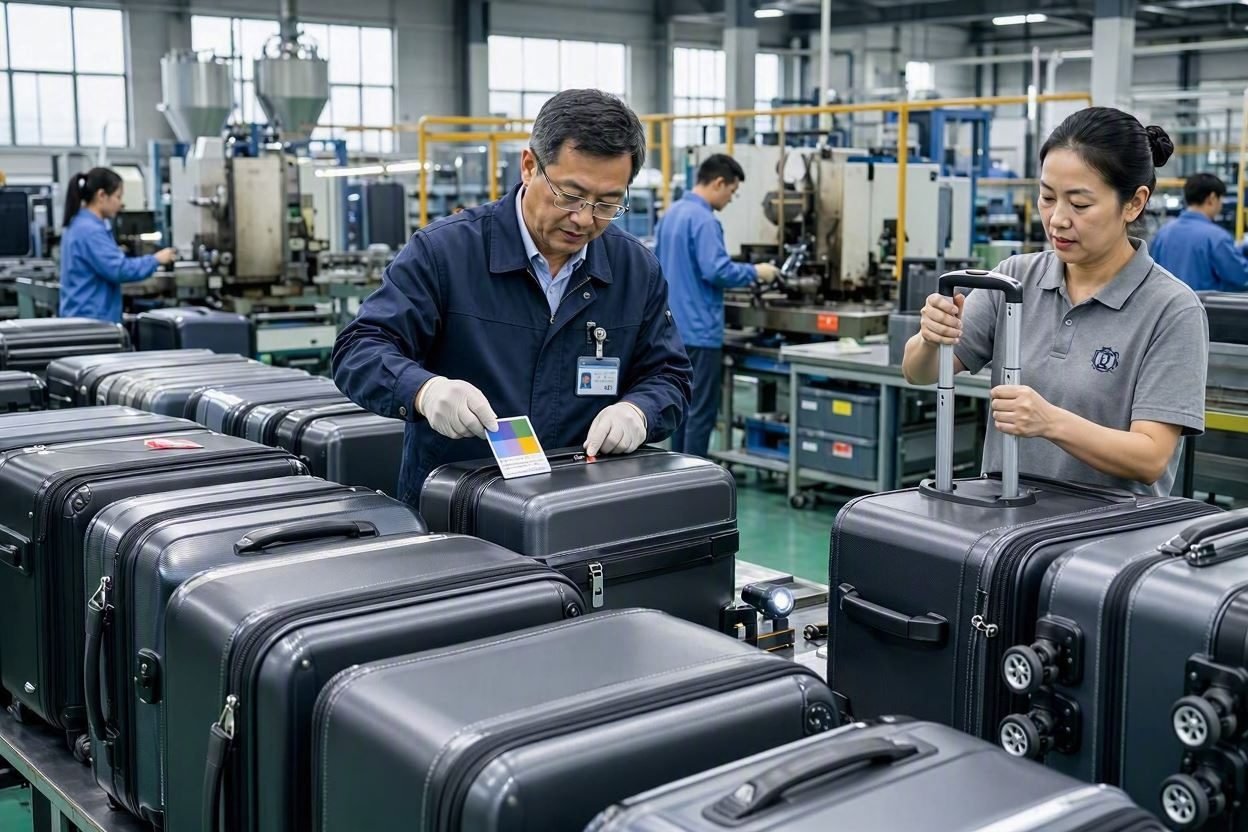
How Do You Spot Red Flags in Production?
Here’s where hands-on checks matter. I’ve seen samples that looked flawless, only to discover issues in mass production—color mismatches, broken zippers, or weaker stitching in cost-optimized bulk output. Common red flags include:
- Sudden changes in materials or manufacturing processes after sample approval.
- Limited capacity to handle large orders without delays.
- Overreliance on subcontractors or third-party factories.
Request a production-line tour or a video audit (if travel isn’t feasible) and scrutinize the supplier’s process for consistency. Be sure to check their response time to quality disputes when something goes wrong.
Actionable Tip: Use Sample-to-Batch Testing
Insist on pre-production testing, where samples from random batches are compared to your initial prototype. Tools like stitching strength testers can ascertain durability1 before approving the production run.
Why Should You Evaluate Material Sustainability?
Sustainability isn’t just an eco-friendly buzzword; in regions like Europe, regulatory pressure around sustainable materials is growing2. Choosing unsustainable luggage materials can limit your market access.
Ask your supplier for verifiable certifications like GRS (Global Recycled Standard)3 or RPET material documentation4. These certifications prove compliance with eco-friendly standards for fabrics and plastics.

What Are Common Mistakes Around Material Evaluation?
It’s tempting to prioritize low-cost offers, but I’ve seen buyers overlook sustainability trade-offs: opting for cheaper ABS materials5 instead of recycled blends (e.g., RPET) without realizing market consequences. Justifying "budget wins" in premium international markets is harder today than it was a decade ago.
Sustainable materials also command higher resale value6. For instance, using RPET in luggage products often enables brands to print an eco-friendly story that resonates with affluent or environmentally conscious consumers7.
Actionable Tip: Verify Certifications
Never take verbal assurances at face value. Ask for material certifications upfront, and cross-check compliant documentation with qualified third-party assessors in case of doubt.
How Can You Confirm Delivery Capacity?
Promises around lead times can be deceiving—especially in peak seasons. Suppliers may overpromise delivery schedules to secure your order but fail to deliver.
Assess lead time reliability by reviewing past delivery patterns and production capacity utilization. Insist on transparent capacity reports for both peak and off-peak seasons.

What Should You Look For During Capacity Audits?
A supplier who produces 50,000 units during high season8 might struggle under 30% capacity utilization during slower periods. Factors that directly impact capacity include:
- Machinery bottlenecks for specific materials like PP or PC blends9.
- Dependence on external logistics providers during export peaks.
- Their ability to scale labor temporarily when demand spikes.
Actionable Tip: Factory Spot Audits
Conduct spot audits or have them share video proof of current production lines during normal vs high demand periods. Match their historical data with your order requirements closely.
How Do Quality Assurance Practices Differ?
Not all suppliers have stringent quality assurance workflows. A reliable supplier prioritizes robust quality assurance frameworks—from raw material inspection to mid-line testing and pre-shipment verification.
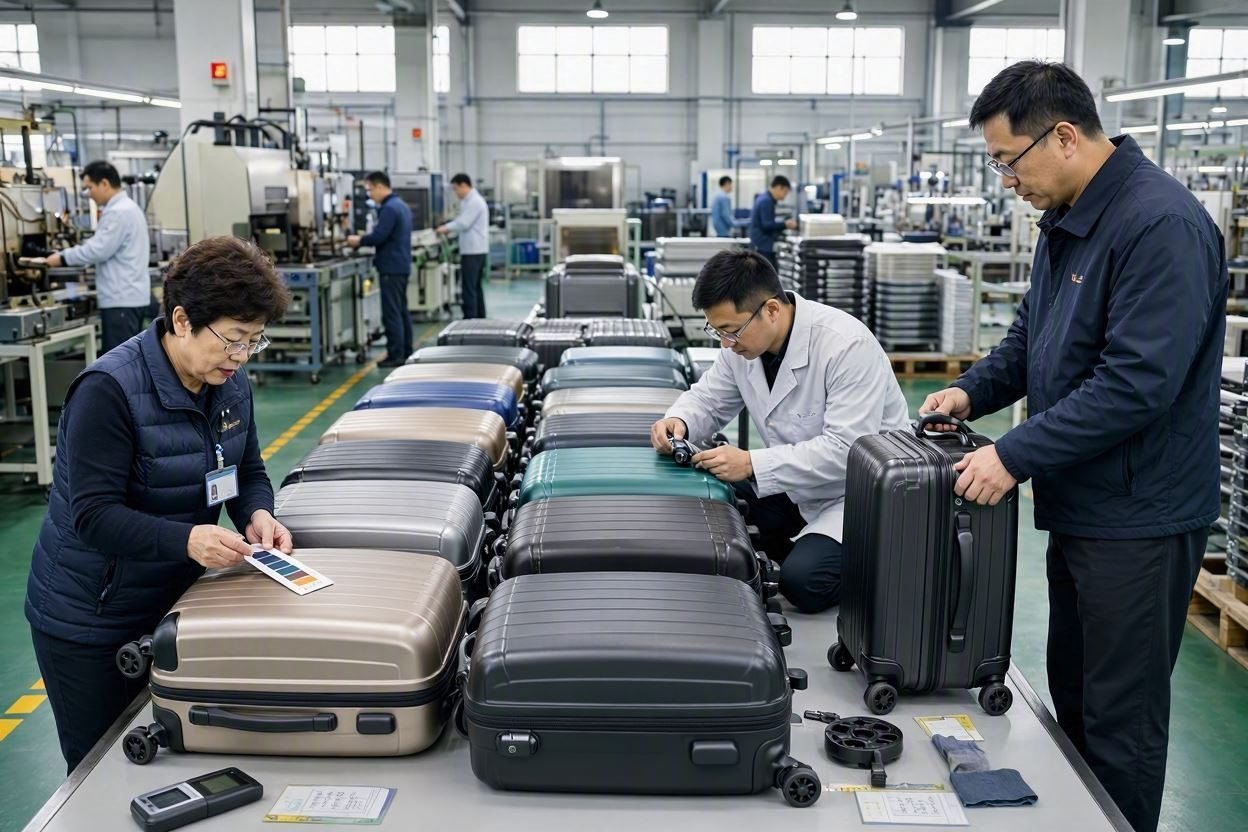
Why QA Reputation Matters
I once worked with a supplier who didn’t check a batch until after production was complete. Unsurprisingly, the entire batch failed zipper strength checks10, causing significant delays. Investing in a supplier with disciplined QA processes ensures every batch meets agreed-upon standards.
Common QA Tests to Verify
- Raw material testing: Verifying resin or metal compliance before production.
- Mid-line checks: Sampling during the stitching phase to prevent errors.
- Durability tests: Using abrasion and pull strength tests11 post-assembly.
- Pre-shipment trials: Ensuring packaging withstands transit pressures.
Frequently Asked Questions
What’s the most important quality to look for in luggage suppliers?
Focus on consistency in mass production. Consistent quality ensures that retail buyers or business customers stick with you long-term.
How can I check supplier compliance with sustainability standards?
Request certifications like GRS or RPET usage records. Most legitimate suppliers willingly provide these documents, especially for EU and US-bound markets.
Are supplier audits necessary for small businesses?
Yes, factory visits or digital audits verify capabilities, giving even small buyers confidence before committing to an order.
How do I ensure lead time promises are realistic?
Ask for capacity reports covering peak and off-peak seasons. Reliable suppliers should provide clear visual data showing their operational capacity.
Conclusion
Choosing the right luggage supplier for wholesale and export in 2026 requires a thorough evaluation of production consistency, material sustainability, delivery capacity, and quality assurance processes. These checks help mitigate potential risks while ensuring your products meet growing consumer and regulatory requirements. Don’t rush the vetting process—invest time upfront to secure reliable partnerships for the long term.
Ready to identify reliable luggage suppliers for your business needs? Reach out for expert assistance or insights into building a sustainable supply chain.
"ASTM D1683 - Seam Strength Testing", https://www.universalgripco.com/astm-d1683. International standards such as ASTM D1683 and ISO 13935 specify procedures for measuring seam strength in textiles using tensile testing equipment, providing quantitative assessment of stitching durability under controlled conditions. Evidence role: mechanism; source type: institution. Supports: Standardized seam strength testing methods exist for evaluating textile durability. ↩
"Circular Economy - Environment - European Commission", https://environment.ec.europa.eu/strategy/circular-economy_en. The European Union has implemented multiple directives under its Circular Economy Action Plan that establish requirements for sustainable materials, extended producer responsibility, and recyclability standards across consumer goods sectors. Evidence role: general_support; source type: government. Supports: EU regulatory frameworks increasingly mandate sustainable material use and circular economy principles. Scope note: These regulations apply broadly to consumer products and packaging rather than specifically targeting luggage materials ↩
"Global Recycled Standard (GRS) Certification", https://www.scsglobalservices.com/services/global-recycled-standard. The Global Recycled Standard, administered by Textile Exchange, is an international, voluntary standard that sets requirements for third-party certification of recycled content, chain of custody, social and environmental practices, and chemical restrictions. Evidence role: definition; source type: institution. Supports: GRS is an internationally recognized product standard for verifying recycled content. ↩
"Polyethylene terephthalate", https://en.wikipedia.org/wiki/Polyethylene_terephthalate. RPET (recycled polyethylene terephthalate) is polyester material produced from recycled plastic bottles and containers, commonly used in textile applications as an alternative to virgin polyester fiber. Evidence role: definition; source type: encyclopedia. Supports: RPET refers to recycled polyethylene terephthalate derived from post-consumer plastic. ↩
"Acrylonitrile butadiene styrene", https://en.wikipedia.org/wiki/Acrylonitrile_butadiene_styrene. Acrylonitrile butadiene styrene (ABS) is a common thermoplastic polymer known for its impact resistance, toughness, and rigidity, widely used in manufacturing hard-shell luggage, automotive components, and consumer electronics housings. Evidence role: definition; source type: encyclopedia. Supports: ABS is a thermoplastic polymer used in rigid consumer products. ↩
"Consumer Willingness to Pay for Sustainable Products", https://researchconnect.buffalo.edu/en/publications/consumer-willingness-to-pay-for-sustainable-products/. Multiple consumer behavior studies have documented that significant segments of consumers, particularly in developed markets, express willingness to pay price premiums for products with verified environmental credentials, though actual purchasing behavior shows more modest premiums than stated preferences. Evidence role: general_support; source type: research. Supports: Consumer research indicates willingness to pay premium prices for sustainable products. Scope note: Research findings on stated willingness to pay often exceed actual purchasing behavior, and premiums vary significantly by product category and market segment ↩
"Environmental Consciousness, Purchase Intention, and Actual ...", https://pmc.ncbi.nlm.nih.gov/articles/PMC10093960/. Consumer research literature documents that environmental concern influences purchasing decisions for certain consumer segments, with higher education and income levels often correlating with stated environmental values, though the attitude-behavior gap remains a consistent finding across studies. Evidence role: general_support; source type: research. Supports: Research identifies environmental concern as a factor in consumer purchasing decisions, with variation by demographic segments. Scope note: The relationship between environmental attitudes and actual purchasing behavior is complex and mediated by factors including price sensitivity, convenience, and product performance, with stated preferences often exceeding revealed preferences ↩
"Industry Standards-Luggage Knowledge - CLK", https://www.clkluggage.com/articles/industry-standards.html. Luggage manufacturing operations range from small workshops producing hundreds of units monthly to large factories with capacity exceeding 100,000 units per month, with capacity determined by automation level, workforce size, and product complexity. Evidence role: general_support; source type: other. Supports: Luggage manufacturing facilities vary widely in production capacity. Scope note: Industry capacity benchmarks are not standardized and vary significantly by product type, manufacturing method, and regional labor practices ↩
"Polycarbonate", https://en.wikipedia.org/wiki/Polycarbonate. Polypropylene (PP) and polycarbonate (PC) are thermoplastic polymers with different melting points, processing temperatures, and mechanical properties; PP offers chemical resistance and flexibility while PC provides higher impact strength and transparency, each requiring specific molding equipment and parameters. Evidence role: definition; source type: encyclopedia. Supports: PP and PC are distinct thermoplastic materials with different processing requirements. ↩
"Zipper Testing & Standards", https://lenzip.com/zipper-testing-standards/. ASTM D2061 specifies standard test methods for measuring zipper strength, including procedures for testing slider and chain strength, dimensional stability, and operational durability under repeated cycling, providing quantitative metrics for quality assessment. Evidence role: mechanism; source type: institution. Supports: Standardized testing methods exist for evaluating zipper performance. ↩
"Testing luggage", https://www.satra.com/spotlight/article.php?id=482. Standards organizations including ASTM International and ISO have established test methods for abrasion resistance (such as ASTM D4966 and ISO 12947) and tensile strength (including ASTM D5034 and ISO 13934) that provide reproducible procedures for evaluating material durability. Evidence role: mechanism; source type: institution. Supports: Standardized abrasion and tensile testing methods exist for textile and material evaluation. ↩