

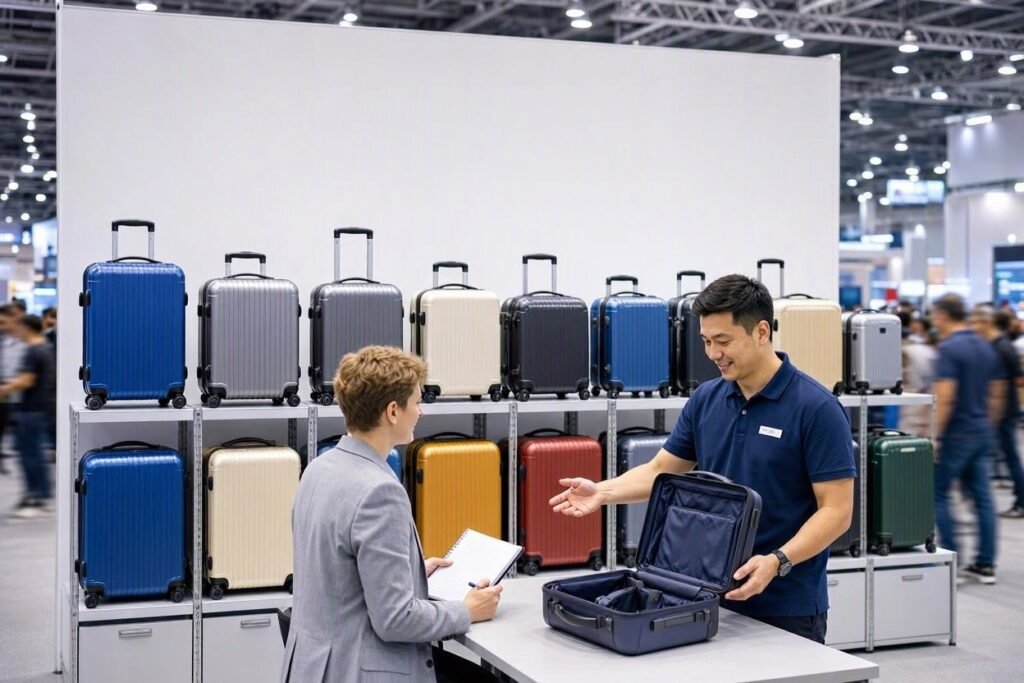
Attending a trade show is an excellent opportunity to meet luggage manufacturers face-to-face, but the right questions often go unasked. If you're an importer, a small brand owner, or a distributor evaluating manufacturers, asking insightful questions upfront can reveal production flexibility, customization limits, and payment terms. These queries are key to finding a supplier that meets your unique business needs.1
To make the most of trade show meetings, ask manufacturers about logistics efficiency, order scaling capabilities, customization constraints, and eco-material production challenges. These tailored questions uncover potential roadblocks and ensure alignment with your goals.

When meeting a manufacturer at their trade show booth, balancing curiosity with precision ensures you leave with actionable insights. Below are specific questions you should be asking to clarify capabilities, avoid miscommunications, and assess their suitability for your business needs.
How flexible is the manufacturer with logistics and order scaling?
Ensuring smooth logistics and manageable order quantities is often a challenge for importers and growing businesses.2
Ask directly about minimum order quantities (MOQs) and their flexibility in scaling production and shipping. The manufacturer's terms on logistics will impact scalability and operational efficiency, especially if you're planning to grow a product line.

Most manufacturers have set MOQs tied to their production efficiency.3 However, flexibility varies. Importers planning for fluctuating market demand should verify whether scaling options are available for larger or smaller orders. International logistics is another topic often overlooked—questions like shipping partners, lead times under different circumstances, and costs for varied destinations should take priority.
Additional queries to consider include:
- What are your standard MOQs, and do you offer flexibility?
- How do you handle split shipments or phased production?
- Do you work with reliable freight services for global delivery?
An example of missed opportunities: two years ago at a trade show in Shanghai, I met an importer who overlooked logistics efficiency while negotiating MOQs. They later discovered shipping delays from this supplier added months to their timeline. Asking specific logistics questions early would have prevented this costly issue.
Can customization meet your brand's design vision?
Customization is a core priority for small brands aiming to differentiate themselves with tailored luggage designs.4
Ask manufacturers about their design feasibility, material compatibility, and their process for customization, including mold creation, sampling, and production timelines. This helps prevent expensive misunderstandings.

Customization is often more complicated than it appears. Many brands assume their designs can be adapted without knowing critical limitations.5 For instance, incorporating eco-materials or unique color patterns can affect mold setup, production timing, and final costs. Manufacturers should clarify whether designs require specialized machinery or involve limitations tied to industry standards.
Specific questions worth asking include:
- What is your full customization process, from prototyping to finished goods?
- Are there restrictions on material options for the luggage designs I have in mind?
- How does mold creation or modification impact costs and timelines?
For example, I recall a small brand owner who requested unique metal corner reinforcements on luggage. The supplier explained on-site at the Canton Fair that this tweak would require custom molds, raising their sample costs by over 30%. Such details are vital to uncover early.
Are payment terms negotiable?
Payment terms remain a sticking point in supplier negotiations.6 Many buyers assume terms are easily flexible, only to discover strict financial policies later.
Clarify payment terms during initial discussions to avoid surprises. Focus on deposit percentages, payment schedules, and currency transactions upfront. These details impact budgets and cash flow management for orders.

While some suppliers might budge on deposit percentages, many set strict terms aligned with their financial policies and operational risks. For larger purchases, ask about tiered payment models based on production phases or quantity thresholds. For smaller orders, inquire about whether advance payments can secure priority scheduling. Manufacturers also vary widely in accepted currencies and transaction channels, so clarifying these is crucial for cross-border orders.
Key questions to ask include:
- What percentage deposit do you require to start production?
- Is it possible to structure payments across production stages?
- What currencies or payment methods are accepted for international buyers?
While payment flexibility sounds ideal, it’s frequently limited in practice. Trade shows provide a great opportunity to gauge a supplier’s responsiveness on this topic.7
What are common production constraints buyers overlook?
Production challenges—such as material processing limits or timing setbacks—are often understated during trade show conversations.
Ask manufacturers about constraints related to eco-material handling, mold setup fees, or specific production bottlenecks affecting timelines and budgets. This ensures transparency.
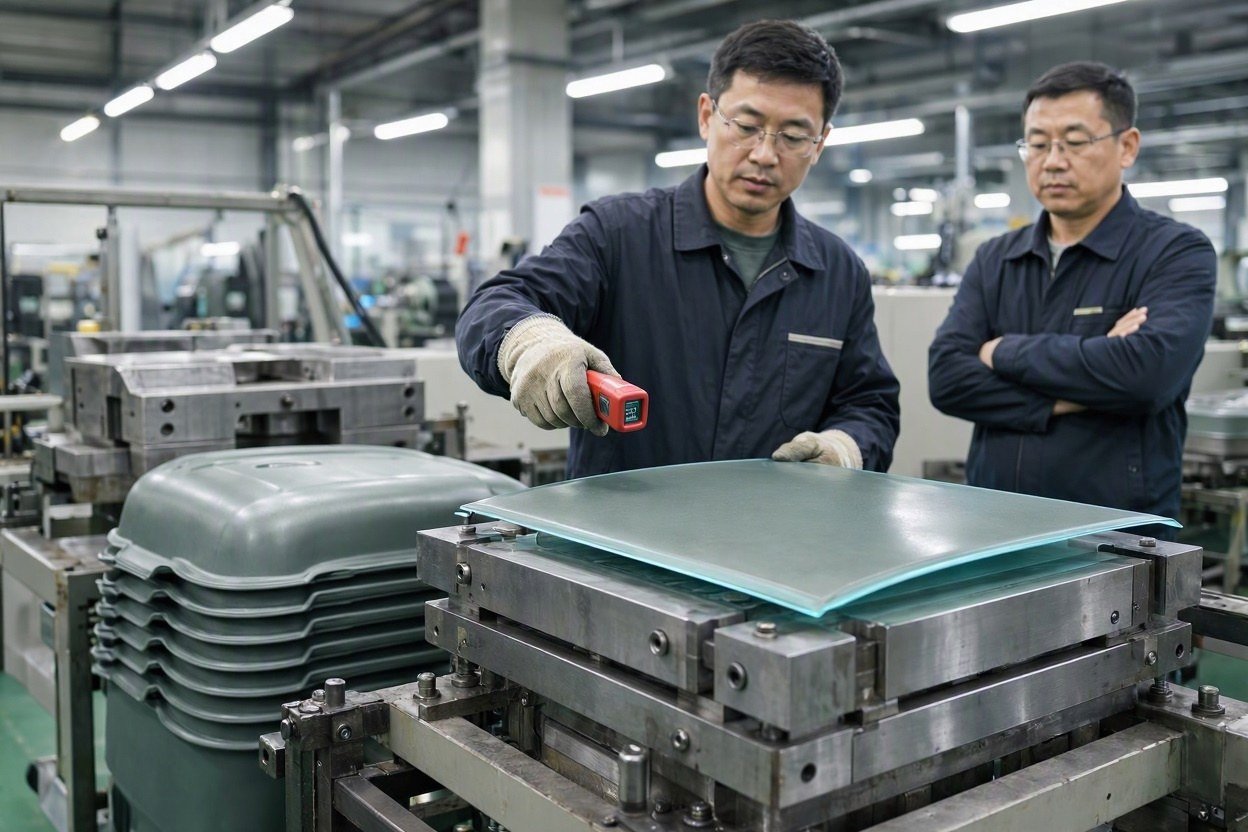
Eco-friendly luggage, for example, has surged in demand, but handling recycled materials (like RPET or biodegradable plastics) requires stricter processes that extend lead times.8 Mold setups are another overlooked issue. Fees for tooling adjustments or new mold creation can add to upfront development costs.
To gain clarity, ask questions such as:
- How do eco-friendly materials impact your production efficiency?
- What lead times apply to mold creation or material modifications?
- What fee structures exist for out-of-standard setups?
Real trade show exchanges drive this home. One distributor I spoke with had committed to an eco-friendly product line without asking about RPET material challenges at the fair. Once manufacturing began, they discovered delays stemming from temperature-specific handling requirements.
Frequently Asked Questions
Why are MOQs important to discuss at trade shows?
MOQs decide the minimum units you can order, directly influencing your ability to scale. MOQs often tie to manufacturers’ production efficiency, and negotiating flexibility upfront ensures alignment with your market demand.
How do mold creation fees impact project budgets?
Custom molds can add significant upfront costs—any additional tweaks also increase sampling time.9 If customization is critical for your brand, clarify mold processes with suppliers before committing.
What should you ask about eco-friendly materials?
Ask about material certification, handling constraints, production timelines, and cost premiums. These complexities can affect project feasibility.
Are payment terms universally flexible?
No. Payment terms often reflect the supplier’s operational structure. Clarify deposit percentages, accepted currencies, and payment schedules before negotiating contracts.
Face-to-face interactions allow buyers to ask detailed, tailored questions.10 Manufacturers can explain constraints or requirements directly, avoiding costly miscommunications later.
Conclusion
Trade shows are ideal for evaluating luggage manufacturers, but meaningful interactions stem from asking thoughtful and practical questions. Prioritize inquiries about logistics efficiency, customization options, payment terms, and production constraints to make informed decisions. The effort spent clarifying these elements now can save significant time and resources later. If you're preparing for your next trade show, make sure your questions align with your specific business goals.
Looking to start your search for reliable suppliers who prioritize quality and communication? Contact us for an introduction to trusted luggage manufacturers with proven track records in global trade.
"Supplier Selection and Assessment: Their Impact on Business ...", https://digitalcommons.usu.edu/cgi/viewcontent.cgi?article=1270&context=manage_facpub. Research on supplier evaluation methods highlights that asking specific questions during initial meetings can improve alignment with business goals, though outcomes depend on the supplier's transparency and the buyer's negotiation skills. Evidence role: general_support; source type: research. Supports: The importance of asking tailored questions to suppliers to identify their suitability for business needs.. Scope note: The effectiveness of this approach may vary based on the supplier's willingness to disclose detailed information. ↩
"Biggest Challenges Global Importers Face in 2026", https://gccoverseas.com/biggest-challenges-global-importers/. Studies on global trade logistics indicate that small businesses often struggle with minimum order quantities and shipping inefficiencies, which can hinder scalability and operational efficiency. Evidence role: general_support; source type: research. Supports: The challenges importers and growing businesses face with logistics and order quantities.. Scope note: The findings may not apply universally across all industries or regions. ↩
"Raw Material Minimum Order Quantity Optimization", https://dspace.mit.edu/bitstream/handle/1721.1/121302/1240293813-MIT.pdf?sequence=1. Research on manufacturing economics explains that MOQs are often established to optimize production runs and reduce per-unit costs, though exceptions exist for custom or small-scale orders. Evidence role: mechanism; source type: research. Supports: The connection between minimum order quantities and production efficiency in manufacturing.. Scope note: The relationship may vary depending on the manufacturing sector and specific production methods. ↩
"Should Your Business Offer Customized Products?", https://www.business.com/articles/customized-products-small-business/. Market analysis shows that small brands often prioritize customization to create unique products and compete in niche markets, though the extent of customization depends on budget and target audience. Evidence role: general_support; source type: research. Supports: The importance of customization for small brands in differentiating their products.. Scope note: The emphasis on customization may vary across industries and market segments. ↩
"Is Manufacturing Being Overlooked?", https://scet.berkeley.edu/is-manufacturing-being-overlooked/. Case studies in product design highlight that brands frequently underestimate manufacturing constraints, leading to delays and increased costs during production. Evidence role: case_reference; source type: research. Supports: The tendency of brands to overlook critical design limitations during manufacturing discussions.. Scope note: The examples may not represent all manufacturing sectors or design types. ↩
"How to negotiate payment terms with your suppliers - Sage", https://www.sage.com/en-us/blog/negotiating-payment-terms/. Research on international trade highlights that payment terms are a frequent point of contention in supplier negotiations, often due to differing financial policies and risk management strategies. Evidence role: general_support; source type: research. Supports: The challenges payment terms pose in supplier negotiations.. Scope note: The findings may vary based on the size and location of the supplier and buyer. ↩
"Avoid Hidden Costs of Extending Supplier Payment Terms", https://www.bcg.com/publications/2024/avoid-hidden-costs-of-extending-supplier-payment-terms. Trade show studies suggest that face-to-face interactions can improve clarity on payment terms, though outcomes depend on the supplier's willingness to negotiate. Evidence role: general_support; source type: research. Supports: The effectiveness of trade shows in assessing supplier responsiveness on payment terms.. Scope note: The effectiveness may vary based on the trade show format and the supplier's policies. ↩
"The Environmental Trade-offs of Biodegradable Plastics", https://environment.yale.edu/news/article/environmental-trade-offs-biodegradable-plastics. Studies on sustainable manufacturing show that recycled materials often require specialized handling and processing, which can increase production lead times. Evidence role: mechanism; source type: research. Supports: The stricter processes required for handling recycled materials like RPET or biodegradable plastics.. Scope note: The impact on lead times may vary depending on the material type and manufacturing technology. ↩
"Cost-Benefit Assessment of Additive Manufacturing for ...", https://docs.nlr.gov/docs/fy26osti/93799.pdf. Research on product development indicates that custom molds often involve high upfront costs and extended sampling times due to design adjustments and tooling requirements. Evidence role: mechanism; source type: research. Supports: The cost and time implications of custom molds in manufacturing.. Scope note: The extent of these impacts may vary by industry and product complexity. ↩
"The power of face to face communication", https://www.iese.edu/standout/face-to-face-conversations-power/. Research on business communication highlights that in-person meetings often facilitate more detailed and tailored discussions compared to remote interactions. Evidence role: general_support; source type: research. Supports: The benefits of face-to-face interactions for asking detailed questions to suppliers.. Scope note: The effectiveness may depend on the communication skills of both parties. ↩