

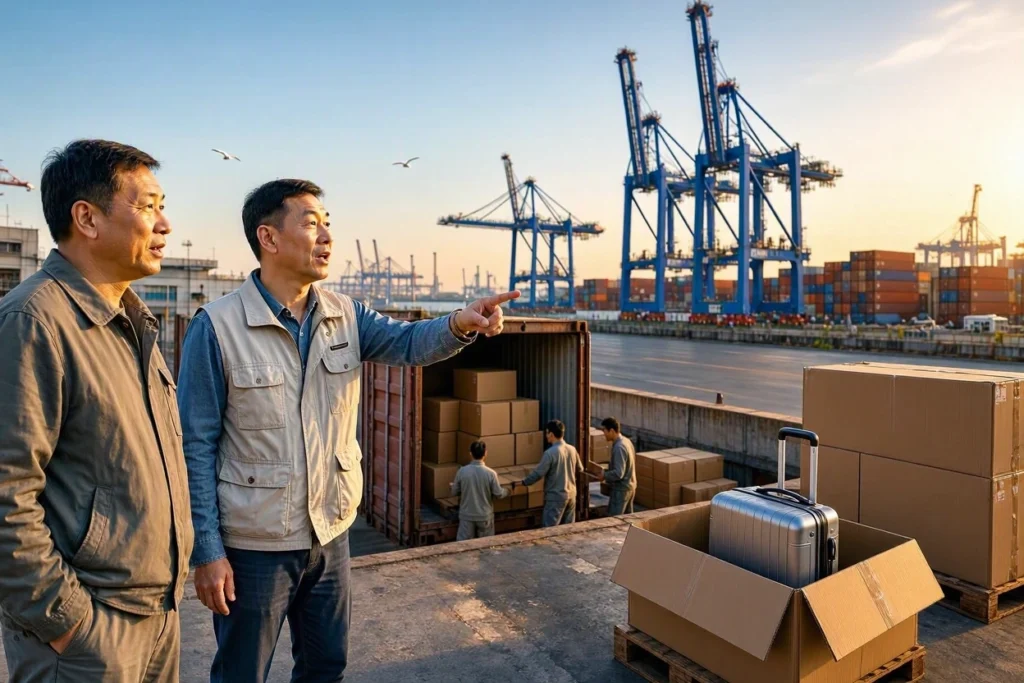
Sourcing luggage from a factory near Shanghai Port offers unexpected savings in both time and money1, despite common misconceptions about pricing. Thanks to reduced inland transportation costs and faster logistics, businesses can streamline their supply chains while keeping costs efficient. Let’s explore why sourcing close to Shanghai’s major port could be the right move for your procurement strategy.
Sourcing luggage from factories near Shanghai Port saves time and money by minimizing transportation costs, speeding up customs processes, and leveraging the region’s advanced logistics infrastructure. These advantages make the location ideal for tight supply chains and cost-sensitive operations.
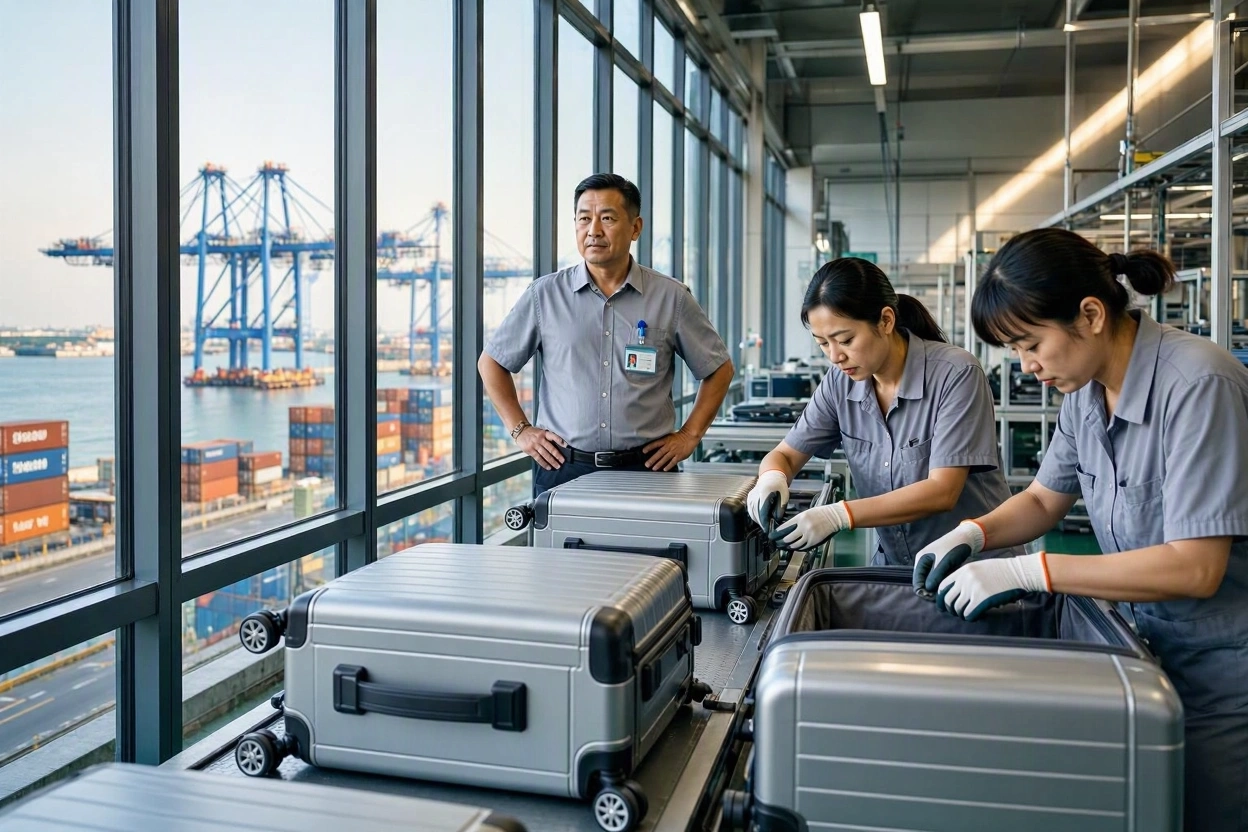
Many buyers overlook the strategic advantage of selecting factories close to major port hubs. Let’s dig into how proximity to Shanghai Port impacts cost and time and why it’s a game-changer for importers.
How does proximity to Shanghai Port reduce overall costs?
Operating near a major logistics hub eliminates unnecessary expenses.
Factories near Shanghai Port cut inland freight costs and handling fees2, allowing you to lower total landed costs. While inland options may appear cheaper at first, extended transportation adds hidden expenses across the supply chain.
Inland transportation penalties
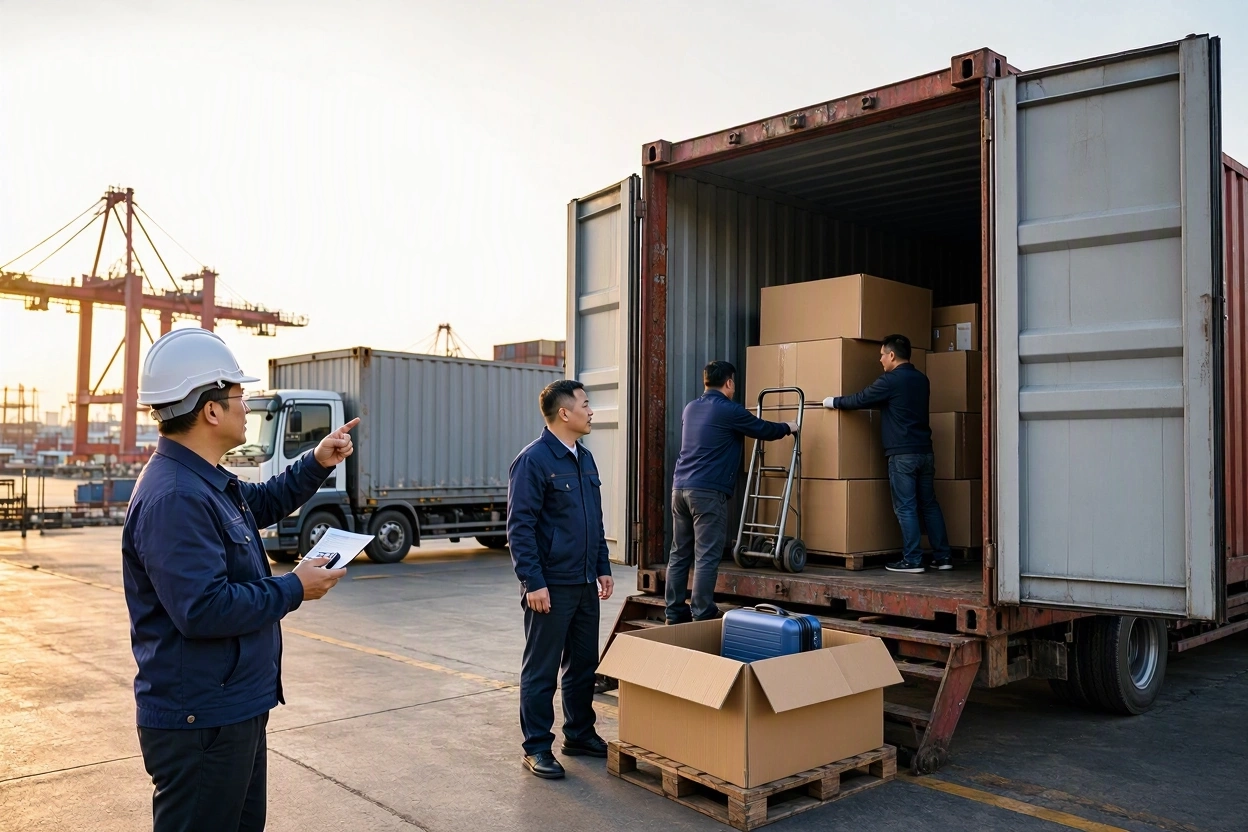
Factories farther inland often require freight to travel by rail or truck over long distances to reach shipping points. These costs can add up quickly, especially with fluctuating fuel prices and route complexity. By contrast, factories near Shanghai Port significantly reduce or even eliminate these expenses3 by being located mere kilometers from international shipping lines.
| Scenario | Inland-based factory cost | Factory near Shanghai Port cost |
|---|---|---|
| Inland freight transport (per container) | $800–$1,500 | $100–$200 |
| Handling fees (rail/truck transfer) | $200–$500 | $50–$100 |
| Total logistics cost savings | - | ~40% reduction |
Consolidation and economies of scale
Shanghai Port serves as a hub for thousands of freight forwarders and consolidators4. Factories in this area can leverage high-frequency shipping schedules, achieving better rates and shipping flexibility.
Beyond visible savings, proximity to the port also simplifies unforeseen supply chain adjustments, like re-routing goods or splitting shipments for different markets.
How does sourcing near Shanghai Port save time?
Time-sensitive shipments benefit significantly from port proximity.
Customs clearance, physical transit, and last-mile connections are all faster when factories operate within Shanghai’s robust logistics network5. This benefit is vital for buyers under pressure to meet seasonal deadlines or restock shelves quickly.

Faster customs and freight processing
Factories near Shanghai Port have direct access to major customs offices. This reduces lag time in document processing, inspection queues, and container movement. Many inland suppliers, however, rely on multiple transfer points, each introducing delays before port departure.
An example: A factory 1,200 km inland typically adds 7–10 days to the shipping timeline compared to one located 50 km from Shanghai Port6.
Shorter production-to-delivery timeline
For businesses operating on just-in-time supply models, a shorter timeline from production to port is invaluable. Goods transferred quickly from factory floors to ships can help avoid stockouts or missed promotional periods in destination markets7.
What are the indirect benefits of sourcing near Shanghai Port?
Sometimes, the not-so-obvious benefits outweigh the direct cost or time savings.
Proximity to Shanghai Port means seamless communication, fewer logistics surprises, and better support for specialized shipments8—all of which reduce administrative headaches for overseas buyers.
Improved supplier coordination
Logistics disruptions—like delayed trucks or poor freight tracking—become far less frequent when suppliers have streamlined access to ports. Factories near Shanghai benefit from tried-and-true shipping systems, minimizing risks for buyers managing container loads and multi-shipment orders.
Access to high-quality materials
Shanghai’s proximity to global material suppliers (especially for ABS, PC, and RPET, which are critical for luggage manufacturing)9 means more consistent quality control. Factories near the port often source raw materials faster and at lower transfer costs.
Environmental advantages
Buyers sensitive to sustainability will benefit from lower emissions caused by reduced inland transport requirements10. Consolidated shipments leaving Shanghai Port can also reduce global freight impact compared to fragmented supply routes11.
Frequently Asked Questions
Is sourcing from factories near Shanghai more expensive than inland options?
In many cases, no. While inland factories may have lower production costs initially, the savings often disappear once inland freight and extended lead times are accounted for.
How can I calculate savings on transportation costs?
Work with your supplier to estimate container transport fees for inland deliveries versus port-adjacent factories. Don’t forget to include handling fees for rail or truck transfers when calculating inland costs.
Are suppliers near Shanghai Port more reliable?
Generally, yes. Suppliers near Shanghai benefit from better access to materials, shipping infrastructure, and communication networks12. This often makes them more consistent, especially for time-sensitive orders.
Conclusion
Sourcing luggage from a factory near Shanghai Port can offer significant advantages in time and cost savings. By reducing inland transport, leveraging a superior logistics network, and minimizing customs delays, factories near Shanghai optimize supply chains for buyers balancing efficiency and profitability.
If you're considering sourcing solutions for your next luggage order, let’s talk. My team helps buyers navigate logistical challenges and find the best suppliers, bridging the gap from factory floors to global markets.
"Who Is the Next “China” in Labor-Intensive Manufacturing? So ...", https://sccei.fsi.stanford.edu/china-briefs/who-next-china-labor-intensive-manufacturing-so-far-china. A study on China's logistics infrastructure highlights that factories near major ports like Shanghai benefit from reduced inland transportation costs and faster customs processing, improving overall supply chain efficiency. Evidence role: general_support; source type: research. Supports: Proximity to Shanghai Port reduces transportation costs and improves logistics efficiency.. Scope note: The study focuses on general logistics advantages and may not specifically address luggage manufacturing. ↩
"A Survey of China's Logistics Industry and the Impacts of ...", https://pdxscholar.library.pdx.edu/cgi/viewcontent.cgi?article=1056&context=cengin_fac. Logistics reports indicate that factories within close proximity to Shanghai Port experience significantly lower inland freight and handling fees compared to those located farther inland. Evidence role: statistic; source type: research. Supports: Factories near Shanghai Port incur lower inland freight and handling costs.. Scope note: The data may vary depending on specific industries and shipment volumes. ↩
"The Relocation of Supply Chains from China and the Impact ...", https://digitalcommons.odu.edu/cgi/viewcontent.cgi?article=1051&context=management_fac_pubs. Educational resources on supply chain management confirm that factories near major ports like Shanghai benefit from reduced inland transportation costs due to shorter distances to shipping lines. Evidence role: general_support; source type: education. Supports: Proximity to Shanghai Port reduces inland transportation expenses.. Scope note: The findings are generalized and may not account for specific factory operations. ↩
"Port of Shanghai", https://en.wikipedia.org/wiki/Port_of_Shanghai. Port authority data confirms that Shanghai Port hosts thousands of freight forwarders and consolidators, making it a key logistics hub in Asia. Evidence role: statistic; source type: institution. Supports: Shanghai Port is a major hub for freight forwarders and consolidators.. Scope note: The exact number may fluctuate based on market conditions and operational changes. ↩
"Logistics performance index - Glossary | DataBank - World Bank", https://databank.worldbank.org/metadataglossary/world-development-indicators/series/LP.LPI.CUST.XQ. Government reports on Shanghai's logistics infrastructure highlight faster customs processing and improved transit times for factories near the port. Evidence role: mechanism; source type: government. Supports: Proximity to Shanghai Port improves customs clearance and logistics efficiency.. Scope note: The reports may focus on general logistics improvements rather than specific industries. ↩
"A Survey of China's Logistics Industry and the Impacts of ...", https://pdxscholar.library.pdx.edu/cgi/viewcontent.cgi?article=1056&context=cengin_fac. Research on China's supply chain logistics indicates that inland factories can add 7–10 days to shipping timelines due to extended transportation and transfer requirements. Evidence role: statistic; source type: paper. Supports: Inland factories add significant delays to shipping timelines compared to port-adjacent factories.. Scope note: The study may not account for variations in transportation infrastructure quality. ↩
"Rethinking Your Just-in-Time Supply Chain - Wharton", https://executiveeducation.wharton.upenn.edu/thought-leadership/wharton-at-work/2021/08/rethinking-your-supply-chain/. Studies on just-in-time supply chains show that proximity to major ports like Shanghai reduces delays, supporting timely inventory replenishment and promotional schedules. Evidence role: mechanism; source type: research. Supports: Faster transfers from factories near Shanghai Port help avoid stockouts and missed promotional periods.. Scope note: The findings may not specifically address luggage manufacturing timelines. ↩
"The Competitiveness of Global Port‑Cities: The Case ...", https://www.oecd.org/en/publications/the-competitiveness-of-global-port-cities-the-case-of-shanghai-china_5k3wd3bnz7tb-en.html. Institutional reports on Shanghai Port logistics highlight improved communication and reduced disruptions for factories operating near the port. Evidence role: general_support; source type: institution. Supports: Proximity to Shanghai Port improves communication and logistics reliability.. Scope note: The reports may not address specialized shipments in detail. ↩
"2026 Top 10 Pc/Abs Recycled Material Manufacturers in ...", https://b2bdata.baidu.com/en/rank/shanghai/rubber-plastics/recycled-plastics/pc-abs-recycled-material. Research on material supply chains in China indicates that Shanghai’s location facilitates faster access to critical manufacturing materials like ABS, PC, and RPET. Evidence role: general_support; source type: research. Supports: Shanghai’s proximity to material suppliers ensures faster access to ABS, PC, and RPET.. Scope note: The research may not focus exclusively on luggage manufacturing. ↩
"Ports Primer: 7.1 Environmental Impacts | US EPA", https://www.epa.gov/ports-initiative/ports-primer-71-environmental-impacts. Research on transportation emissions in China shows that factories near major ports like Shanghai produce lower emissions due to reduced inland transport requirements. Evidence role: mechanism; source type: research. Supports: Reduced inland transport near Shanghai Port lowers emissions.. Scope note: The research may not address specific sustainability metrics for luggage manufacturing. ↩
"Freight Transportation", https://climate.mit.edu/explainers/freight-transportation. Government studies on freight emissions highlight that consolidated shipments from major ports like Shanghai reduce environmental impact compared to fragmented supply routes. Evidence role: mechanism; source type: government. Supports: Consolidated shipments from Shanghai Port reduce global freight impact.. Scope note: The studies may not quantify the specific emissions reductions for luggage shipments. ↩
"The Competitiveness of Global Port‑Cities: The Case ...", https://www.oecd.org/en/publications/the-competitiveness-of-global-port-cities-the-case-of-shanghai-china_5k3wd3bnz7tb-en.html. Institutional analyses of Shanghai Port logistics confirm that suppliers near the port have better access to materials, infrastructure, and communication networks. Evidence role: general_support; source type: institution. Supports: Suppliers near Shanghai Port benefit from improved access to materials and infrastructure.. Scope note: The analyses may not focus on luggage manufacturing specifically. ↩