

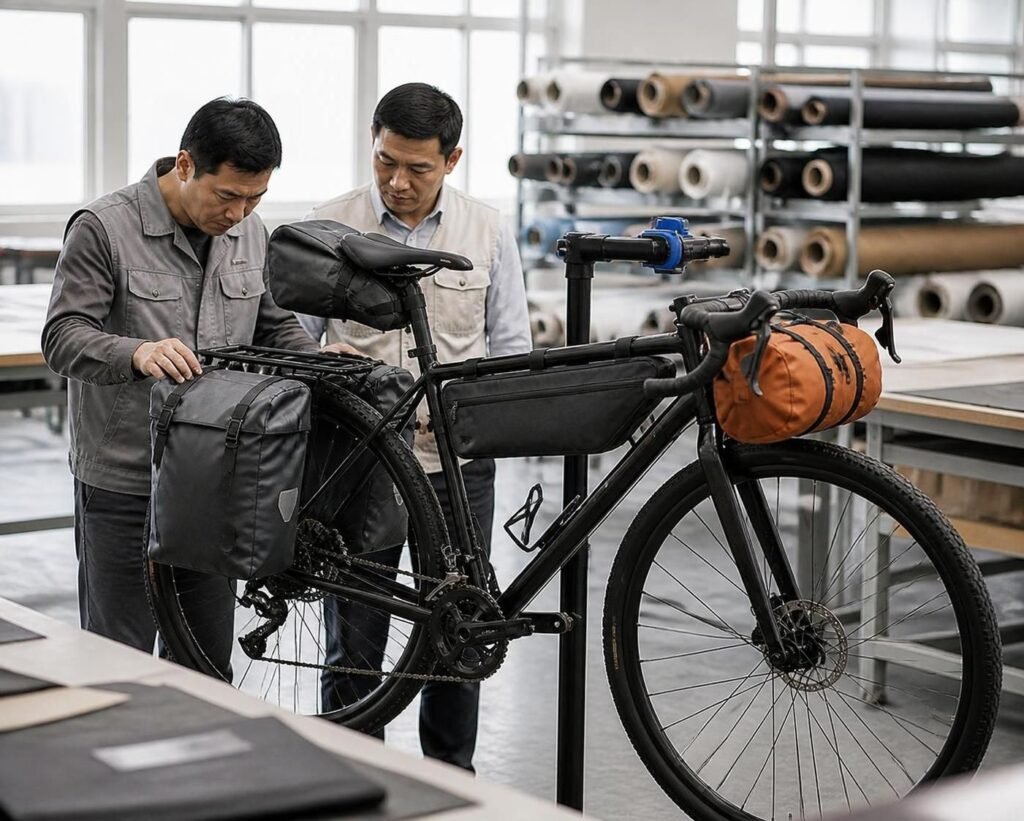
Sourcing custom bicycle travel bags requires much more than just finding a manufacturer. The process involves balancing durability, innovative design, production timelines, and sustainability to meet the unique demands of cycling or outdoor brands. Misjudging these factors can result in costly delays or underwhelming products. Let’s explore how to source effectively while aligning with your brand's expectations.
Effective sourcing of custom bicycle travel bags hinges on selecting durable materials, setting realistic production timelines, and prioritizing functional design over price alone. Engage suppliers with clear communication regarding sustainability goals, branding needs, and performance expectations for outdoor environments.
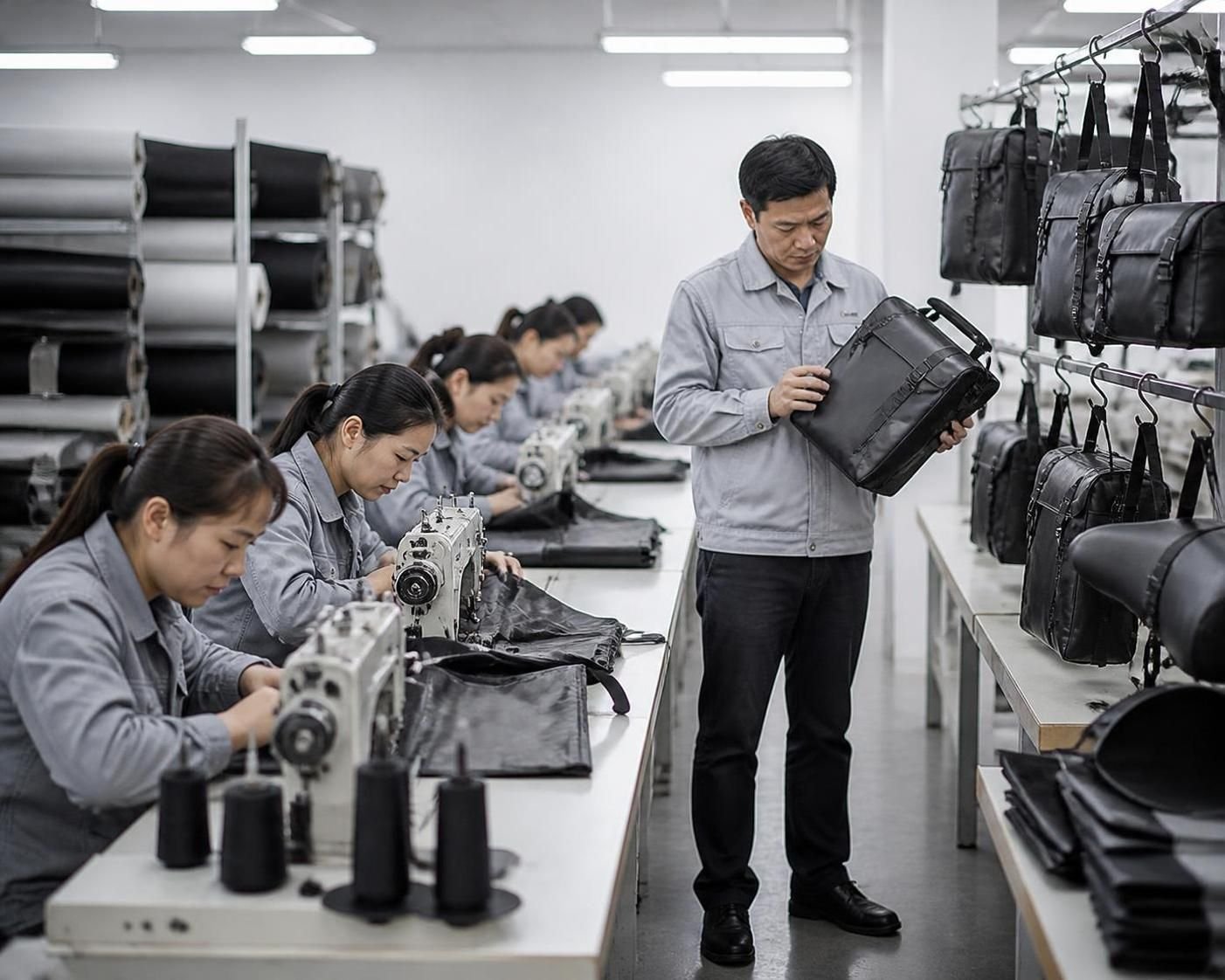
Outdoor brands need to look beyond simple price comparisons if they want to achieve competitive differentiation. Below, I’ve shared actionable insights for selecting the right customized bicycle travel bag supplier, ensuring durability in challenging environments, and managing the production process.
Why Is Material Selection Often Misunderstood?
Many buyers assume that all materials labeled "durable" will meet outdoor requirements. This misconception leads to sourcing mistakes.
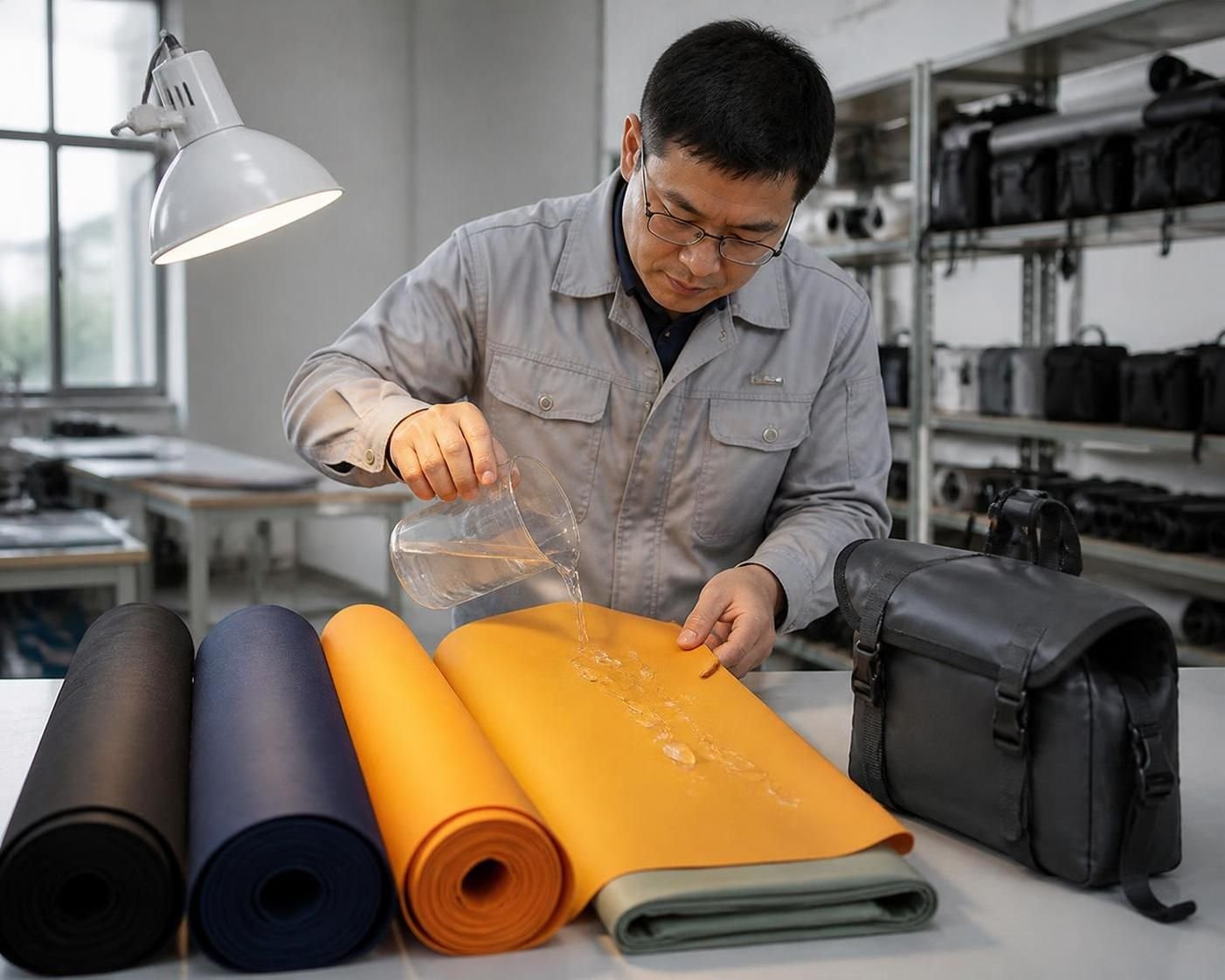
The durability of a material depends on its ability to withstand specific environments—such as rain, UV exposure1, or abrasion from long-term use. Manufacturers often offer options like nylon, polyester, or PVC-coated fabrics for custom bags, but they vary significantly in performance.
Diving deeper into material selection:
To choose the best material for your custom bicycle bags, start by identifying usage scenarios. Will the bags face prolonged sunlight during expeditions? Will they carry heavy equipment over rough terrain? For cycling bags, abrasion resistance from mounting brackets often takes precedence2, as does waterproofing to shield precious cargo during rainstorms3.
Here’s a breakdown of common material options:
| Material Type | Strengths | Weaknesses |
|---|---|---|
| Nylon | High abrasion resistance, lightweight | Expensive, limited UV resistance |
| Polyester | Affordable, decent UV resistance | Lower abrasion resistance |
| PVC-coated fabrics | Excellent waterproofing, tear resistance | Heavier, not eco-friendly |
| RPET (Recycled PET) | Sustainable option, moderate durability | Higher cost, limited waterproofing |
When communicating with suppliers, request material certifications, like weatherproof ratings or eco-certifications (e.g., OEKO-TEX, GRS4), if sustainability aligns with your brand values. Never assume that a "waterproof" material will hold up under dynamic outdoor conditions; lab testing data or field tests should validate claims.
How Can You Prevent Production Timeline Pitfalls?
Custom bicycle bags often require highly detailed sampling and production coordination. Many buyers underplan, assuming quick turnarounds without considering complexity.
Most sourcing disruptions occur because buyers underestimate the lead times required for sampling, revisions, and scaled production5. Establishing realistic expectations early can prevent delays that jeopardize product launches.
Diving deeper into timeline planning:
Custom production follows three distinct phases: prototyping, sampling approvals, and mass production. Here’s an overview of typical lead times:
-
Prototype Development (2–3 weeks)6: This phase involves turning your idea into a tangible sample. If intricate requirements like custom compartments or brand logos are included, expect adjustments.
-
Sampling Refinement (2–4 weeks): After a prototype is approved, manufacturers refine dimensions, materials, and usability factors while aligning with branding elements like color schemes or prints. Multiple iterations may arise here.
-
Mass Production (6–8 weeks): Once the sample is locked, full-scale production begins. If peak seasons (like Q3/Q4 when many brands launch)7 coincide, factories may stretch timelines due to capacity limits.
Mismanaged communication during these stages leads to downstream issues—missed delivery deadlines hurt seasonal promotions, while sampling shortcuts can compromise the final product's quality. I always advise setting firm calendar deadlines shared across both internal teams and suppliers.
Why Does Good Design Matter More Than Low Cost?
It’s tempting for buyers to focus on price, but for cycling or outdoor brands, functional design is key to winning customer loyalty.
Prioritizing price over design often results in products that lack ergonomic usability, innovative features, or protection against outdoor challenges. Outdoor customers not only want aesthetics—they demand functionality that makes their journeys easier.
Diving deeper into design priorities:
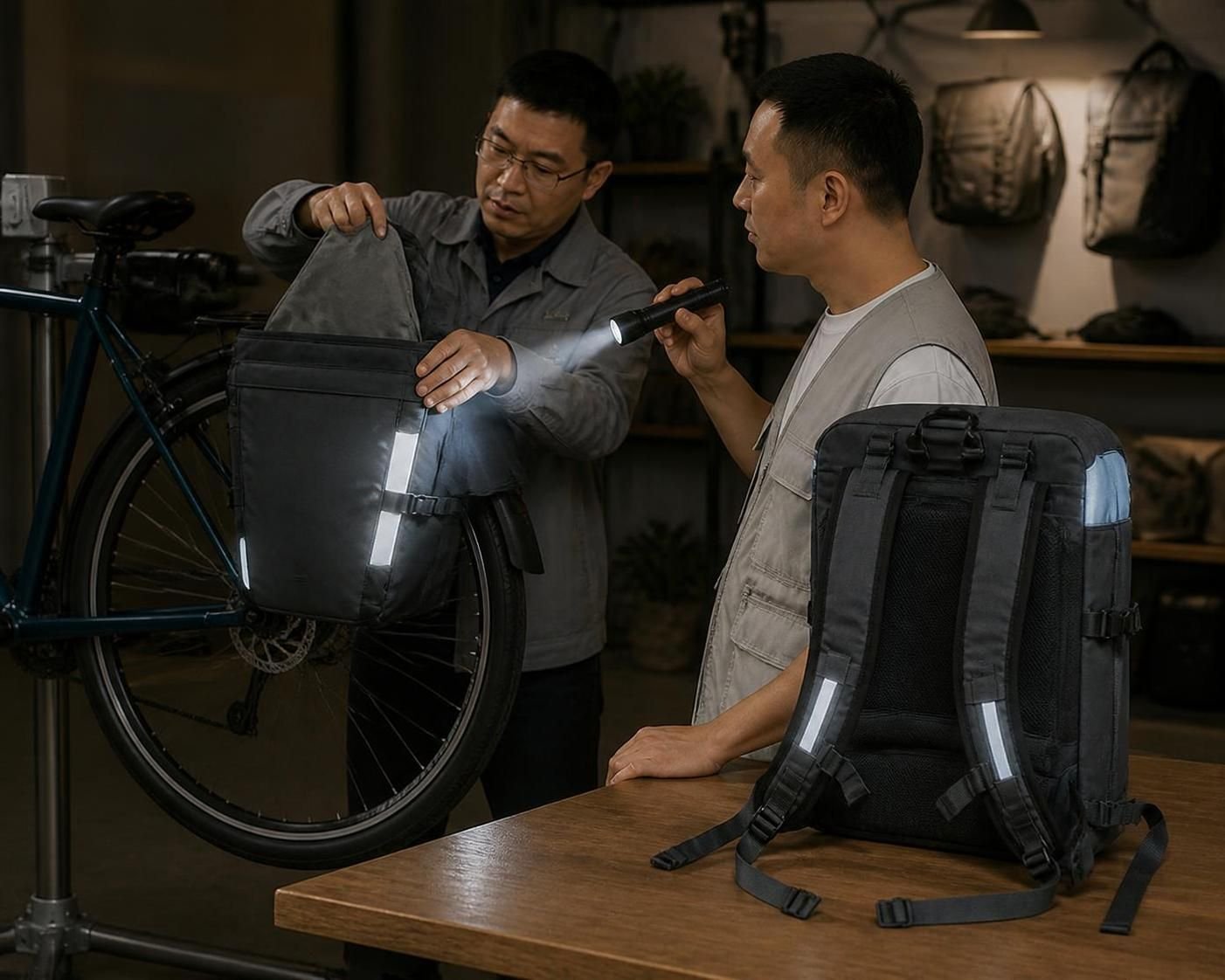
Cycling-specific travel bags have unique needs compared to general luggage. These include secure mounting options, accessible compartments, reinforced seams, and lightweight designs. Some specialized innovations in custom bags include:
- Modular designs: Interchangeable components, like detachable inner compartments, give outdoor enthusiasts adaptability while traveling.
- Reflective patches: These ensure visibility under dim lighting—a critical safety feature for cyclists.
- Hybrid usage: Combining backpack features with travel bag functionality appeals to users who shift between cycling and hiking.
Balancing ergonomic design with material limitations can be difficult—suppliers may discourage experimental features, fearing increased production complexity. For example, requesting hybrid compression straps made from RPET might require sourcing secondary components independently.
Delivering cost-effective functionality requires a partnership mindset. Speak with your supplier early about design constraints and offer collaboration incentives (e.g., longer contracts for willingness to innovate).
How Do You Align Branding and Sustainability Goals?
Sustainability is a high priority for many outdoor brands today, but it raises concerns about material availability, production trade-offs, and cost.
To align custom sourcing with sustainability, precise communication about eco-friendly certifications, recycled materials, and branding visuals is needed. Misalignment in these areas can lead to serious branding missteps.
Diving deeper into sustainability and branding:
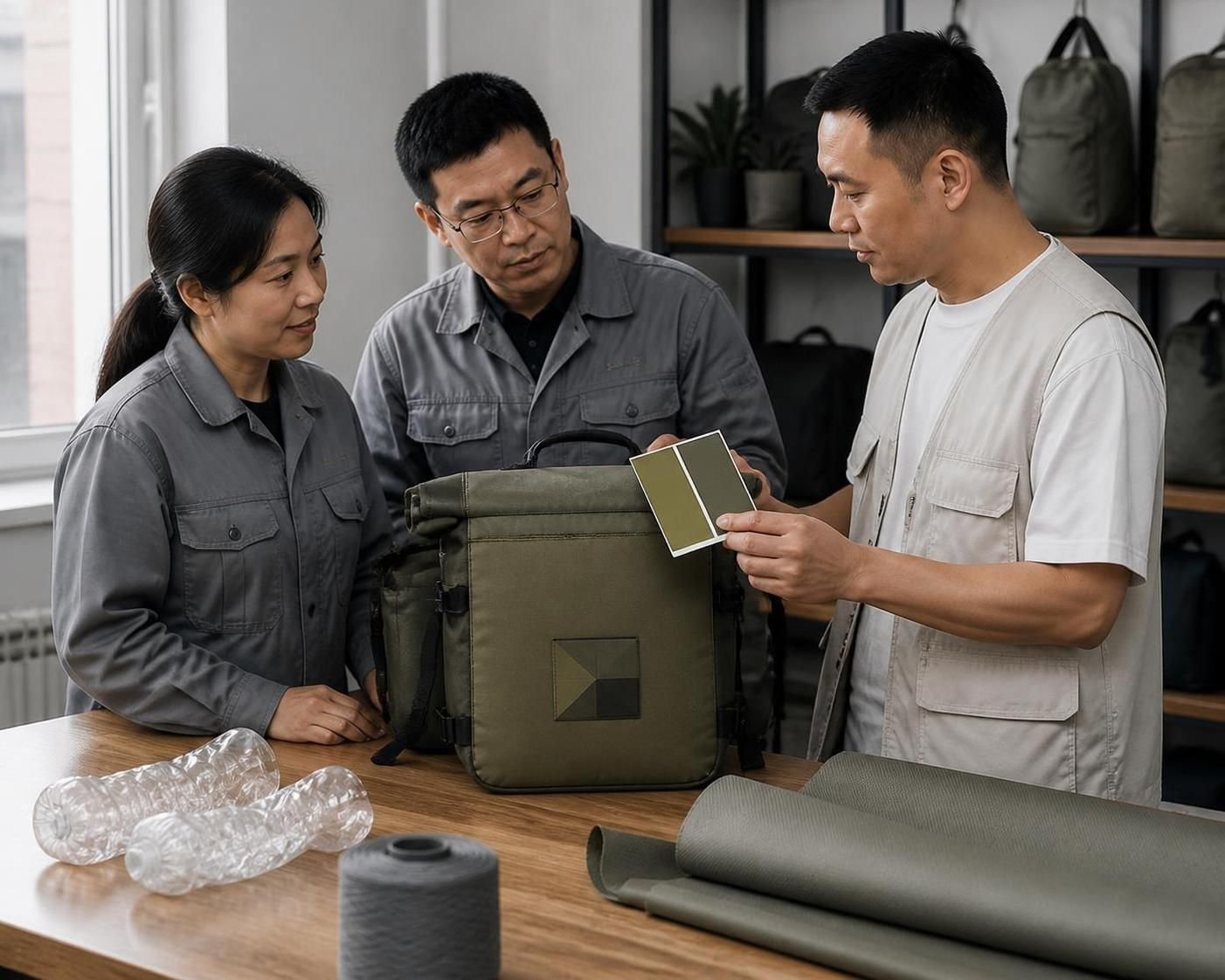
Recycled PET (RPET) fabrics are often favored for cycling bags because they reduce virgin plastic usage8. However, RPET alone may not offer sufficient durability, especially for high-friction areas like mounting pads. Brands can consider blended options to balance sustainability with performance.
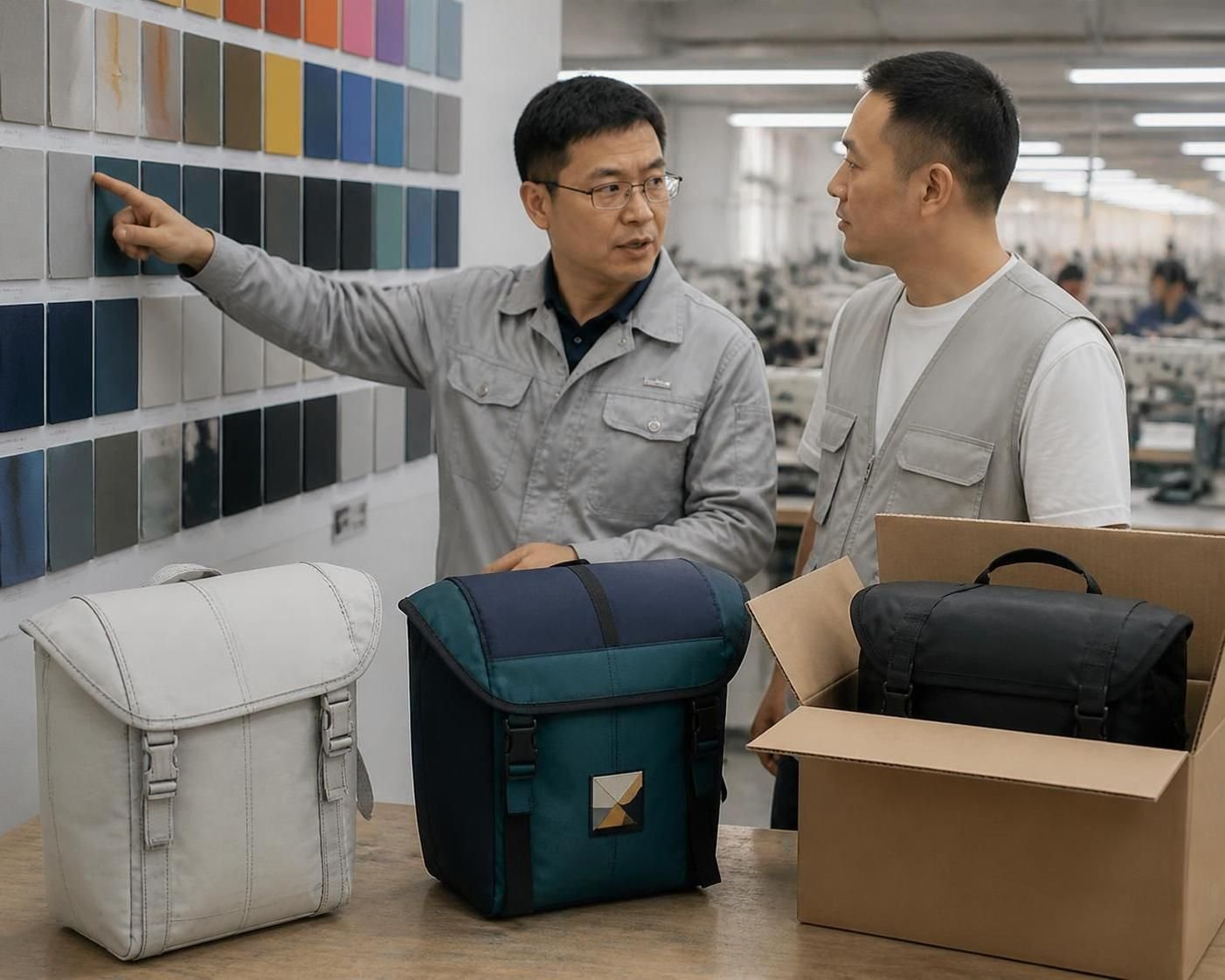
Remember, branding doesn’t stop at logos—it’s integrated into design through color palettes, textures, and messaging. Agreeing on branding layouts during the sampling phase helps ensure consistency.
To ensure sustainable sourcing runs smoothly:
- Request certifications upfront: Ask suppliers for documents verifying recycled content claims or sustainable production methods.
- Focus on customer transparency: Label products accurately, avoiding greenwashing claims.
- Balance eco goals with real functionality: Never sacrifice practical usability for aesthetic branding alone.
Frequently Asked Questions
What guarantees can suppliers provide about material durability?
Suppliers should offer specifications with performance testing data, such as abrasion resistance (in cycles) or waterproof ratings (e.g., IPX standards9). Insist on lab testing reports or certifications before committing.
How can I ensure supplier accountability during sampling?
Set detailed checkpoints for revisions based on physical samples, not assumptions. Include penalty clauses in contracts for missed delivery deadlines if unavoidable risks aren’t communicated.
Yes—custom mold fees for logos, eco-friendly material surcharges, and color matching fees can arise. Discuss these upfront with your supplier to avoid price shocks late in production.
Conclusion
Sourcing custom bicycle travel bags involves thoughtful coordination between material selection, production timelines, functional designs, and sustainability goals—all while ensuring supplier transparency. By prioritizing realistic planning and clear communication, cycling or outdoor brands can deliver exceptional products into their niche market.
Ready to optimize your sourcing strategy? Start with a reputable manufacturer who understands the complexities of outdoor goods! Reach out today for tailored consultation.
"Effects of UV radiation on natural and synthetic materials - PMC", https://pmc.ncbi.nlm.nih.gov/articles/PMC10088630/. Ultraviolet radiation breaks down polymer chains in synthetic textiles through photodegradation, causing loss of tensile strength, color fading, and surface deterioration over extended exposure periods. Evidence role: mechanism; source type: research. Supports: how UV radiation causes material degradation in synthetic fabrics. ↩
"Ride Forward Designs J-Bag Review: Racks are Cool Again", https://bikepacking.com/gear/ride-forward-designs-j-bag-review/. Studies of bicycle bag mounting systems demonstrate that attachment points experience concentrated friction forces during cycling, creating wear patterns that require materials with high abrasion resistance ratings. Evidence role: mechanism; source type: research. Supports: that mounting systems create high-friction contact points requiring abrasion-resistant materials. Scope note: Support may be contextual to specific mounting system designs rather than universal across all bicycle bag types. ↩
"How to Choose a Waterproof Bike Bag", https://rockbrosbike.us/blogs/bike-maintenance-cycling-how-to-guides-rockbros/how-to-choose-waterproof-bike-bag?srsltid=AU7gw4WZ2LRLx-Yf3ri73RFO3FznVo9uUWupzlerZygf1eqtP88KJAoX. Field testing of cycling bags demonstrates that sustained rain exposure and splash from road surfaces require waterproof ratings sufficient to prevent moisture penetration over multi-hour riding periods. Evidence role: general_support; source type: research. Supports: the need for waterproof protection in cycling applications. Scope note: Waterproofing requirements vary based on riding conditions, duration, and rainfall intensity. ↩
"Oeko-Tex", https://en.wikipedia.org/wiki/Oeko-Tex. OEKO-TEX certifies textiles for harmful substance testing, while the Global Recycled Standard (GRS) verifies recycled content and responsible production practices in textile supply chains. Evidence role: definition; source type: institution. Supports: the scope and requirements of OEKO-TEX and GRS certifications for textile products. ↩
"Supply chain disruptions and resilience: a major review ... - PMC", https://pmc.ncbi.nlm.nih.gov/articles/PMC7792559/. Supply chain management research identifies unrealistic lead time expectations as a common factor in sourcing delays, particularly for custom products requiring iterative development phases. Evidence role: general_support; source type: research. Supports: that inadequate timeline planning contributes to supply chain disruptions. Scope note: This represents one of multiple contributing factors to sourcing disruptions rather than the sole cause. ↩
"Why Focusing on Lead Time, Not Just Efficiency and Cost ...", https://interpro.wisc.edu/lead-time-drives-manufacturing-success/. Industry benchmarking data suggests that prototype development for custom textile products typically ranges from 2-4 weeks, depending on design complexity and material sourcing requirements. Evidence role: general_support; source type: research. Supports: typical timeframes for prototype development in custom textile manufacturing. Scope note: Actual timelines vary significantly based on manufacturer capabilities, design complexity, and material availability. ↩
"Industrial Production and Capacity Utilization", https://www.federalreserve.gov/releases/g17/current/default.htm. Manufacturing facilities typically experience peak capacity utilization in Q3/Q4 as brands prepare inventory for holiday retail seasons, leading to extended lead times and potential production bottlenecks. Evidence role: general_support; source type: research. Supports: that Q3/Q4 represents high-demand manufacturing periods. Scope note: Seasonal patterns vary by industry sector and geographic region. ↩
"Environmental life cycle assessment of textile bio-recycling", https://www.academia.edu/110779202/Environmental_life_cycle_assessment_of_textile_bio_recycling_valorizing_cotton_polyester_textile_waste_to_pet_fiber_and_glucose_syrup. Lifecycle assessments indicate that recycled PET production consumes significantly less energy and petroleum resources compared to virgin polyester manufacturing, though the environmental benefit depends on collection and processing efficiency. Evidence role: general_support; source type: research. Supports: that recycled PET reduces reliance on virgin petroleum-based materials. Scope note: Environmental benefits vary based on recycling infrastructure and transportation distances in the supply chain. ↩
"IP code", https://en.wikipedia.org/wiki/IP_code. The IPX rating system, defined in IEC standard 60529, classifies the degree of protection against water ingress, with higher numbers indicating greater water resistance. Evidence role: definition; source type: institution. Supports: the IPX rating system as a standardized measure of water resistance. ↩