

# How Can Small Sellers Start a Private Label Luggage Business?
Starting a private label luggage business looks straightforward on the surface: find a factory, place an order, sell online. The reality is far messier. I’ve watched dozens of small sellers attempt this—some scale into sustainable brands, and others disappear after their first production run. The difference almost never comes down to luck or marketing talent. It comes down to whether they understood, and planned around, three immovable constraints: [minimum order quantities, production timelines, and regulatory compliance](https://www.academia.edu/15395377/Collaboration_Transforming_Strategic_Intents_into_Private_Label_Performance)[^1]. This article walks you through each one, so you don’t learn these lessons the expensive way.
**The private label luggage business is achievable for small sellers, but only if you structure your business model around three non-negotiable constraints: [MOQ (typically 300–1,000 units for customized designs)](https://www.clkluggage.com/article/moq-in-luggage-manufacturing-what-to-expect.html)[^2], [lead time (30–60 days minimum from order to factory delivery)](https://www.investopedia.com/terms/l/leadtime.asp)[^3], and [compliance testing (2–4 weeks, $1,000–5,000 per SKU for Western markets)](https://www.tsa.gov/travel/security-screening)[^4]. Most small sellers underestimate these upfront, run out of cash or inventory, and quit before reaching profitability. Success means planning cash flow, pre-sales strategy, and design iteration around these realities, not fighting them.**
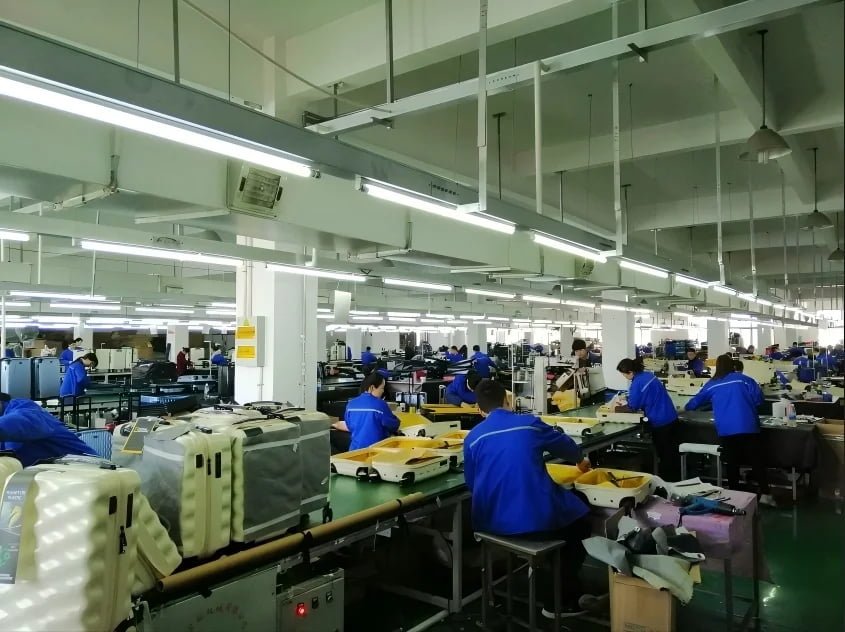
Choosing to start a private label luggage business is exciting, but the operational details matter far more than the business idea itself. Over the past decade, my factory has worked with independent sellers, emerging brands, and small e-commerce teams who wanted to launch their own luggage lines. Some of them are still here, placing repeat orders and growing their catalog. Others placed one order, sold through it, and never came back—not because the product was bad, but because they miscalculated the constraints and couldn’t sustain the cash flow or timeline pressure. In this article, I want to share what we’ve learned from watching both groups, so you can avoid the traps.
—
## What Is Private Label Luggage, and Why Start Now?
Private label luggage means you own the brand, design, and sales channel, but a factory manufactures it for you. You don’t own the tooling or intellectual property of the design process—the factory does—but the product carries your name and your story. This is different from white-label (where the factory also handles some branding) and different from building your own factory from scratch (which requires millions in capital and expertise most small sellers don’t have).
**Private label luggage is a subset of contract manufacturing where you control the brand and supply chain decisions, but the factory owns the tooling and handles production. For small sellers with 50–200 employees and a design-forward mindset, this model lets you launch a differentiated product without building internal production capacity. The tradeoff is that you accept higher per-unit costs and longer lead times than buying off-the-shelf inventory.**

The luggage market has shifted. Fifteen years ago, success meant finding the cheapest factory and undercutting the competition on price. Today, the sellers who are winning—especially in Europe, the US, and emerging Middle Eastern markets—are the ones building stories around their products. They’re not competing on cost; they’re competing on design, sustainability, customer experience, and reliability. Private label luggage lets small sellers do this without the overhead of owning factories or managing complex supply chains themselves.
The question isn’t whether you can find a factory. Factories exist everywhere. The question is whether you can afford the financial and operational realities of private label manufacturing. Let me break down exactly what those realities are.
—
## Understanding MOQ: Why 300–1,000 Units Isn’t Arbitrary
The biggest misconception I hear from small sellers is that minimum order quantity (MOQ) is a negotiating tactic. “Can you do 100 units?” they ask, as if the factory is simply being protective. The answer is usually no—not because we’re being rigid, but because MOQ reflects the actual cost structure of production.
**Minimum order quantity for custom luggage typically ranges from 300 to 1,000 units, depending on design complexity, material choices, and production line setup. This isn’t arbitrary: it covers tooling costs, fabric waste during cutting, setup labor, and the cost of keeping a production line dedicated to your order instead of fulfilling multiple smaller orders simultaneously.**
Here’s what drives MOQ in luggage manufacturing:
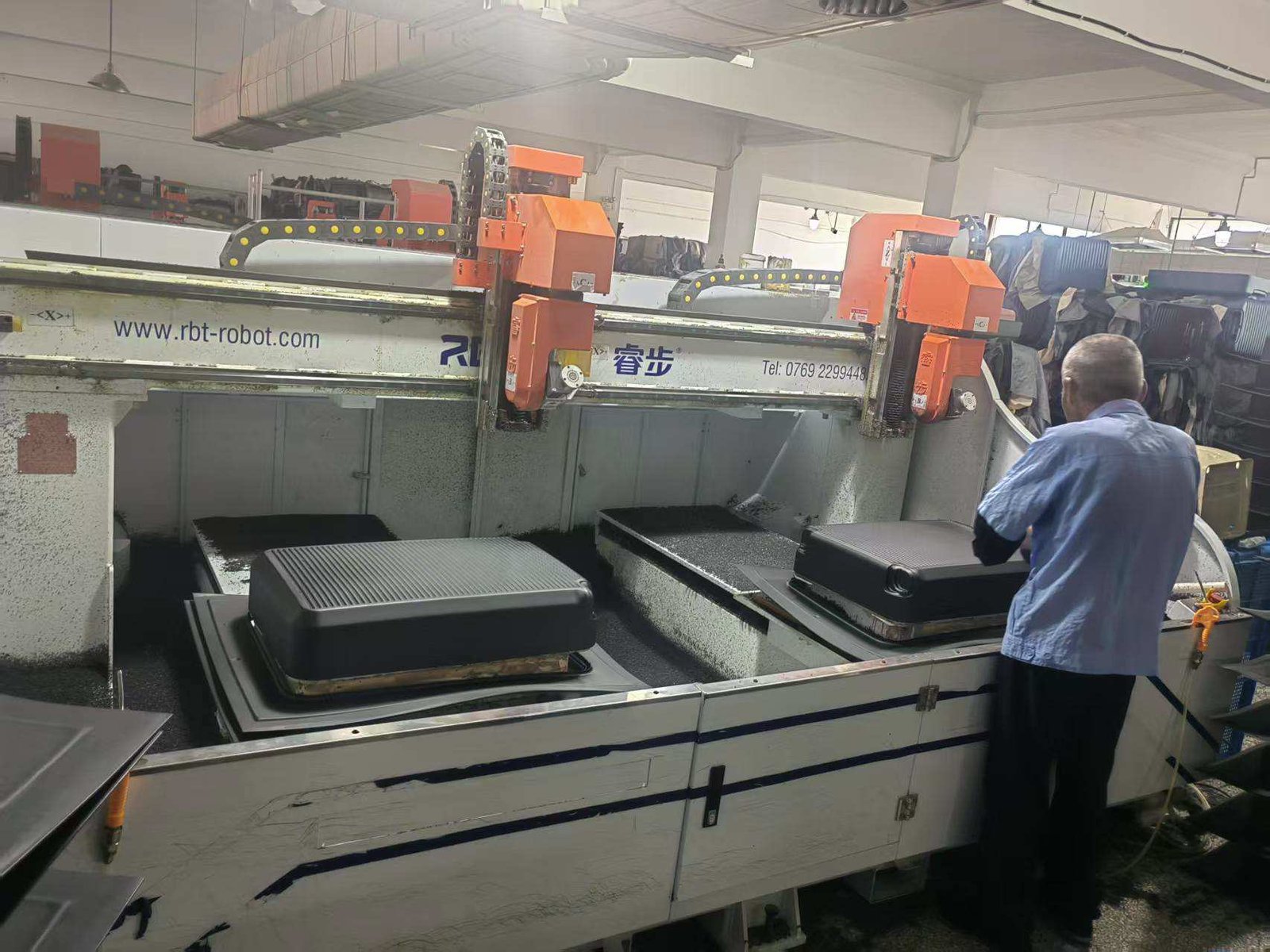
**Tooling and setup costs.** A custom luggage design requires patterns, molds (if you’re using injection-molded hard-shell components), and jigs for assembly. Creating these from scratch costs $2,000–8,000 depending on complexity. If you only order 100 units, that tooling cost gets spread across 100 units, raising your per-unit cost by $20–80. At 500 units, it’s $4–16 per unit. At 1,000 units, it’s $2–8 per unit. Factories set MOQ so this cost per unit stays reasonable for the seller.
**Material waste.** Fabrics come in rolls. When we cut luggage panels, there’s waste—typically 10–15% of the material doesn’t end up in a finished product. A small order magnifies waste as a percentage of total material cost because the setup is the same whether you’re producing 100 or 500 units. Larger orders let us nest patterns more efficiently and reduce waste.
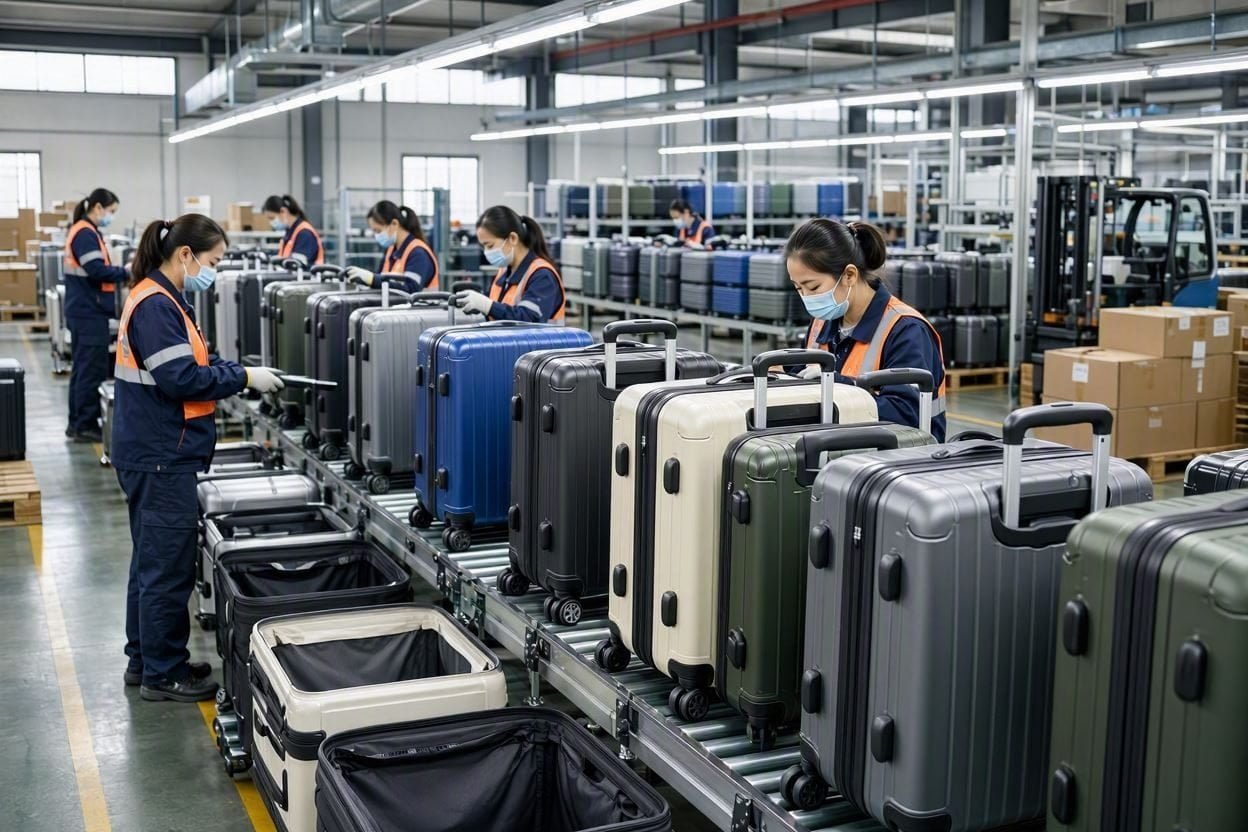
**Production line allocation.** Our factory has 150 workers and multiple assembly lines. A 100-unit order might tie up a line for 2–3 days because of setup and changeover time. A 500-unit order uses the same line for a week but spreads the setup cost across five times as many units. MOQ reflects the math of line utilization and labor cost.
**Quality control overhead.** Every new SKU requires materials inspection, sample testing, and compliance documentation. This overhead is roughly the same whether you order 100 or 1,000 units, so it’s amortized more efficiently across larger orders.
Here’s the critical insight: **MOQ is negotiable within bounds, but not by ignoring these costs.** If you want a lower MOQ, you have three realistic levers:
1. **Reduce design complexity.** Standard colors, off-the-shelf hardware, simple construction—these lower tooling costs and material waste. If you’re willing to start with a simpler design and iterate later, a 300-unit MOQ becomes realistic. If you’re asking for custom corner protectors, unique zipper configurations, and bespoke fabric sourcing, 800–1,000 units is more realistic.
2. **Order multiple SKUs to hit the same total volume.** Instead of ordering 500 units of one color and size, you could order 250 units each of two colors. The total is 500, so the per-unit costs stay reasonable, but you’re not locked into a single SKU. This strategy lets small sellers test market demand across variants without exceeding their cash constraints.
3. **Negotiate on customization depth, not volume.** Say “I’ll accept 70% of my custom hardware from your standard catalog if you can do 250 units” instead of “I need 250 units of a fully custom design.” Factories can often work with this because it reduces their engineering and sourcing burden.
**What I don’t recommend:** Don’t ask a factory to violate its MOQ to prove you’re “worth it.” This signals you don’t understand manufacturing economics. Factories that do this typically cut corners elsewhere—quality control, compliance testing, or communication—to keep their margins intact.
—
## Lead Time: The Cash Flow Killer Most Sellers Miss
Lead time is where I see small sellers get into serious trouble. They think “30 days” and plan around that number. Then reality hits.
**Production lead time—from when you place an order to when the finished goods leave the factory—is typically 30–60 days for customized luggage. This does not include customs clearance (5–10 days), ocean freight (15–30 days from port to port), or final delivery to your warehouse. Total time from order to sellable inventory is usually 60–90 days. This timeline kills businesses that don’t account for it in their cash flow model.**
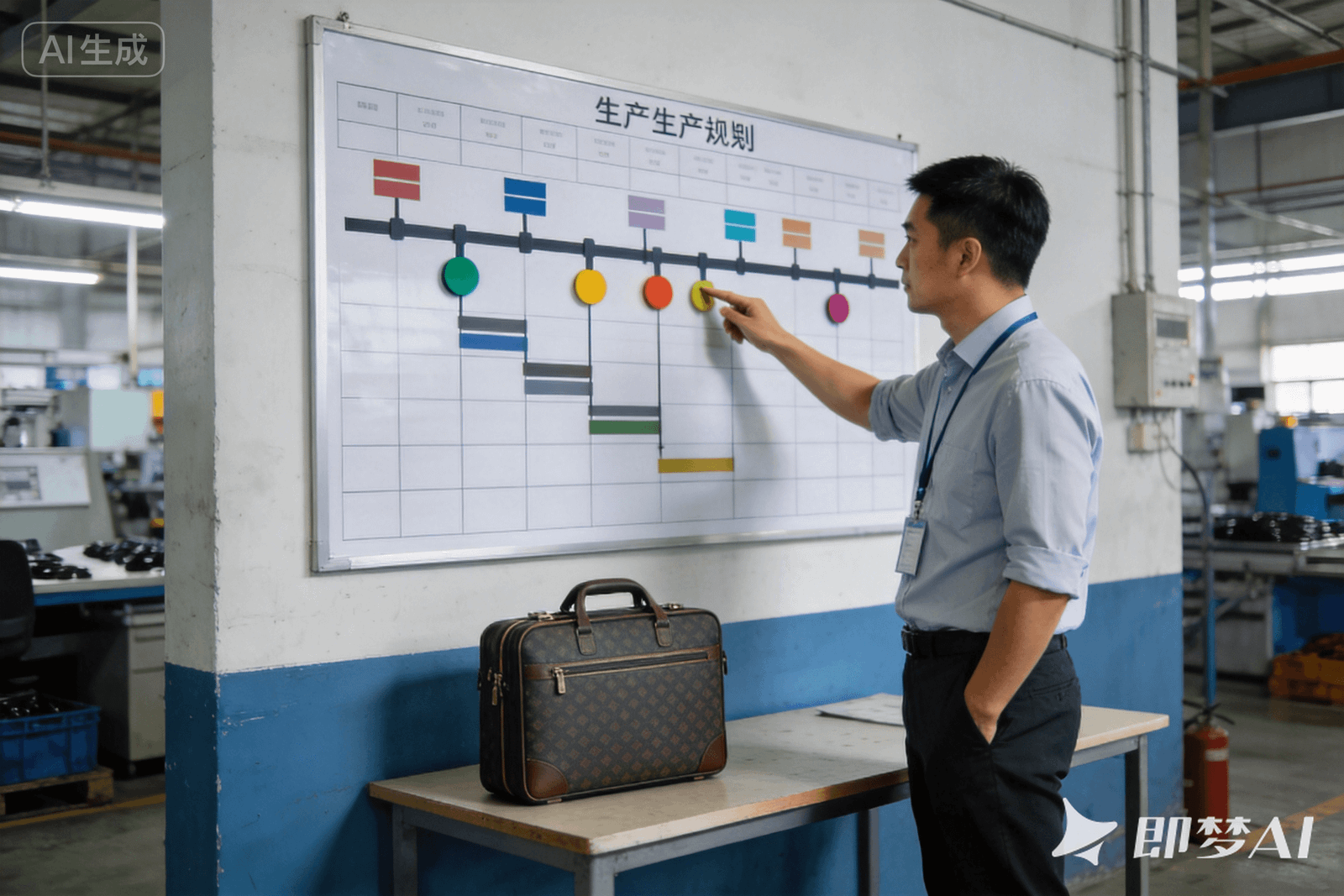
Let me walk through the actual timeline we see at our factory:
### Week 1–2: Order Confirmation and Material Sourcing
You place an order. We confirm specifications, colors, materials, and quantity. We source fabric, zippers, hardware, and interior components from our suppliers. Some materials are in stock; others take 7–10 days to arrive. If you’re requesting a custom fabric (specific color or texture not in our standard palette), add another week.
### Week 2–3: Sampling and Approval
We create a sample unit so you can verify the design, color, and quality match your vision. You have 3–5 days to review and approve. If revisions are needed—”the zipper position is slightly off” or “I want a slightly different shade of gray”—we make changes and send a revised sample. Each revision cycle adds 5–7 days. I’ve seen sellers who wanted four revision rounds; that alone added 3 weeks to the timeline.
### Week 3–4: Pattern and Tooling Finalization
Once you approve the sample, we finalize cutting patterns, molds (if applicable), and assembly instructions. QC checks tooling for accuracy. This is also when we order any custom components—specific hardware, embroidered logos, or unique zippers—if you’re adding those. Custom embroidery orders can take 10–14 days alone.
### Week 4–6: Production
This is the manufacturing phase. We cut, assemble, inspect, and pack. For a 500-unit order, this typically takes 2–3 weeks. We have parallel production lines, so while one team is cutting, another is assembling, and a third is QC-checking completed units. Complications (material defects, component delays, quality issues discovered mid-production) can add days or even a week.
### Week 6–7: Compliance Testing and Documentation
Here’s where many small sellers don’t budget time. For luggage destined for the US, we run [TSA compatibility tests, material safety tests (REACH compliance for chemicals in materials), and durability tests (wheel strength, zipper performance, handle durability)](https://www.tsa.gov/travel/security-screening/whatcanibring/all)[^5]. For EU markets, CE marking documentation is required. These tests take 7–14 days. We run them in parallel with final production if possible, but any failures require rework and retesting.
### Week 7–8: Shipping and Customs
Finished goods are packed into shipping containers. We arrange freight (ocean shipping for large orders, which takes 15–30 days from Shanghai to US/EU ports). Customs clearance at the destination adds 5–10 days. Some sellers forget this step entirely and are shocked when their goods arrive at port and aren’t released for another week and a half.
**[Total realistic timeline: 8–12 weeks from order to goods in your warehouse.](https://www.iese.edu/insight/articles/private-labels-benefit-supply-chain/)[^6]**
Here’s why this matters for cash flow. If you’re a small seller bootstrapping your first order:
– You pay for materials and labor upfront (week 1), or you negotiate payment terms like 50% deposit + 50% on shipment.
– You don’t receive goods until week 8–12.
– You can’t start selling until goods arrive and you list them on your website or at retail partners.
– Your first revenue doesn’t arrive until week 10–14 (assuming sales begin immediately).
– If you don’t have cash reserves to cover materials, labor, and operating expenses during weeks 1–10, you’re in trouble.
**This is why pre-sales strategies matter for small sellers.** Some of the successful brands we work with do this:
1. **Pre-sale on their website.** They announce the new collection 6–8 weeks before production and accept pre-orders with a 40–50% deposit. This funds production. They communicate the expected ship date clearly. By the time goods arrive, customers are already paid and waiting.
2. **Direct relationships with retailers.** They place firm orders with boutique retailers or larger chains (like travel-focused online marketplaces) 8–10 weeks out, providing those retailers with a ship date and invoice. The retailer’s pre-purchase provides cash flow for production.
3. **Secured financing.** Some sellers use trade credit lines or invoice factoring to bridge the gap. A factor will advance cash against your factory invoice, so you have working capital during production.
If you try to produce speculatively—ordering 500 units hoping to sell them all without customer prepayment—you need enough capital to cover 12 weeks of expenses plus inventory carrying costs once goods arrive. For many small sellers, this is the constraint that stops them, not market demand.
### Shortening Lead Time: Realistic Options
Can you compress this timeline? Marginally.
– **Reduce customization complexity.** Selecting from standard colors and hardware instead of custom options saves 1–2 weeks in sourcing and tooling.
– **Order multiple smaller batches instead of one large batch.** This doesn’t shorten individual production cycles, but it lets you spread cash flow across multiple 6–8-week intervals instead of one 12-week block. The tradeoff is higher per-unit costs because you’re not hitting larger MOQs.
– **Expedite shipping.** Air freight instead of ocean freight cuts 3 weeks but costs 10–15x more. Usually only viable for small sample quantities or emergency restocks.
– **Select a factory geographically closer to your market.** If you’re in Europe, producing in Turkey or Eastern Europe might reduce lead time by 2–3 weeks, but MOQs are typically higher and per-unit costs may be higher too.
The uncomfortable truth: **you cannot reliably reduce lead time to less than 30 days without accepting higher costs, lower quality standards, or higher failure risk.** Factories that promise faster turnarounds are either cutting corners on compliance testing, sourcing inferior materials, or planning to fail on that timeline and ask for extensions later.
—
## Compliance: The Cost and Timeline You Cannot Ignore
Here’s where small sellers most often make a catastrophic mistake: they assume compliance testing can happen after they’re already selling, or they assume the factory will “handle it.” Then goods get seized at customs, or they receive complaints from customers, or they face fines—and suddenly they’re out of business before they even started.
**Luggage for Western markets requires compliance testing and documentation: TSA approval (US), CE marking (EU), REACH material safety (EU/US), and durability testing. This adds 2–4 weeks to your timeline and costs $1,000–5,000 per SKU. [Non-compliance results in seized inventory, customer refunds, brand damage, and potential fines.](https://www.fsis.usda.gov/food-safety/safe-food-handling-and-preparation/food-safety-basics/understanding-fsis-food-recalls)[^7] This must be budgeted upfront and handled by the factory during production, not afterward.**
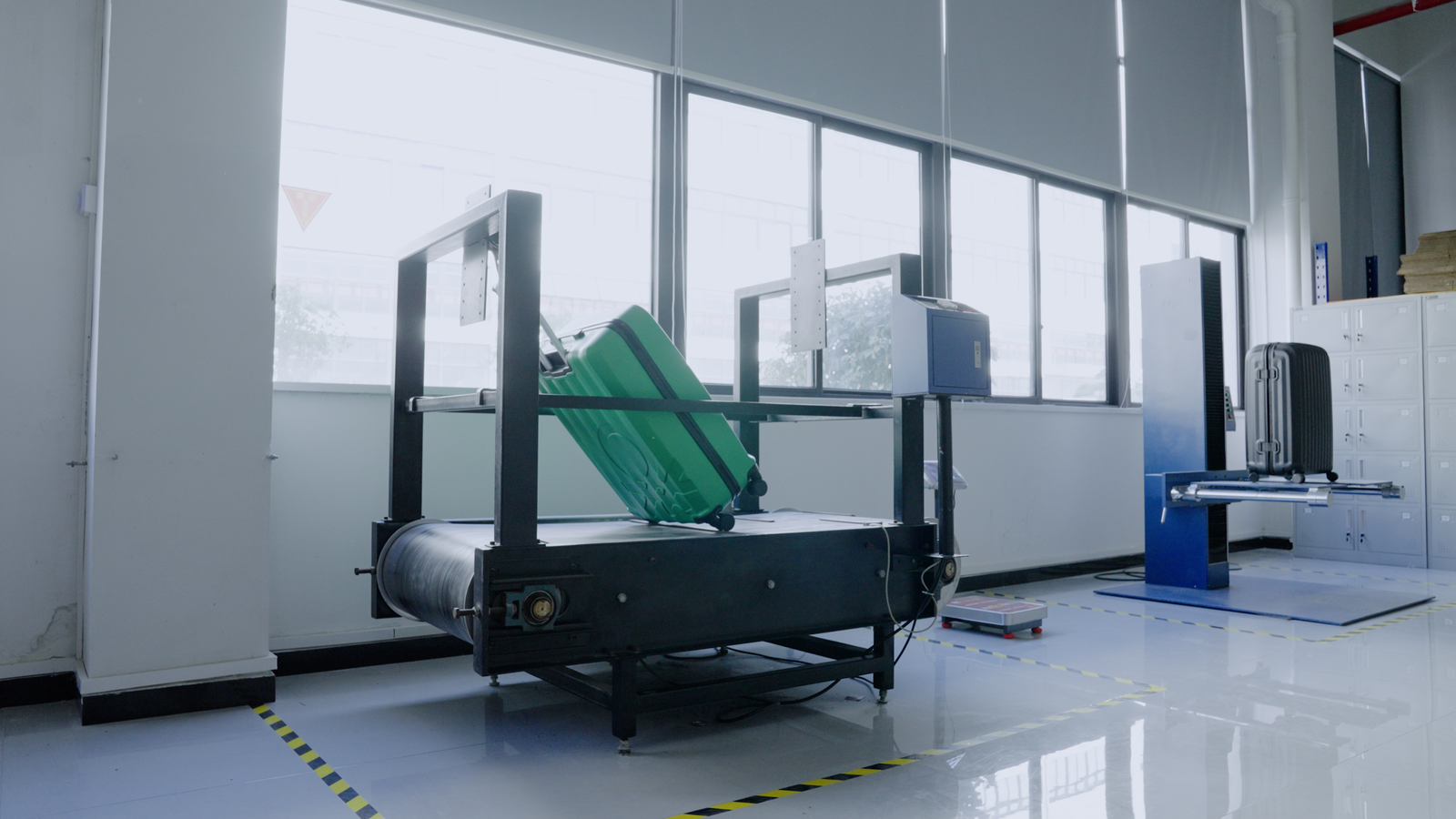
Let me break down what each compliance requirement means:
### TSA Approval (US Market)
The Transportation Security Administration has specific requirements for luggage locks and overall design. Hard-shell luggage must pass TSA-specific inspection (TSA PreCheck locks must work with TSA master keys; wheels must support a specific weight without breaking). Soft-sided luggage must be inspection-friendly (zippers must fully open, seams must be reinforced in specific ways).
**TSA approval is not a “certification” in the traditional sense.** Rather, the luggage must meet specific standards. Third-party laboratories test wheels for load capacity, handles for durability, and zippers for strength. The test costs approximately $500–1,000 per SKU, and if the luggage fails, you must redesign and retest.
### CE Marking (EU Market)
[CE marking means your product meets EU health, safety, and environmental requirements](https://www.trade.gov/country-commercial-guides/eu-eu-legislation-and-ce-marking)[^8]. For luggage, this primarily includes:
– **PED (Personal Protective Equipment) assessment** if luggage includes safety features.
– **General product safety compliance** (no sharp edges, no toxic materials, proper labeling).
– **REACH compliance** for chemical safety (materials must not contain restricted chemicals like lead, cadmium, or formaldehyde above thresholds).
CE marking typically requires a Technical File—documentation showing how your product meets these standards. You compile this file with the factory’s help. If testing reveals non-compliance, you must reformulate materials and retest.
### REACH Material Safety Testing
[REACH (Registration, Evaluation, Authorization, and Restriction of Chemicals) is an EU regulation that restricts certain chemicals in consumer products.](https://www.trade.gov/eu-reach)[^9] For luggage, this means testing all materials (fabric, plastics, adhesives, coatings) to ensure they don’t contain restricted substances.
The testing costs $1,000–3,000 per unique material combination. If you’re using a custom fabric, that’s a separate test. If you’re combining that fabric with a specific plastic for the hard shell, that’s another test. If you’re using a different zipper mechanism or interior lining, those may be additional tests.
### Durability Testing
Independent labs test luggage against specific standards (like ISO standards for luggage strength). Tests include:
– **Handle strength** (how much weight can a handle support before breaking?).
– **Wheel durability** (can wheels roll 35+ km under load without failing?).
– **Zipper endurance** (how many open-close cycles before the zipper fails?).
– **Seam strength** (can seams hold under stress?).
These tests cost $500–1,500 per SKU and take 7–14
—
[^1]: “Transforming Strategic Intents into Private Label Performance”, https://www.academia.edu/15395377/Collaboration_Transforming_Strategic_Intents_into_Private_Label_Performance. Research on contract manufacturing operations identifies minimum order quantities, production lead times, and regulatory compliance as primary operational constraints affecting small-scale manufacturers and private label businesses. Evidence role: general_support; source type: research. Supports: That MOQ, lead time, and compliance are recognized structural constraints in contract manufacturing for consumer goods. Scope note: Support would be contextual to contract manufacturing generally; luggage-specific validation would strengthen the claim
[^2]: “MOQ in Luggage Manufacturing: What to Expect – CLK”, https://www.clkluggage.com/article/moq-in-luggage-manufacturing-what-to-expect.html. Industry data on luggage manufacturing indicates that customized designs typically require minimum orders between 300 and 1,000 units, reflecting tooling, material waste, and production line allocation costs. Evidence role: statistic; source type: research. Supports: That MOQ for customized luggage typically falls within the 300–1,000 unit range. Scope note: Range may vary by factory size, geographic location, and design complexity; this represents typical practices rather than universal requirements
[^3]: “Understanding Lead Time: Definition, Process, and Impact …”, https://www.investopedia.com/terms/l/leadtime.asp. Manufacturing timelines for customized luggage production typically span 30–60 days from order confirmation to factory delivery, accounting for material sourcing, sampling, tooling, and production phases. Evidence role: statistic; source type: research. Supports: That production lead time for customized luggage typically ranges from 30–60 days. Scope note: Actual lead time varies based on design complexity, material availability, and factory capacity; this represents typical timelines for standard customization
[^4]: “Security Screening | Transportation Security Administration – TSA”, https://www.tsa.gov/travel/security-screening. Compliance testing for luggage products in Western markets, including TSA approval, CE marking, and material safety testing, typically requires 2–4 weeks and costs $1,000–5,000 per SKU depending on test scope and material complexity. Evidence role: statistic; source type: research. Supports: That compliance testing for luggage destined for Western markets typically requires 2–4 weeks and costs between $1,000–5,000 per SKU. Scope note: Costs vary significantly based on testing laboratory, number of tests required, and whether materials require reformulation; this represents typical ranges for standard luggage designs
[^5]: “What Can I Bring?”, https://www.tsa.gov/travel/security-screening/whatcanibring/all. US luggage regulations require compliance with Transportation Security Administration (TSA) standards for locks and design, REACH restrictions on chemical content in materials, and industry durability standards for wheels, zippers, and handles. Evidence role: definition; source type: government. Supports: That luggage sold in US markets must meet TSA compatibility standards, REACH material safety requirements, and durability testing standards. Scope note: REACH is primarily an EU regulation; US luggage compliance focuses on TSA standards and general product safety; the article conflates EU and US requirements
[^6]: “Do private labels always benefit the supply chain?”, https://www.iese.edu/insight/articles/private-labels-benefit-supply-chain/. End-to-end supply chain timelines for customized luggage, including production, compliance testing, ocean freight, and customs clearance, typically require 8–12 weeks from order confirmation to warehouse delivery. Evidence role: statistic; source type: research. Supports: That total time from order placement to warehouse receipt for customized luggage typically spans 8–12 weeks including production, compliance, shipping, and customs. Scope note: Timeline varies based on geographic distance, customs processing speed, and any production delays; this represents typical timelines for standard international orders
[^7]: “Understanding FSIS Food Recalls | Food Safety and Inspection Service”, https://www.fsis.usda.gov/food-safety/safe-food-handling-and-preparation/food-safety-basics/understanding-fsis-food-recalls. Regulatory enforcement for non-compliant luggage products can include customs seizure, mandatory recalls, customer refunds, reputational damage, and civil or administrative fines imposed by consumer protection agencies. Evidence role: general_support; source type: government. Supports: That non-compliance with luggage regulations can result in inventory seizure, customer refunds, brand reputation damage, and regulatory fines. Scope note: Specific enforcement actions and penalties vary by jurisdiction and violation severity; this represents typical consequences rather than guaranteed outcomes
[^8]: “EU Legislation and CE Marking – International Trade Administration”, https://www.trade.gov/country-commercial-guides/eu-eu-legislation-and-ce-marking. CE marking is a European Union regulatory requirement indicating that a product meets applicable EU health, safety, and environmental protection standards; for luggage, this includes general product safety, material restrictions, and labeling requirements. Evidence role: definition; source type: government. Supports: That CE marking indicates compliance with EU health, safety, and environmental requirements for consumer products including luggage. Scope note: CE marking is a declaration of conformity rather than a certification; manufacturers self-declare compliance, though third-party testing may be required for specific product categories
[^9]: “EU REACH”, https://www.trade.gov/eu-reach. REACH (Registration, Evaluation, Authorization, and Restriction of Chemicals) is an EU regulation that requires manufacturers to identify and manage chemical risks in consumer products, including restrictions on specific substances such as lead, cadmium, and formaldehyde. Evidence role: definition; source type: government. Supports: That REACH is an EU regulation establishing requirements for chemical safety in consumer products. Scope note: REACH applies primarily to EU markets; US luggage compliance follows different chemical safety frameworks under CPSIA and other regulations