


Selecting the right manufacturing partner can be a daunting task for a brand's head designer. Balancing design innovation with production efficiency, cost considerations, and delivery timelines often feels like juggling priorities.1 Neglecting any one aspect could jeopardize the quality, market appeal, or timely launch of your product. But what should take precedence? Let’s explore how design alignment and collaborative adaptability can outweigh superficial cost advantages.
A brand’s head designer should look for a manufacturing partner that prioritizes design adaptability, effective communication, and on-time delivery over the lowest cost. This ensures better quality, a smoother production process, and a final product that aligns with your brand's creative vision and market goals.

For designers, the manufacturing partner you choose should feel like an extension of your creative process. The sections below highlight key factors to evaluate and potential pitfalls to avoid during your selection process.
Why Is Design Adaptability Crucial When Choosing a Manufacturing Partner?
The problem of rigid manufacturing processes can stifle creativity and innovation. Without a partner that values design adaptation, your product may lose the original creative essence that sets it apart from competitors.
Design adaptability is essential because it ensures that your vision for your product translates accurately into a manufactured product.2 This includes the ability to iterate designs during the sampling phase without excessive delays or costs.

Dive Deeper: What Does Design Adaptability Look Like?
Design adaptability goes beyond simply following a blueprint. It means your manufacturing partner can understand your design intent, make adjustments where necessary, and recommend practical solutions when complex ideas hit production roadblocks. For example, in designing an eco-friendly luggage line, you might want to incorporate a unique material like RPET fabric. A good partner won't just source the material but will also provide insights on how to structure seams or reinforce handles to maintain durability without compromising sustainability.
Another key sign of adaptability is a partner's openness to prototyping and their ability to produce multiple iterations until the sample aligns perfectly with your expectations.3 Beware of suppliers who rush this process or show resistance to change—this could signal inflexibility. While it’s important to respect your supplier’s production capabilities, a collaborative approach is what ensures your designs come to fruition as envisioned.
How Do Communication and Collaboration Impact Quality Control?
Miscommunication can lead to delays, errors, and expensive mistakes, directly impacting delivery schedules and production outcomes.4 Clear and consistent dialogue between designers and manufacturers is non-negotiable.
Strong communication channels with your manufacturing partner ensure your design requirements, quality standards, and production timelines are understood and adhered to. This reduces misaligned expectations and costly rework.
Dive Deeper: Best Practices for Maintaining Collaboration
A productive relationship starts with setting clear expectations. During initial discussions, be upfront about your quality standards, including materials, finishes, and construction techniques. Following this, establish key milestones, such as prototype approvals and quality assurance checks before production.
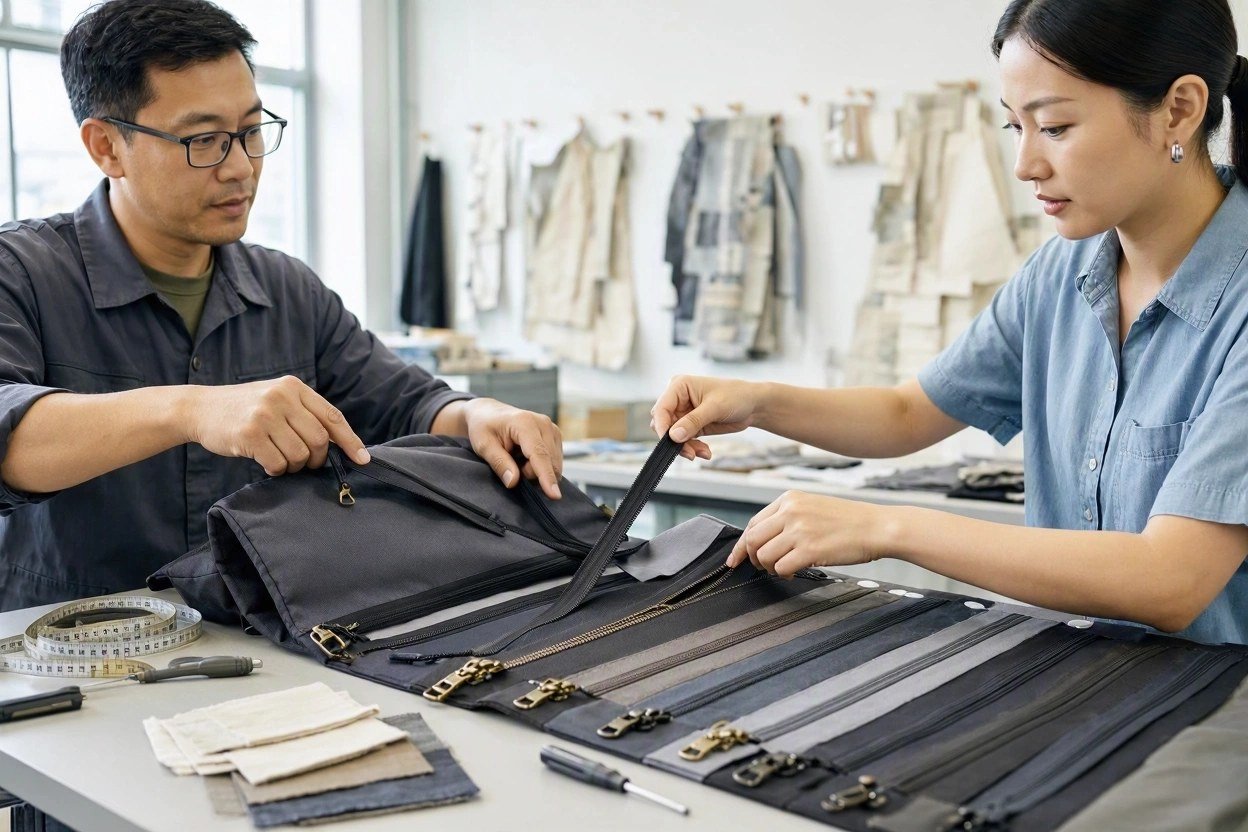
For instance, when working with a bag manufacturer, I once encountered communication hiccups regarding zipper specifications. Instead of making assumptions, the supplier flagged the issue early, allowing us to find an alternative zipper that worked within the logistical constraints. This circumvents errors down the line and shows that proactive communication fosters positive outcomes.
Using digital collaboration tools like CAD software for 3D modeling, combined with regular video meetings, can also bridge the distance when working with a supplier overseas.5 What’s most important, however, is assessing how responsive and understanding your manufacturing partner is during the supplier selection process. Are they willing to listen to feedback, and do they provide updates proactively? These behaviors often determine long-term collaboration success.
How Can Cost and Timing Impact Your Product Launch?
The allure of low-cost production can sometimes overshadow potential risks to quality and timelines. When assessing manufacturing partners, it’s crucial not to underestimate the importance of lead times and realistic production costs.
Choosing partners solely based on price may lead to higher costs in the long run through missed deadlines, excessive rework, or poor product quality.6 Prioritize partners with established track records in meeting timelines and adhering to agreed-upon terms.

Dive Deeper: Avoiding Common Risks with Pricing and Delivery Timelines
During one production cycle for a line of high-end carry-on luggage, a client learned the hard way that rushing suppliers on delivery often leads to compromised quality. A poorly executed handle compromised their reputation with early adopters. To avoid this pitfall, I encourage brands to request—and verify—a supplier’s production calendar. Check resources like holiday schedules, available machinery, and potential subcontractor involvement.
Also, take your sample development costs seriously. We've worked with designers who underestimated sample complexity, only for hidden iteration charges to creep into the final cost. A responsible manufacturing partner will provide a clear upfront breakdown of sampling fees and not shy away from transparent post-production costs. Be wary of overly optimistic or unrealistic quotes—they can signal potential substitutes in materials or labor quality.
What Legal Considerations Should Be Discussed with a Manufacturing Partner?
Legal misunderstandings can derail otherwise solid partnerships. From intellectual property (IP) protection to defect resolution terms, overlooking contract details leaves you and your designs vulnerable.
Ensuring that core contract terms—especially for IP, order changes, and quality controls—are explicitly defined with your manufacturing partner is critical for long-term collaboration.

Dive Deeper: Key Contract Clauses to Negotiate
Start by carefully addressing these areas in your contract:
- Intellectual Property (IP): Safeguard your design ideas from being reused or replicated without your consent. Request non-disclosure agreements and patent protections where applicable.7
- Order Modifications: Specify how design iterations, material substitutions, or quantity changes will be handled, including how costs are calculated.8
- Defect Management: Establish clear procedures and thresholds for defect allowances. Stipulate penalties for non-compliant products to avoid disputes later.
- Penalty Clauses for Delayed Deliveries: Include consequences for failing to meet agreed-upon timelines, especially if delays affect your product release.9
For small to medium-sized businesses, navigating these aspects without over-burdening the relationship can be tricky. This is where a reliable manufacturing partner, familiar with international contracts and local compliance, becomes invaluable. In one instance, we worked with a European sustainable brand, guiding them through a manufacturer’s vague quality assurance agreement. By amending specific clauses, we ensured accountability and upheld the product's design integrity.
Frequently Asked Questions
How can I find a supplier that aligns with my design needs?
Start with clear design documentation like technical drawings or CAD files for potential suppliers to review.10 Look at past portfolios, request references, and conduct live discussions to gauge their ability to adapt to your unique design needs.
Should cost always be a deciding factor?
No. While budgets are important, adaptability, quality assurance, and timely production will have a more lasting impact. Selecting solely on cost could lead to sacrifices in other critical areas, like materials or craftsmanship.
How long should the sampling phase take?
Sampling timelines vary, usually spanning 1–3 months.11 It’s best to allow enough time for iterations, ensuring your manufacturer understands and executes your design precisely before entering mass production.
How do I ensure intellectual property protection?
Sign a non-disclosure agreement (NDA) with your manufacturer and outline IP terms in your contract. Work with a legal professional to verify your documentation aligns with international legal frameworks.
What are the red flags when evaluating manufacturers?
Lack of communication, missed deadlines during sampling, resistance to design changes, unclear pricing, and vague delivery timelines are all major red flags.12 Avoid manufacturers unwilling to discuss compliance certifications or quality control processes.
Conclusion
The role of a brand's head designer is to translate vision into reality—a feat that depends significantly on the right manufacturing partner. By prioritizing design adaptability, clear communication, and robust legal agreements, you can build a mutually beneficial partnership. While competitive pricing matters, aligning your creative goals and ensuring timely, quality production are far more critical for long-term success.
If you're ready to collaborate with a supplier who values your designs and can adapt to your creative vision, reach out to us today to discover how we can bring your ideas to life.
"Problem driven innovation design strategies research ... - PMC", https://pmc.ncbi.nlm.nih.gov/articles/PMC12019239/. Research on manufacturing processes highlights the inherent challenges designers face in balancing innovation, production efficiency, cost, and delivery timelines, as these factors often conflict in practice. See: 'Design for Manufacturing and Assembly: Concepts, Architectures and Implementation' by Boothroyd et al. Evidence role: general_support; source type: research. Supports: The challenges designers face in balancing innovation, efficiency, cost, and timelines in manufacturing.. Scope note: The source provides general insights but may not address specific industries or scenarios. ↩
"SEH 5.0 Product Realization", https://www.nasa.gov/reference/5-0-product-realization/. Educational resources on industrial design emphasize that design adaptability allows manufacturers to align production processes with creative visions, reducing discrepancies between initial designs and final products. See: 'Principles of Design for Manufacturing' by MIT OpenCourseWare. Evidence role: general_support; source type: education. Supports: The importance of design adaptability in ensuring accurate product realization.. Scope note: The source provides general principles and may not address specific case studies or industries. ↩
"Key Advantages of Rapid Prototyping for Product ...", https://www.stratasys.com/en/resources/blog/key-advantages-of-rapid-prototyping/. Studies on product development highlight that iterative prototyping allows manufacturers to refine designs and address production challenges, showcasing adaptability. See: 'Iterative Design and Prototyping in Manufacturing' by the Journal of Product Innovation Management. Evidence role: mechanism; source type: research. Supports: The role of prototyping and iterative processes in demonstrating manufacturing adaptability.. Scope note: The source focuses on general manufacturing practices and may not address specific industries or products. ↩
"Poor communication by health care professionals may lead to ...", https://pmc.ncbi.nlm.nih.gov/articles/PMC6694717/. Case studies from the National Institute of Standards and Technology (NIST) show that miscommunication in manufacturing processes often leads to costly delays and errors, emphasizing the need for clear communication channels. Evidence role: case_reference; source type: institution. Supports: The impact of miscommunication on manufacturing delays and errors.. Scope note: The case studies may focus on specific industries and not provide universal applicability. ↩
"Benefits of Video Conferencing and Virtual Meetings", https://www.ucumberlands.edu/blog/benefits-video-conferencing-and-virtual-meetings. Educational resources on global manufacturing practices highlight that tools like CAD software and video conferencing improve communication and design accuracy in international collaborations. See: 'Global Manufacturing Collaboration Tools' by Stanford University. Evidence role: mechanism; source type: education. Supports: The effectiveness of digital collaboration tools in facilitating international manufacturing partnerships.. Scope note: The source provides general insights and may not include specific case studies or industries. ↩
"Reducing the Costs of Poor Quality: A Manufacturing Case ...", https://scholarworks.waldenu.edu/cgi/viewcontent.cgi?article=6608&context=dissertations. Research on manufacturing economics shows that prioritizing low-cost suppliers often leads to increased long-term expenses due to quality issues and production delays. See: 'Cost vs. Quality in Manufacturing Partnerships' by the International Journal of Production Economics. Evidence role: case_reference; source type: research. Supports: The risks of choosing manufacturing partners based solely on price.. Scope note: The source provides general trends and may not address specific industries or products. ↩
"Open innovation and confidentiality agreements as key factors ...", https://pmc.ncbi.nlm.nih.gov/articles/PMC11104656/. Guidelines from the U.S. Patent and Trademark Office emphasize the role of NDAs and patent protections in preventing unauthorized use of intellectual property in manufacturing partnerships. Evidence role: expert_consensus; source type: government. Supports: The importance of NDAs and patent protections in safeguarding intellectual property in manufacturing.. Scope note: The guidelines focus on U.S. legal frameworks and may not apply globally. ↩
"16.4 Substitution and “Or Equal” Proposals", https://projectdeliverymanual.engineering.lacity.gov/chapter-16-construction-management-procedures/164-substitution-and-or-equal-proposals. Educational resources on contract management in manufacturing emphasize that clear clauses for design changes and cost calculations prevent disputes and ensure smooth collaboration. See: 'Contract Management in Manufacturing' by Harvard Business School. Evidence role: general_support; source type: education. Supports: The importance of specifying design iterations, material substitutions, and cost calculations in manufacturing contracts.. Scope note: The source provides general principles and may not include specific case studies or industries. ↩
"penalty clause | Wex | US Law | LII / Legal Information Institute", https://www.law.cornell.edu/wex/penalty_clause. Case studies from the World Trade Organization highlight that penalty clauses for delayed deliveries incentivize suppliers to adhere to timelines, reducing risks to product launches. Evidence role: case_reference; source type: institution. Supports: The importance of including penalty clauses for delayed deliveries in manufacturing contracts.. Scope note: The case studies may focus on international trade and not specific industries. ↩
"Why is Computer-Aided Design (CAD) Important to ...", https://www.goodwin.edu/enews/why-is-computer-aided-design-cad-important/. Educational resources on supplier evaluation emphasize that technical drawings and CAD files provide critical insights into a supplier's ability to meet design requirements. See: 'Supplier Selection and Evaluation' by Purdue University. Evidence role: mechanism; source type: education. Supports: The role of clear design documentation in evaluating potential suppliers.. Scope note: The source provides general principles and may not include specific case studies or industries. ↩
"Sample Project Timeline", https://workforce.iowa.gov/media/3188. Research on manufacturing processes indicates that sampling timelines typically range from 1 to 3 months, depending on product complexity and supplier capabilities. See: 'Sampling and Prototyping in Manufacturing' by the International Journal of Advanced Manufacturing Technology. Evidence role: statistic; source type: research. Supports: The average sampling timelines in manufacturing.. Scope note: The source provides general trends and may not address specific industries or products. ↩
"Managing Relationships with Suppliers and Vendors You Use", https://www.apu.apus.edu/area-of-study/business-and-management/resources/managing-relationships-with-suppliers-and-vendors-you-use/. Guidelines from the International Trade Centre emphasize that poor communication, missed deadlines, and unclear pricing are common red flags in manufacturing partnerships, often leading to disputes and project delays. Evidence role: expert_consensus; source type: institution. Supports: The major red flags to watch for when evaluating manufacturing partners.. Scope note: The guidelines focus on international trade and may not address specific industries. ↩